Description
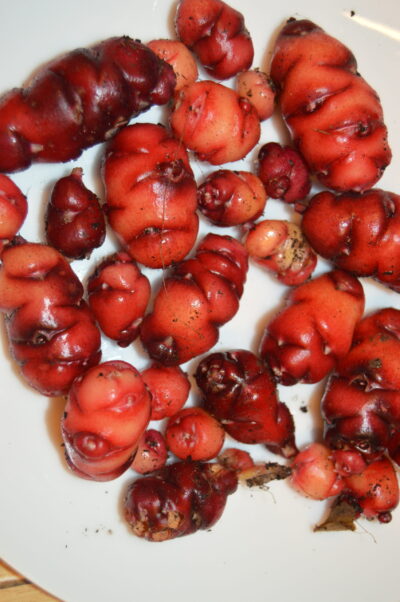
A: Oxalis tuberosa
B: 01 – T
C: 130975
D: GB
A place to explore and buy perennial vegetables and other food plants.


£5.00
By buying these tubers you are agreeing to abide by the Open Source Seed Initiative Pledge…..
The OSSI Pledge: You have the freedom to use these OSSI- Pledged seeds in any way you choose. In return, you pledge not to restrict others’ use of these seeds or their derivatives by patents or other means, and to include this Pledge with any transfer of these seeds or their derivatives.
Oca is a re-plant perennial vegetable grown mainly for its tubers. These are rather potato-like but with a lemony flavour. They can be eaten raw in salads or steamed, boiled, fried, roasted or baked.
The yield from each oca plant is rather dependant on the weather (and when killing frosts arrive – see below). Oca likes warm moist conditions doing less well when the weather is very hot and dry for extended periods (or very cold for that matter). It also seems to yield better in a well-drained, light soil. A good yield is about 1kg of tubers from each plant. Tubers vary greatly in size – large ones are about the size of a medium potato (but a bit longer and thinner).
Tubers can be planted straight into the ground (about 8cm deep) after the risk of frost has passed but are usually started off first in small pots of compost in March under glass and planted out later. A spacing of at least 40cm is recommended. Water the plants in dry conditions. They like a full-sun location but some shade from very hot summer sun (with a net for example) can also be beneficial.
Oca are not very frost tolerant but can cope with a light frost. This is useful because they only start to tuberise around the time of the autumn equinox (22nd September) so for a decent yield they need to be kept growing for a good few weeks after this date. Even after frost kills the leaves it is thought to be worth leaving the plants in the ground for a week or two (so long as very hard frosts aren’t forecast which might damage the tubers) so that the nutrients remaining in their juicy stems can be drawn down to further swell the tubers. (In mild winters the tubers often survive the winter to sprout again the following spring.)
After harvest, leave the tubers on a sunny windowsill for a fortnight to sweeten up. After this they will store well in paper bags or trays in a cool place with high humidity (similar to potato storage).
Two small red tubers which tend to darken on storage to almost black.
Out of stock
Reviews
There are no reviews yet.