Cabbage Thistle
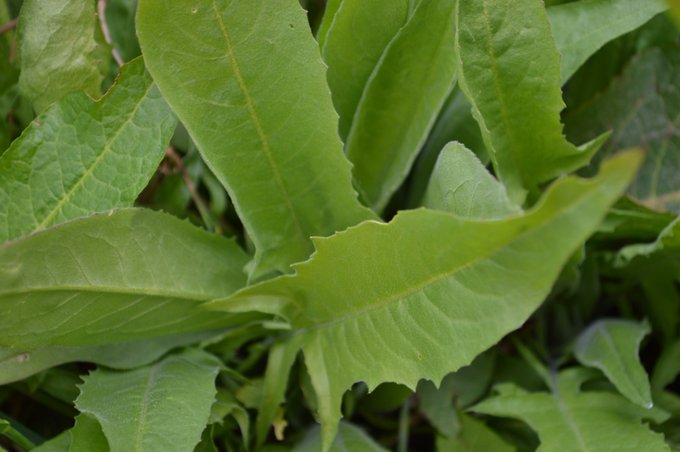
Cabbage thistle (Cirsium oleraceum), or Siberian thistle, is native to central and eastern Europe and Asia, usually growing on fens, wet meadows, beside river and streams and in damp woodlands. It is an edible perennial thistle with few sharp spines, a good but fairly strong flavour and a high nutrition profile.
Hardiness
Hardy to about -20°C
Soil conditions and location and cultivation
Will grow in neutral and alkaline soils but not in acid ones. Likes full sun or semi-shade. Will grow in a wide range of soil types so long as they are moist.
Height
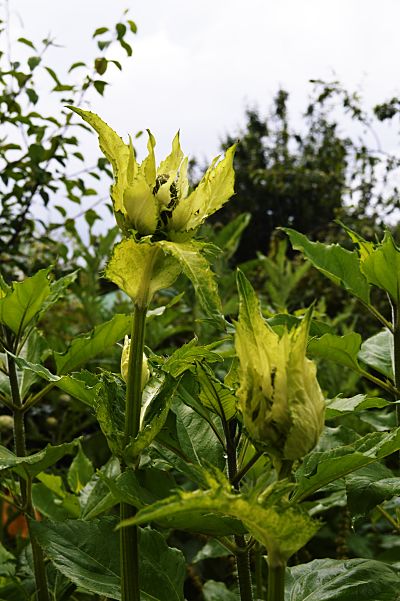
4ft – 5ft. 120 – 150cm.
Spacing
2ft. 60cm.
Pests and diseases
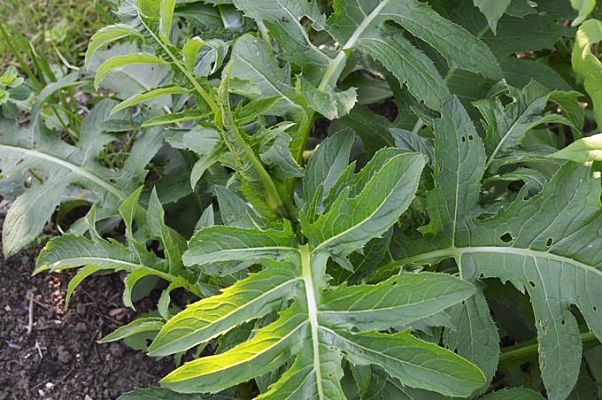
A resilient wild plant rarely troubled by pests and diseases. Slug will eat the new growth in early spring but the plant grows through the damage.
Harvesting and yield
The flavour is fairly strong but young leaves are mildest in flavour and acceptable in a mixed salad or cooked as a green vegetable. The roots are also edible. (I haven’t tried eating the roots and have no reports on their flavour.) They contain indigestible inulin probably to similar levels as Jerusalem artichokes. Plant one plant per two people. Thistles are generally known to be rich in minerals. Although a nutritional profile hasn’t been published for Cirsium oleraceum, this one for Scolymus hispanicus gives an idea of its likely nutrient levels.
How to propagate
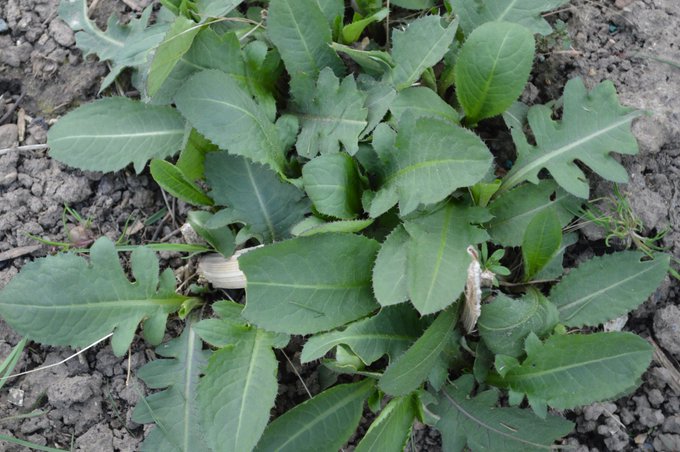
Sow seed in early spring or autumn. Germination usually takes place within 2 – 8 weeks. Divide mature thistles in spring or autumn.
Wildlife value
A good wildlife plant, attracting a wide range of butterflies, bees, beetles, flies and moths and a food plant for the larvae of many insects (The Database of Insects and their Food Plants). Birds feed on the seeds.
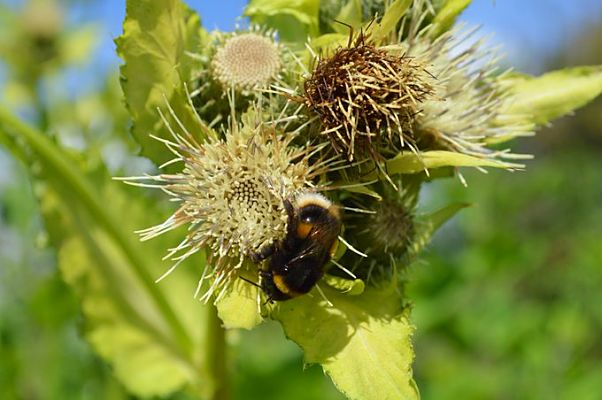
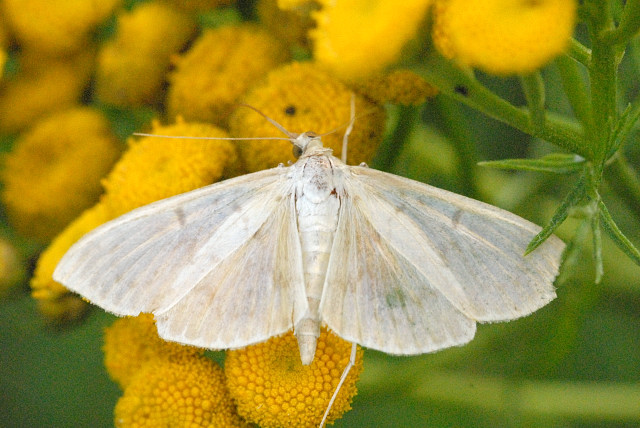
Cirsium oleraceum is a food plant for the Fenland Pearl , Phlyctaenia perlucidalis. James Lindsey at Ecology of Commanster, CC BY-SA 2.5 via Wikimedia Commons
Botanical name
Cirsium oleraceum Scop. 1769
Common names
Cabbage thistle, Siberian thistle, circe des maraîchers (France), moesdistel (Netherlands).
History
In Les Plantes potagères: description et culture des principaux légumes des climats tempérés, 1891, Vilmorin and Andrieux say,
‘It does not appear that Cirsium oleraceum has ever been cultivated anywhere. We were content to simply harvest it in the meadows, where it grows spontaneously.’
They add that ‘the swollen stump of the plant was formerly used as a vegetable, before it rose to flower’. But the cabbage thistle’s place in the kitchen garden may have been forgotten by then.
The Austrian botanist, Giovanni Antonio Scopoli, gave the cabbage thistle the epithet ‘oleraceum’ in 1769. Oleraceum, from holus (“vegetable”) + aceus, can be understood in various ways: used as a vegetable/herb, from the kitchen garden, fit for the garden etcetera. An indication that it may have been cultivated around that time.
Stronger evidence comes from an article from 1854 by Joseph Decaisne, a prominent French botanist. The article is about the merits of the Chinese yam for cultivation in Europe, but, in arguing his case for the yam, Decaisne writes,
‘To this may be added that almost all the old perennial plants of the kitchen-garden have been abandoned in favour of annuals, wherever the latter could be found with similar properties; thus Lathyrus tuberosus, Sedum telephium, and Cirsium oleraceum have given way before Potatoes, Spinage, and the like.’
Probably the earliest reference to cabbage thistle being cultivated is by Matthias d’Obell who has a description and illustration for Carduus pratensis tragi acanthifacie (Cirsium oleraceum) in his book Plantarum, seu, Stirpium historia 1576.
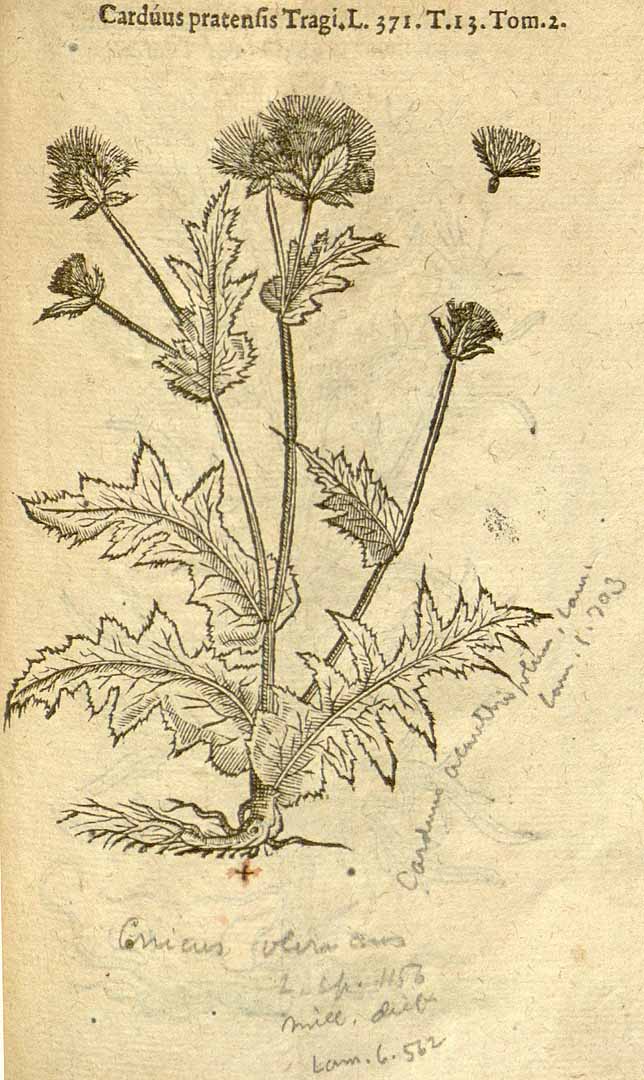
He adds the note ‘Morganus noster Londini alebat in horto’ referring to Hugh Morgan, apothecary to Elizabeth 1, growing it in his London garden. But Hugh Morgan was probably growing the plant for medicinal use or as part of a botanical collection rather than for food.