Sea Kale
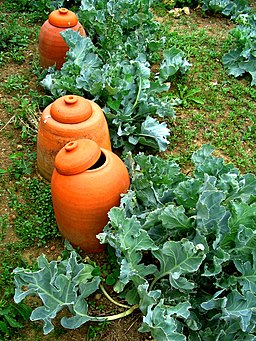
Sea kale (Crambe maritima) is a hardy herbaceous perennial that has thick, waxy blue-green leaves, and honey-scented flowers in summer.

It is a maritime plant which grows (predominantly) on the southern shores of the British Isles, and around the Baltic Sea, the Black Sea and the Atlantic. It has edible shoots, leaves, flower sprouts and seed pods and is a very easy and beautiful plant for the perennial vegetable garden.
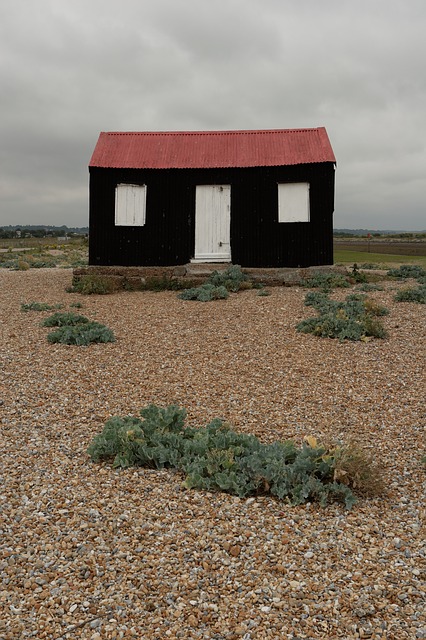
Andrew Virnuls from Pixabay
Hardiness
Hardy to about -28°C.
Soil conditions and location and cultivation
Sea kale is tolerant of a large range of soil types. It will however eventually rot at the stem/root junction in a clay soil but live on for many more years in a well-drained one. It grows well with moderate levels of moisture but will withstand drought for lengthy periods. A position in full sun is preferable although it may tolerate just a little shade. Annual mulches of garden compost help to keep it growing well.
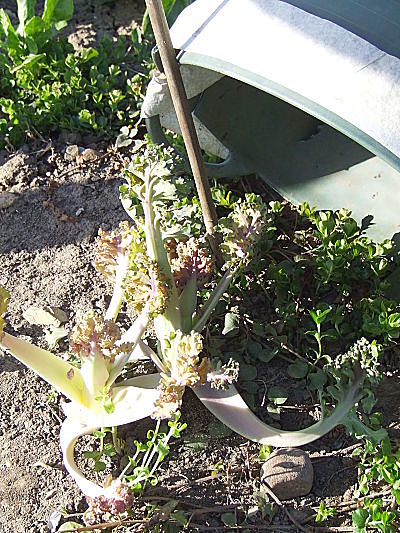
For the production of blanched shoots (popular for an especially mild flavour) place upturned buckets for about a month on two year or older plants when the first signs of new shoots are seen in late winter and remove the long blanched shoots for cooking as they appear. For blanched shoots earlier in the year plants need to be dug up in late autumn, potted up and placed in a dark, coolish place (59 – 70 degrees F) to sprout pale shoots over winter.
Height
2ft. 0.6 m
Spacing
2ft – 3ft. 0.6 – 0.9m.
Pests and diseases
No notable pests although if you blanch the stems look out for slugs under the blanching pots. Although cabbage white butterflies may lay eggs on the leaves, subsequent damage from the caterpillars is usually minimal. Rotting of the stem just above the root can be a problem in clay soils. Although the plants continue to leaf up for several years despite the rot, eventually they will succumb. Place sand around the neck of the plant in a clay soil.
Harvesting and yield
You should get a few meals of blanched shoots from each plant. Plants will go on to give lots of young shoots, leaves, flower sprouts and seed pods after blanching (and note that blanching isn’t essential). Pick the smaller, freshest leaves for eating steamed or sautéed. Pick unopened flower sprouts and cook like broccoli sprouts.

The seed pods should be picked at their greenest when they can be eaten raw (but not too many due to a high erucic acid content). They look like peas but taste of cabbage!
One plant per person is probably enough but it is often possible to find space for more because they make attractive additions to the flower garden.
How to propagate
Propagation is by seed, root cuttings or division.
Sea kale seed is found in spherical seed capsules. Cracking open the seed capsule before sowing makes a significant improvement in germination rates. Seed is best sown individually in small pots as sea kale seedlings dislike being disturbed when they are very tiny. Pre-germinating the seed is possible to avoid wasting compost.
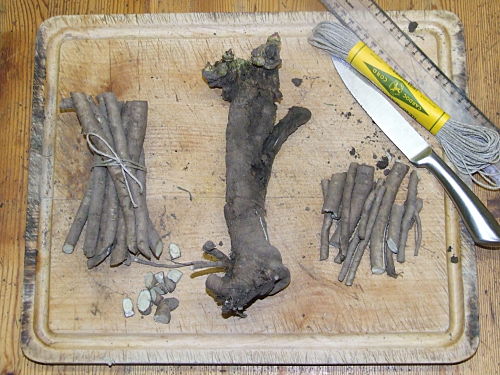
For root cuttings the traditional method is to cut 15cm ‘thongs’ from the roots in late autumn. You make a straight cut at the end closest to the plant and a slanting cut at the farther end so that you don’t forget which end is which. Then the cuttings are tied into bundles and stored upright in slightly damp sand in a cool place with their tops just below the surface. The following March, when the buds should be just breaking, rub out all but the strongest bud and plant the cuttings with the buds 2.5cm below the soil surface.
Wildlife value
Sea kale is a food plant for various flea beetles, weevils and the large and small white butterflies.
Botanical name
Crambe maritima described by Linnaeus in 1753.
Common names
Sea kale. Sea cole. Seakale. Sea colewort. Crambe.
History
When Pliny the Elder writes about a plant known as halmyridia – that he describes as a type of cabbage which is held is high esteem, only grows on the sea shore, is low-growing and which will keep fresh for long sea voyages if sealed from the air in vessels previously used for oil – it seems very likely that he is describing sea kale.
Alan Davidson (2006) writes that sea kale was being forced in Italy in the Middle Ages and that it’s use spread from there reaching England in the seventeenth century. But there was interest in the plant growing wild in England early on too, as specimens of the plant were sent to the continent by two of the herbal-writing physician-botanists of the age, Matthias de L’Obel and William Turner (Maher 1806). Turner died in 1568.
Various naturalists in the late eighteenth century (Dr Lettsom around 1766 (as recounted by Jane Louden 1846), Miller 1768, Bryant 1783) explained that people who lived near to the shores where the sea kale grew would pick it from the wild in the spring taking advantage of the shoots being naturally blanched by the depths of sand and shingle through which it grew. William Curtis (1799) reported that it was also often taken into gardens and that in Devonshire especially, ‘every gentleman has a plantation of it for the use of his table’. Cultivated sea kale had been seen for sale by his friend in Chichester market in 1753.
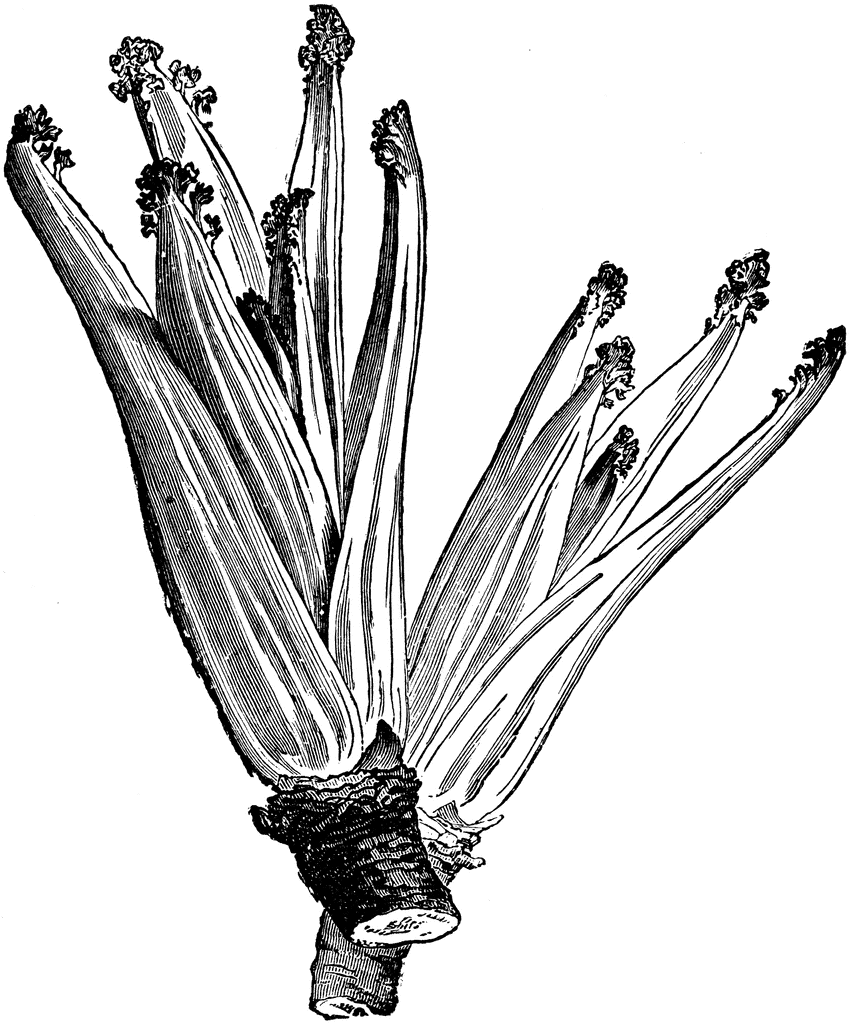
Curtis had a strong desire to introduce it to the London markets and to society more widely and he wrote a pamphlet called, ‘Directions for the Culture of Crambe Maritima or Sea Kale, for the Use of the Table’ (1799). In the nineteenth century numerous very detailed accounts of its cultivation appeared in gardening journals and books, as well as many reports of it being sold in Covent Garden and by costermongers on the streets of London (e.g. Mayhew 1862).

As the Victorian era came to an end sea kale began to disappear from the menu, perhaps because many walled kitchen gardens attached to big houses where it was traditionally grown began to be closed down, and costs for its labour-intensive production by market-gardeners rose. But it is now enjoying a slight upturn in popularity again as wild vegetables become fashionable in restaurants, foraging is promoted by books and television programmes and gardeners seek perennial vegetables for more environmentally friendly vegetable production.