Homegrown Perennial Rye Bread
Alongside perennial vegetables I grow some perennial grains. One of them is perennial mountain rye (Secale montanum).
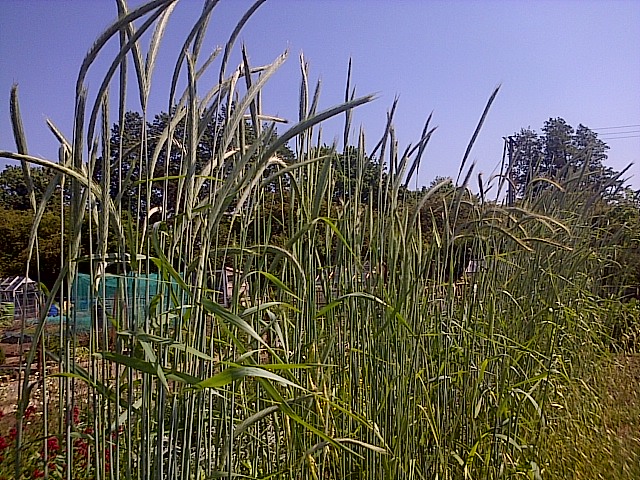
This was only sown in spring last year but it is said to live for 2-8 years (and longer in poorer soils).
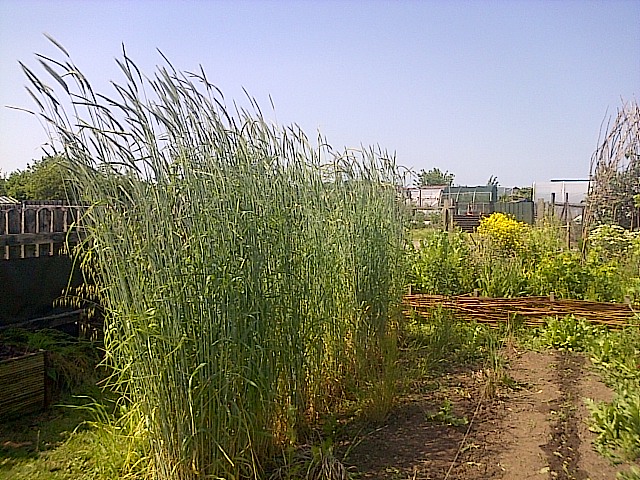
I harvested it in July.
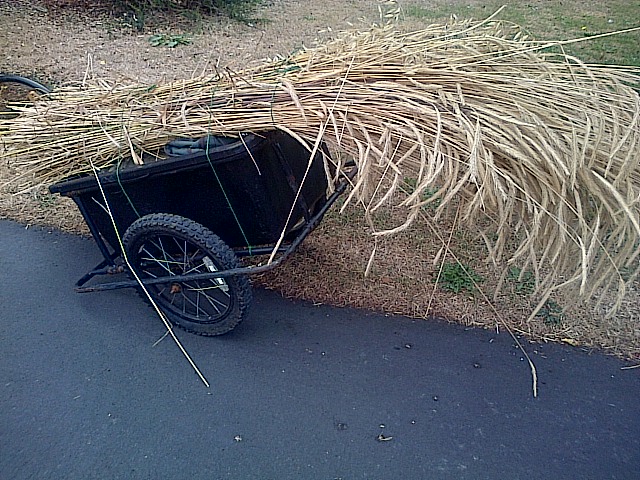
And processed it at home…
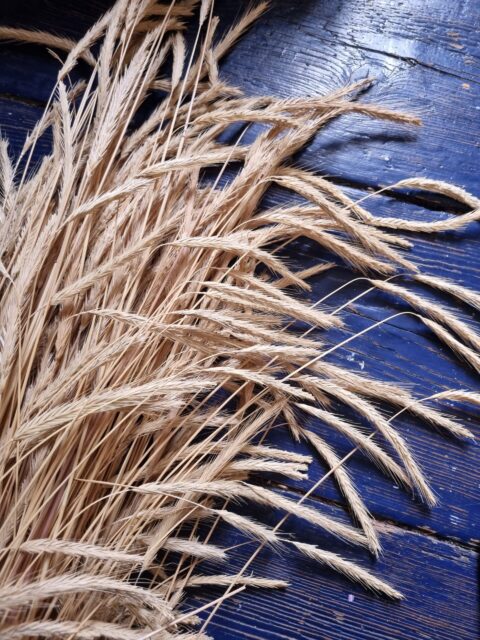
…cutting off the heads…
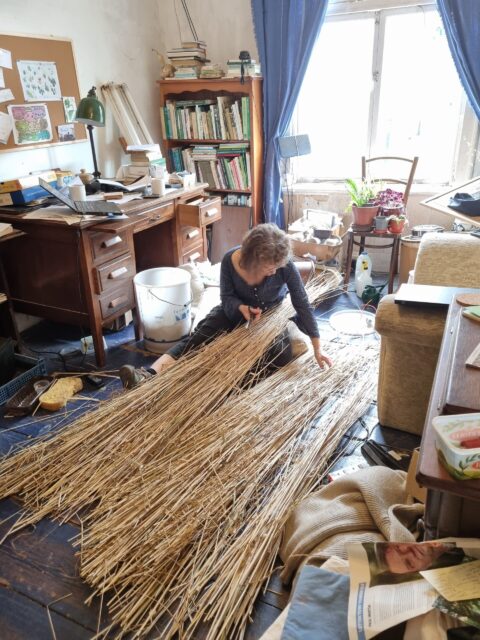
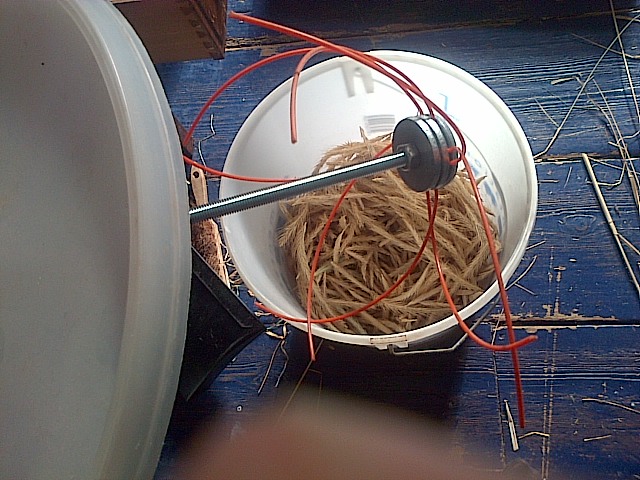
…and threshing them in a bucket with a home made threshing drill attachment (see Aaron Parker’s great instructions for making this thresher here).
Then I took it out to the churchyard across the road to winnow it in a flat basket – inexpertly, but well enough!
I got 550g of grain from that one 12 ft row – plus a little bit that still needs threshing.
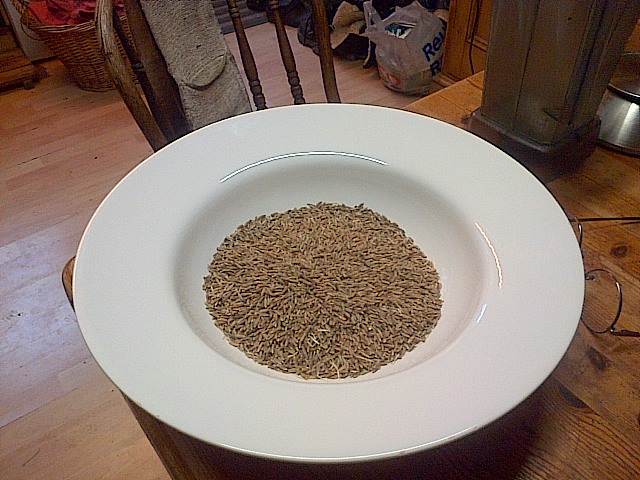
Yesterday the Vitamix blender quickly transformed it into flour.
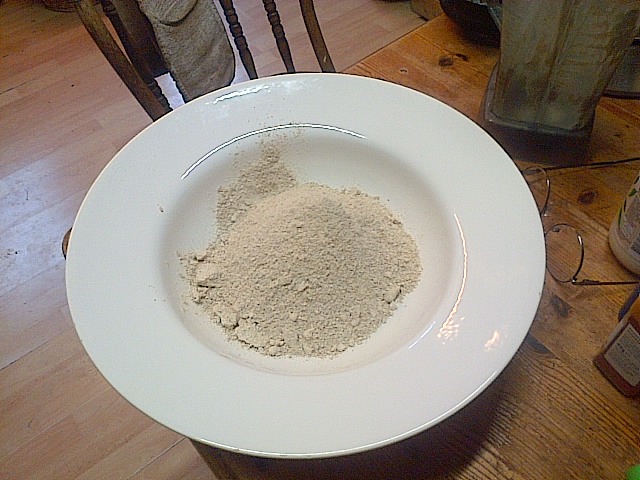
Well, that was the easy part. I wanted to make 100% rye bread and so followed this recipe from Jane Mason of Virtuous Bread. She explains in detail how to make a pure rye loaf which is ‘light and moist and delicious’. I kept things really simple – just the rye, water, dried yeast, molasses and salt.
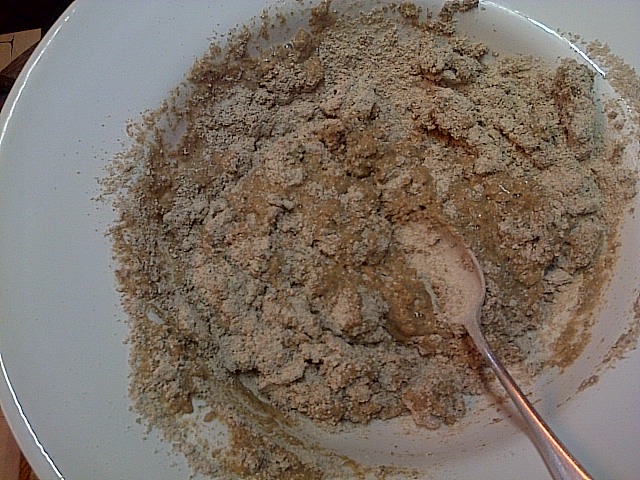
I only had instant yeast in the cupboard which Jane warns against for rye, but says that it can sometimes work if you mix with warm water and something to feed it. It didn’t seem to be rising so I went out to buy dried, but not instant, yeast, and tried again with the 250g grain I had left. This time it did rise.
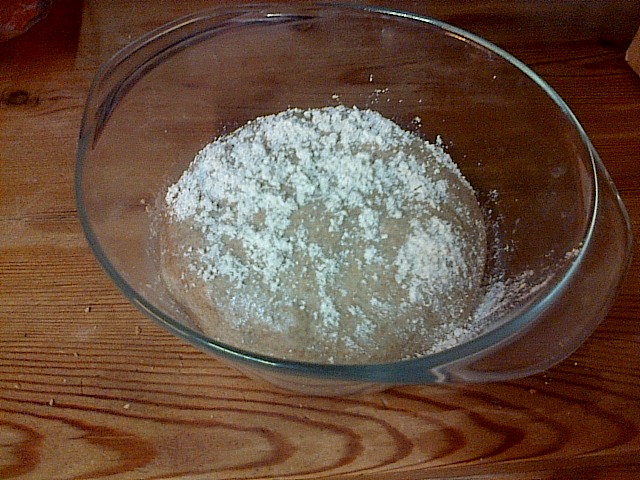
I baked this second loaf but mucked it up by prising it from its glass bowl after 30 minutes, feeling I needed to flip it to get it to bake right through. The result was dense and still doughy.
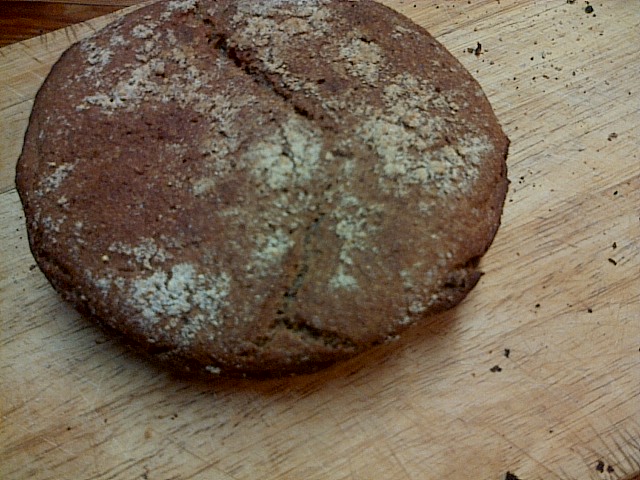
Meanwhile the instant yeast dough started to rise. I left it overnight and baked it this morning, ending up with a better loaf than the first, and a fairly light one. But flat (as I only have 2lb loaf tins which are a bit big) and still too stodgy. Edible, in the way that failed bread can be but no, not right! And the recipe has too much salt for my taste – I’ll halve it next time.
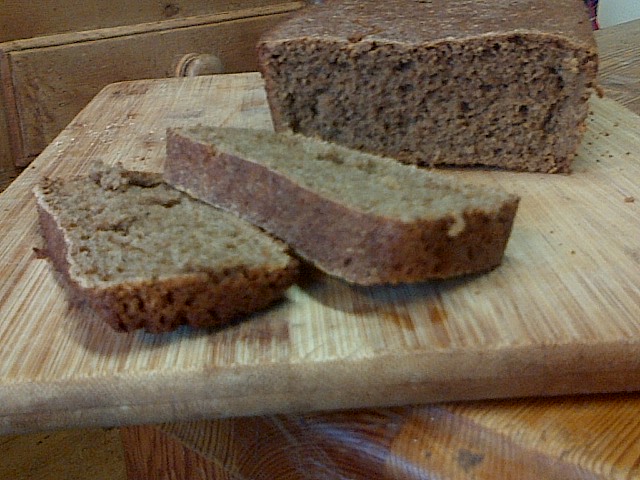
I do believe Jane Mason that pure rye bread doesn’t have to be dense – I just need to perfect the art. That will be next year when I grow more grain. I grow a little Salish Blue perennial wheat also and had a plan to forego most of my annual vegetable growing next year and grow half a plot of perennial wheat. Now I’m thinking I might try a quarter plot of wheat and a quarter plot of rye. (By the way, if anyone is looking for perennial wheat or rye seed I sometimes have a little to share. Email me and I’ll let you know if I have spare.)
I’m reading that although rye and barley were once the chief bread grains in Britain they began to be superseded by wheat from about the beginning of the 18th century. Rye loaves re-emerged during the second world war as ‘War Bread’ when wheat was hard to come by, which meant they continued to be associated with hard times. But more recently rye has experienced a revival as part of the real bread movement.
As a footnote I have a ‘claim to fame’ regarding rye bread. Some of my ancestors were amongst the early Jewish immigrants from Eastern Europe into Leeds and they brought their love of black bread (rye bread) with them. My great-great-grandmother is the Chayie (Chaie Raisman) in the passage below, from ‘The Undark Sky‘ by Geoffrey Raisman. She is celebrated there for introducing the baking of black bread to the Leylands, the area of narrow streets and poor back-to-back houses in Leeds where the newcomers made the best of things in their new country.
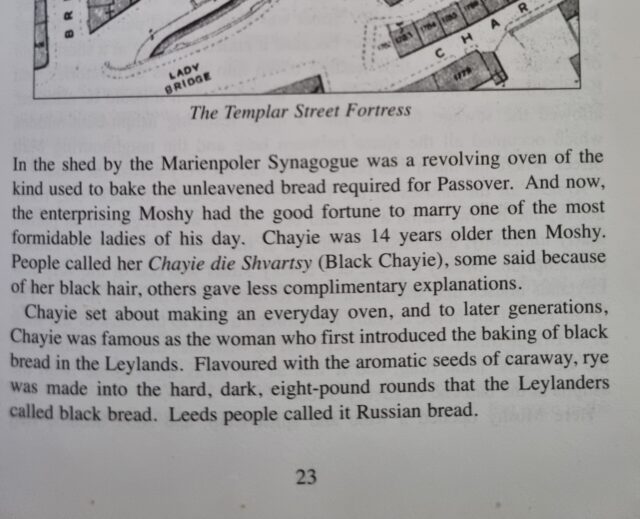
Chayie would not have thought much of my rye bread (no caraway, even apart from the stodge element) but I am not disheartened. Somehow it is very grounding to grow grains, make the flour and bake the bread.
Stuart Holt
I think that you did a really good job considering that you have done nothing like this before. You should be proud of yourself. I am interested about the revolving oven, which book is this an extract from?
Alison Tindale
Thanks Stuart. The book title is mentioned above actually. ‘The Undark Sky‘ by Geoffrey Raisman. There is another passage on p.80 of the book about the revolving ovens. ‘At Passover Hoshy looked after the matsy ovens. Matsy is unleavened bread. To preserve its sacred unleavened state, the flour and water, once mixed, must be baked instantly and rapidly, lest some fermentation occurs and leavens the dough. To do this specially constructed rotating ovens were used, and as Hoshy tended them the children would cluster eagerly around him, waiting for a glimpse through the oven door of the jets of flames as the circular baking plate rotated.’
Margaret Powell
Alison this unleavened bread being baked in haste rapidly is accurate biblically as the Egyptians would have been quick to react to the ‘angel of death’s’ attacks on the first born so the Israelites couldn’t waste time slowly souring their bread. I have made traditional rye sourdough and it has a wonderful flavour and texture when seeds are added as a bonus! It is worth the wait now!
Alison Tindale
I’ve heard it is delicious. Hope to make it one day.
Michele Bland
Hello, I’ve been trying to buy some perennial wheat for about a year but no-one here (France) seems to have it. Is there any chance of you selling me maybe 10 grains and posting them to me, please?
Alison Tindale
I’ll email you.
John Wikström
An interesting read!
Here in Scandinavia rye bread is quite common. It used to be more so. Pure rye bread can be a bit tricky to come by, but rye hard bread (Knäckebröd) is still standard fare here.
Perennial grains are really interesting! Were you able to harvest some rye in its first year also? And since you brought it up – would you maybe happen have some salish blue seeds to sell?
Alison Tindale
Just looking up Knäckebröd now. Rye crispbreads hanging up by the hole in the middle – they look and sound tasty! I don’t think I had any rye the first year – or not much anyway. Perhaps it needed to be sown at the end of the previous year.
I’ll email you about the seeds.