A Bash at Cooking Pash
Pash is the Chumash name for soaproot, Chlorogalum pomeridianum, a perennial bulbous plant from California and Oregon. Above a rosette of strappy leaves rise airy panicles of striped buds which open in the evening to reveal delicate blooms of the palest blue.
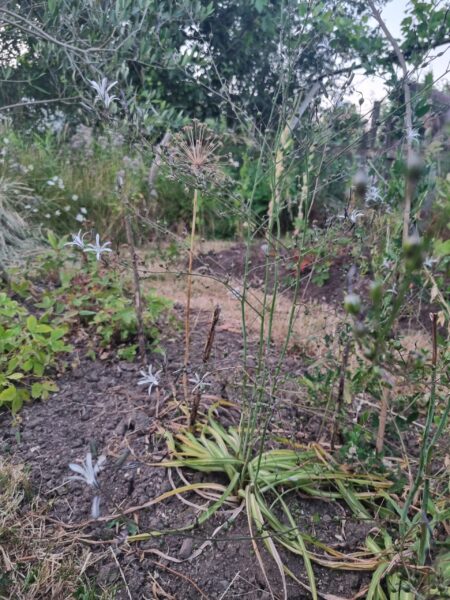
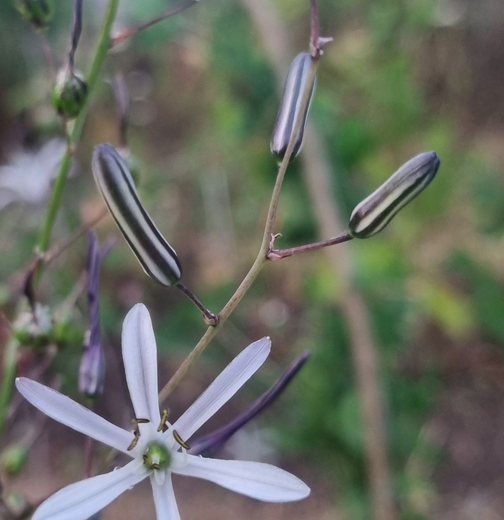
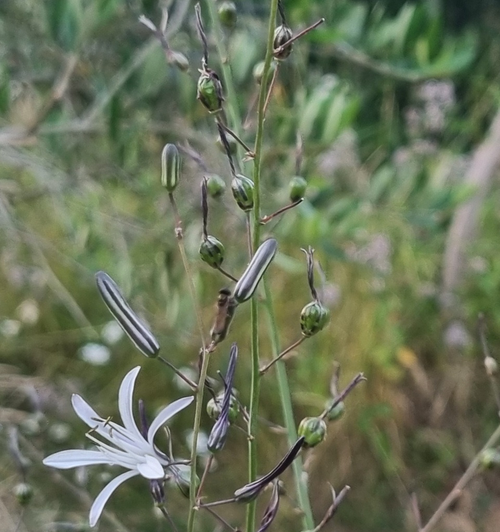
The bulb is edible when thoroughly cooked to remove the bitter, somewhat toxic, saponins. That’s my main interest in it, but true to its name it is also a source of soap, and the coarse fibres surrounding the bulb can be used to make brushes.
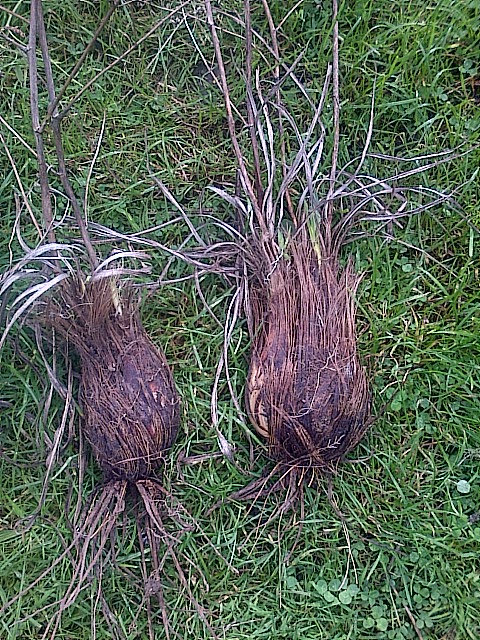
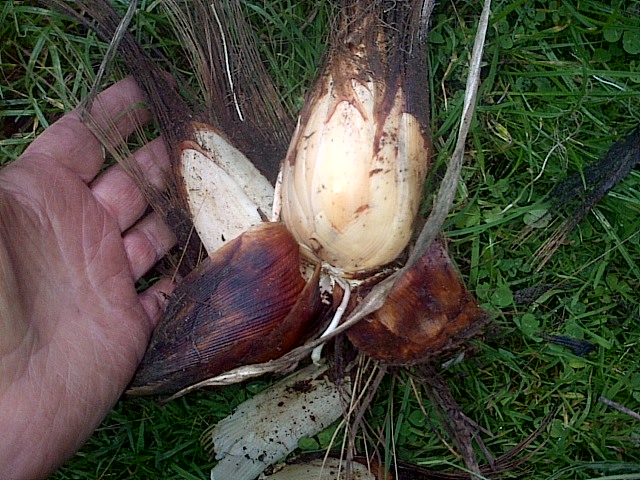
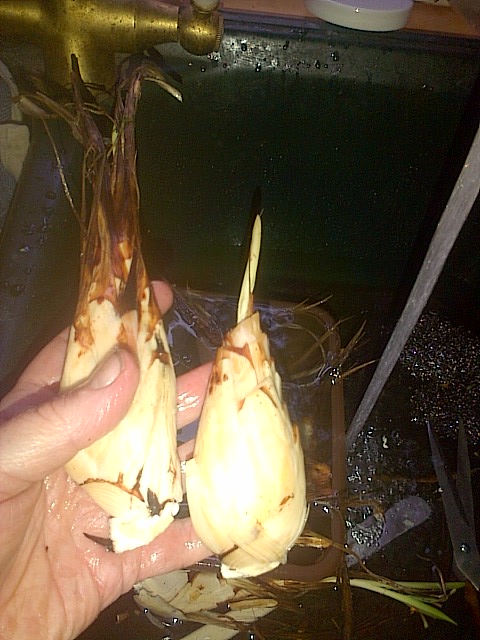
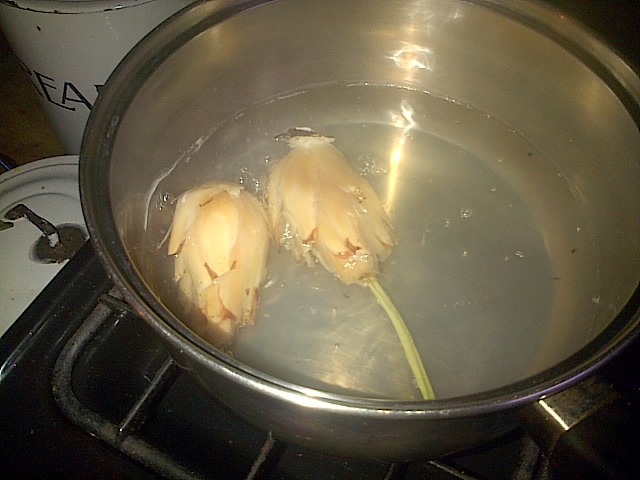
The bulbs are traditionally cooked slowly in pit ovens or roasted over hot coals. Not wanting to put the oven on for just two bulbs I chose to boil them for forty minutes.
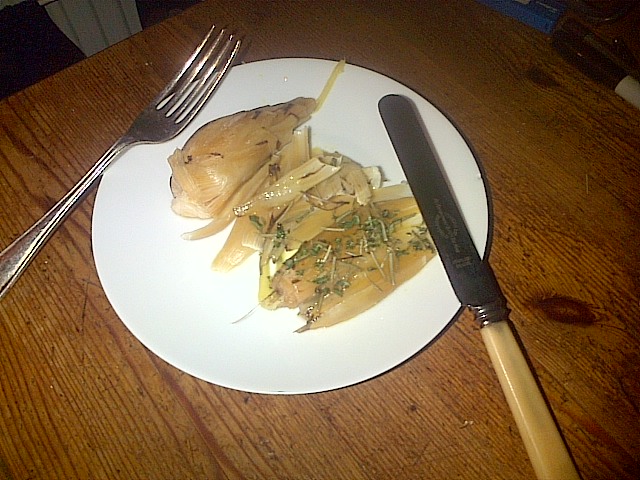
A disappointing result. The bulbs had very little flesh. They were a mass of tough fibres.
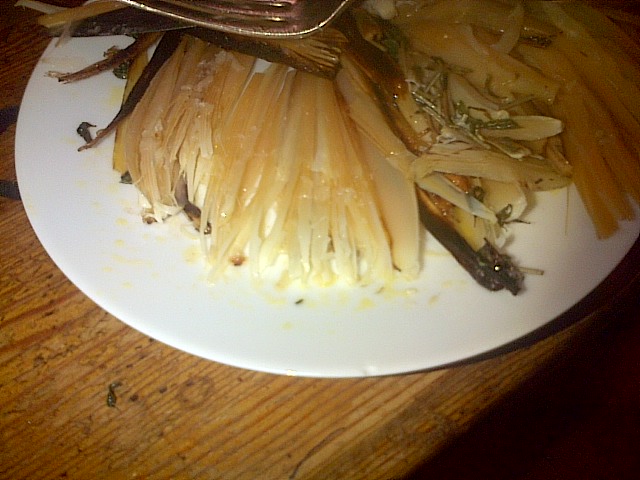
A couple of the inner scale were slightly more starchy. I got a hint of what they should taste like by scraping these two though my teeth as one eats a globe artichoke scale. The starch was pleasant, and slightly potato-like.
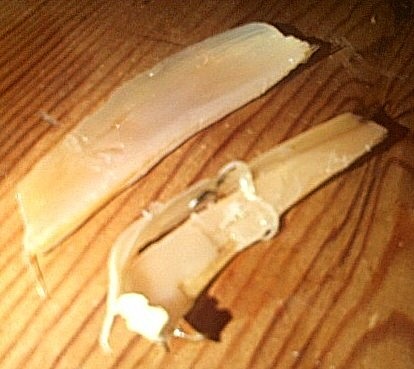
The mostly likely explanation is that a UK summer, being wetter and cooler than the summer in California, even in a year with heat waves and drought, doesn’t allow the formation of much sticky sugars in the bulbs and the fibres are therefore far more dominant. Perhaps the fibres are also tougher, as cooking accounts from Chad Zuber in California don’t seem to mention finding them in the bulb interior. One thought that occurs is that the bulbs had just started to re-sprout after flowering: perhaps they might have been starchier and less fibrous a few weeks earlier (they flowered in July). Also, the bulbs are growing in a clay soil heavily amended with grit and sand but one that could still be even better drained. I could try planting some on a slope, on a bed of pure grit and in a more sheltered spot.
I turned to the question of shampoo. Mushing the bulb in a mortar with a little water very easily produced a lather.
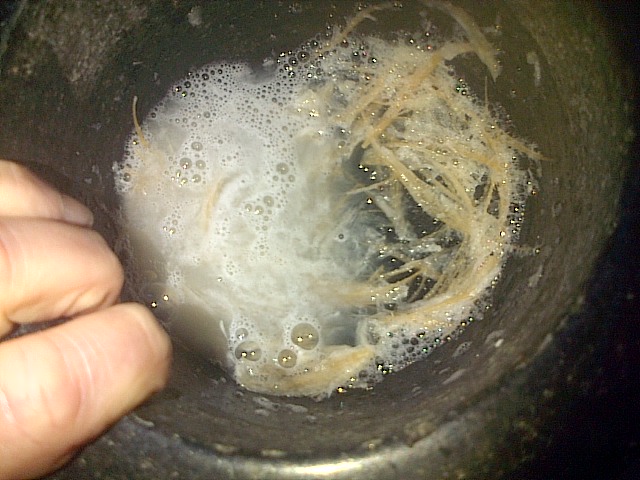
I strained the frothy liquid from the mush and washed my hair with it.
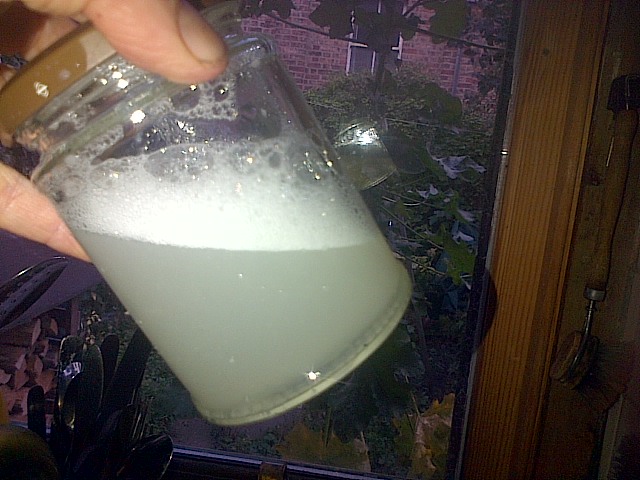
It seemed to work well. My hair feels clean but not dried out (I’m generally a no-shampoo person, just rinsing my hair in water. Occasionally I wash it in olive oil soap or a bit of Vosene but the latter does make it over-dry for a few days until the natural oils improve things again.)
So a pash bash crash, really – but saved by the mash!