Stingless Nettles
My hands are tingling. I’ve been rubbing them over nettles to find out if they are stingless. Sometimes they aren’t!

I started my search for stingless nettles in 2018 after reading a tweet from @ForestGdnWales enquiring about the fen nettle growing at Wicken Fen and whether it was truly stingless. @Wicken Fen replied that it was. I agreed with @ForestGdnWales that nettles are a great perennial vegetable but that stingless ones might be even better! See ‘The Lure of the Stinging-less Nettle‘ on the Forest Garden Wales blog.
I was planning a trip to Cherry Hinton Chalk Pits in Cambridge at the time to look for the greater pignut, Bunium bulbocastanum, and decided to include a visit to nearby Wicken Fen, a lovely nature reserve I enjoyed visiting once as a child. On what must have been the hottest day of 2018 I toiled, on my hire bike, to escape the horrendously busy traffic of Cambridge. Once out in the quieter countryside the ride was more enjoyable, despite the sweltering heat, with lots of wildflower interest. The fen nettle was very abundant along the board walks at Wicken Fen. I collected a little seed, but have since failed to germinate any of it.
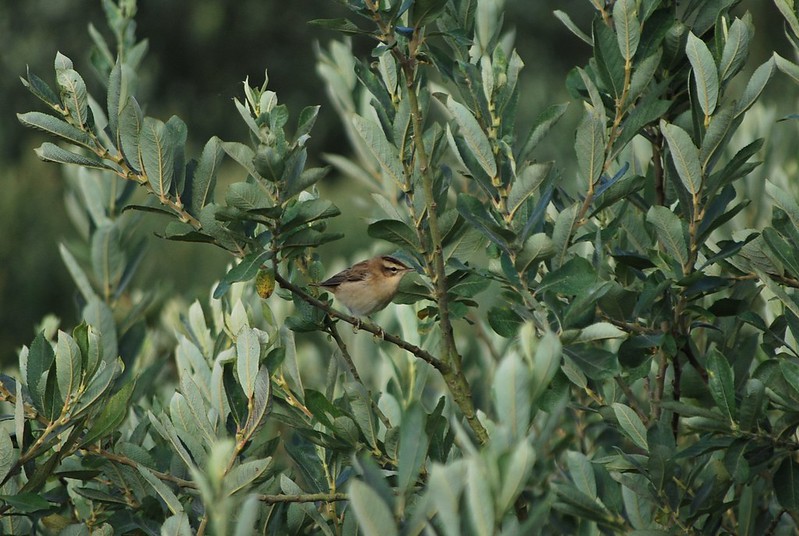
Warbler at Wicken Fen nature reserve
Fen nettle is considered to be either a subspecies of stinging nettle (Urtica dioica subsp. galeopsifolia) or a different species (Urtica galeopsifolia). The differences between the two are that fen nettle has:
- no (or very few) stinging hairs
- narrower leaves relative to their width than stinging nettle
- flowers that appear on the stem between the thirteenth and twenty-second node from the base of the plant rather than between the seventh and fourteenth on stinging nettle.
- Also, invisible to the naked eye, fen nettle has only two sets of chromosomes in its cells (it is diploid) whilst stinging nettle has four sets (tetraploid).

Fen Nettle Richard New Forest / CC BY-SA
However there are tetraploid nettles that look quite similar to the diploid fen nettles. It is considered that these are likely to be hybrids of the two. McCallister (1999) who studied such similar diploid and tetraploid plants developed the following key to distinguish them:
Leaves relatively long and narrow with very few stinging hairs, especially on upper surface of leaf; not flowering till mid July; lowest flowering on 13th to 22nd node; tomentum of non-stinging hairs appearing fine with hair bases 20-25 µm across (detectable by comparison with U. dioica using 20 x hand lens) …………………………………..U. galeopsifolia
Leaves very variable but with some conspicuous stinging hairs on the upper surface of the leaves; flowering from June; lowest flowering on 7th to 14th node; tomentum of non-stinging hairs appearing coarser with hair bases 25-35 µm across ………………. U. dioica
Interestingly several accounts of fen nettle mention that it may be more widespread in Britain than is usually acknowledged. After my Wicken Fen trip I had my eye attuned to differences in nettles and was intrigued to find apparently stingless nettles first in Dalby Forest on the North York Moors. And then just a few days ago in the very garden where we grow our perennial vegetable sale plants! The garden is in quite a damp area (areas of it flood each winter) but I then also found stingless nettles on higher ground in the hedgerow on the way to the allotment. (To cap it all, looking back through Twitter posts on fen nettle, there I am mentioning a stingless nettle I found in the greenhouse in the same garden even before my Wicken Fen trip. I’d completely forgotten this.)

‘Stingless’ nettles in the garden
I don’t have a powerful enough hand lens to apply McCallister’s hair base criterion to see whether these stingless nettles are diploid plants. With regard to the other criteria I could run my hands up and down the downy upper leaves and stem repeatedly with no ill-effect – but looking closely at my photographs I can actually see ‘stinging’ hairs both on the upper surface of some leaves and on the stem – although they do look shorter than the ones on nearby stinging nettles.

Close-up of ‘stingless’ nettle in garden
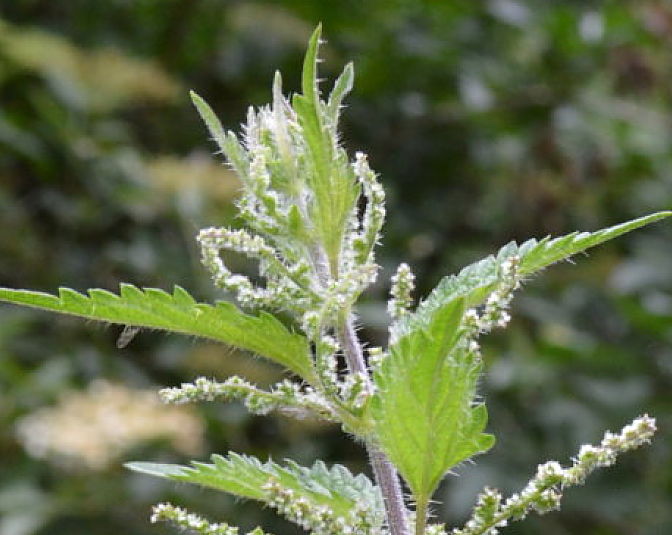
Close-up of stinging nettle in garden
And I discovered there were at least a few viciously stinging hairs lower down on the stem! The leaf shape was variable with leaves near the top of the stem appearing to be relatively narrow but with wider leaves lower on the stem – and the flowers emerged no lower than the fourteenth node on all the plants I examined. Some of the nettles were only just coming into flower but others were more advanced (end of June). So it looks like these are tetraploid hybrid plants.
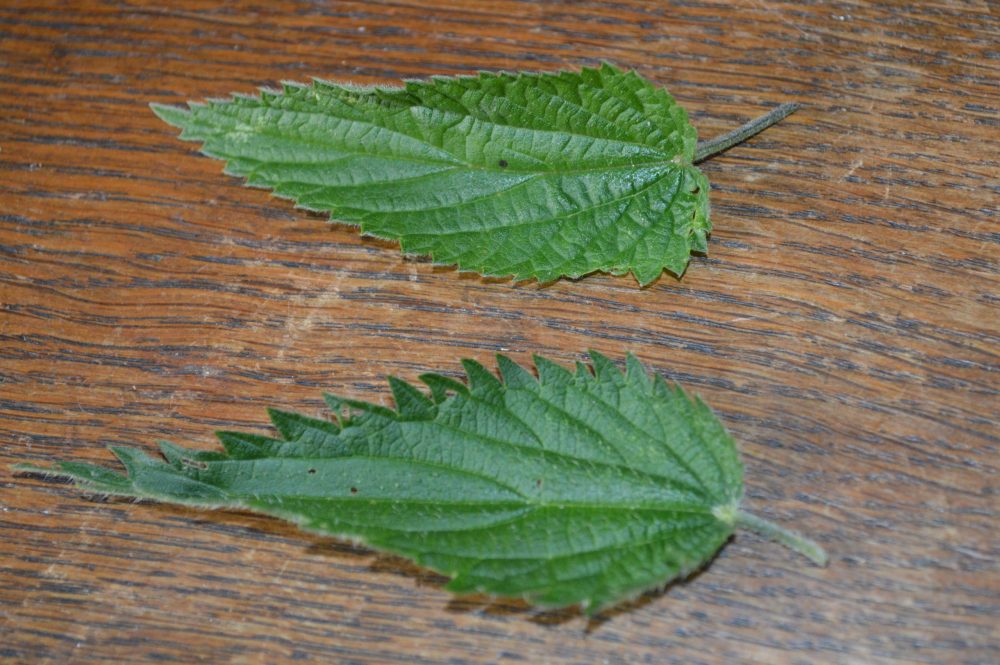
‘Stingless’ nettle leaf above, stinging nettle leaf below
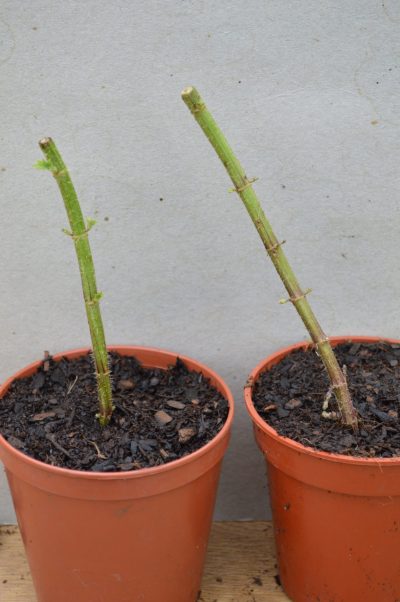
I have potted up a couple of non-stinging plants and plan to grow my own patch of them on the allotment. They will be handy for harvesting on days when I have forgotten my gloves!
Scott Fensome-Kemp
I think I have a stingless nettle in my garden. I remember seeing it and thinking it looked a bit different to a normal nettle. It was growing with some deadnetttles. I pulled it out and just thought I was clever cos I didnt get stung. I didn’t know stingless varieties existed lol. I’ll have to see if its grown again
Alison Tindale
I keep touching nettles now! I seem to be finding a lot that don’t sting in the upper part of the stalk (I’m not quite brave enough to grab the lower leaves and stalk). I’m wondering if the flowering stems are less stingy generally on nettles or if I’ve become a bit immune to the smaller stings! Would quite like a way to test them without getting stung!
Clare Q
Yes I think so. I was always told as a kid that nettles don’t sting when in flower. In my personal experience that isn’t really true, but we definitely have the stinging kind here!
MissWerecat
Oh, i have sting nettle and burning nettle (urtica urens). I like the 2nd more, it’s nicely warm and tingeling. ?
Alison Tindale
Whatever makes you feel good!!
Jacqui Knight
Do the stingless nettles attract admiral butterflies (Vanessa spp.)?
Alison Tindale
Sorry I don’t know Jacqui. Will try and find out.
Harry Audus
I was raised not too far from Wicken Fen, in Soham, and what we called sweet nettles were very common. Their leaves were thicker than stinging nettles’, the points were more rounded, and the flowers were little white bobbles next to the stem. We used to pluck them off and suck the nectar from them. Maybe this was a different nettle altogether from the fen nettle? Anyway, I can’t find any references to “sweet nettles” on the web. What do you think?
Alison Tindale
Hi Harry, might they have been white dead nettles do you think? https://totallywilduk.co.uk/2020/04/29/identify-dead-nettle/
Harry Audus
Yes! Thank you Alison. So it’s not a similar species or subspecies of stinging nettles. That accounts for why I had so much trouble finding it.
Alison Tindale
It is in the mint (Lamiaceae) family rather than the nettle (Urticaceae) family. But as you noted it has its edible uses too. The leaves can be used as a cooked green and also in mixed salads and are quite nutritious. They grow on one of our allotments but weren’t really on my mental list as a vegetable to gather- so thank you!
DJ
Found some stingless Nettle here in San Antonio today while searching for the stinging ones. Did not find the famous stinging one. Got confused and wondered why they didn’t sting at all. Will do more research and find out what they are edible and if they have medecinal potentials
Alison Tindale
Good luck and let us know!
JOHN DENNING
I bought stinging nettle seeds and they came up very weakly the first year. This spring they came up strong and are getting tall but don’t sting. Smell like nettles but no stinging hairs
Alison Tindale
That’s interesting John. Where did you get the seed? Mine all have some stingers.
Ruthven Walkins
Is the stingless nettle just as beneficial/potent as the stinging variety re enhancing the male genital tract, urinary system,etc.?
Alison Tindale
I don’t know Ruthven. I haven’t seen a nutritional comparison for the two varieties or species of plants. I would have thought that they were very similar but with stingless nettle just having less histamine and formic acid – but I don’t know that for sure. What are the active ingredients in nettle which make them helpful for male genital and urinary problems?
Ian Firth
We have a stingless nettle which we have tried to identify. I looks exactly like a stinging nettle (of which we have many) but has a slightly menthol smell when you rub a leaf between your fingers, it’s about 2 foot tall and I would love to know what it is. There are no signs of flowers yet (late June) so I can’t use that to help identify it. It’s a mystery!
Alison Tindale
Yes, a mystery. As it has a slightly menthol smell it sounds as if it might be in the mint family. If so the stem will be square in shape. Dead-nettle is in the mint family and looks very much like nettle but is not usually described as having a menthol scent. Perilla is a possibility but that is a frost-tender plant in the UK (if that is where you are) so only likely in a planted situation.