Edible bulbs and corms
My introduction to this subject ten years ago was Rhizowen of Radix’s ‘Bulbous Belly Border’ posts. I’ve always thought that was a particularly inspired title! The content inspired me too, not being very aware at the time that there were edible bulbs other than onions and garlic. I loved the idea of having a display of beautiful bulbs that was also a secret food stash!

Allium ursinum, ramsons
So the following list is the result of an afternoon’s research on what might go in that display. I’ve kept to bulbs or corms (not tubers or rhizomes) and just those which are hardy in the UK (some may be borderline) and where the bulb/corm itself is edible (i.e. not bulbous plants where it is only other parts which can be eaten). The list is just offered as a starting point – I’m only growing some of these and have eaten only a few of the ones I am growing. I’ve omitted some bulbs of disputed edibility such as tulips and certain Ornithogalum species. But caution is still advised, i.e. doing your own research before deciding that something is edible and then how to safely prepare it, initially eating only a little of the new food, being aware that bulbs sold as ornamentals may have been treated with toxic chemicals and that people can have individual adverse reactions to certain plants.
Allium Many candidates in this genus, but those with larger bulbs include Allium cepa (common onion), Allium ampeloprasum ampeloprasum (elephant garlic), Allium ampeloprasum babingtonii (Babington’s leek), Allium cepa aggregatum (shallot and potato onion), Allium sativum (garlic), Allium cepa proliferum (tree onion), Allium porrum (leek – may develop a rounder bulb in second year), Allium ursinum (wild garlic or ramsoms), Allium stipitatum, hirtifolium, altissimum (all known as Persian shallot).

Allium altissimum ‘Goliath’, Persian shallot
Camassia Camassia quamash (small camas), Camassia leichtlinii (great camas), Camassia scilloides (Atlantic camas). (Note potential confusion with various species of toxic ‘death camas’.)
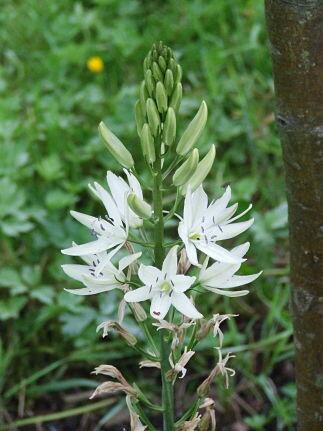
Camassia leichtlinii ‘Alba’
Calochortus gunnersonii (Gunnison’s mariposa lily) Also other Calochortus species – very hardy but require good drainage and to be kept dry from mid-summer and on through winter.
Dichelostemma capitatus (Blue dicks) Requires good drainage especially in winter.
Erythronium Many edible species including Erythronium americanum (trout lily), Erythronium dens-canis (dog’s tooth violet), Erythronium californicum (fawn lily).
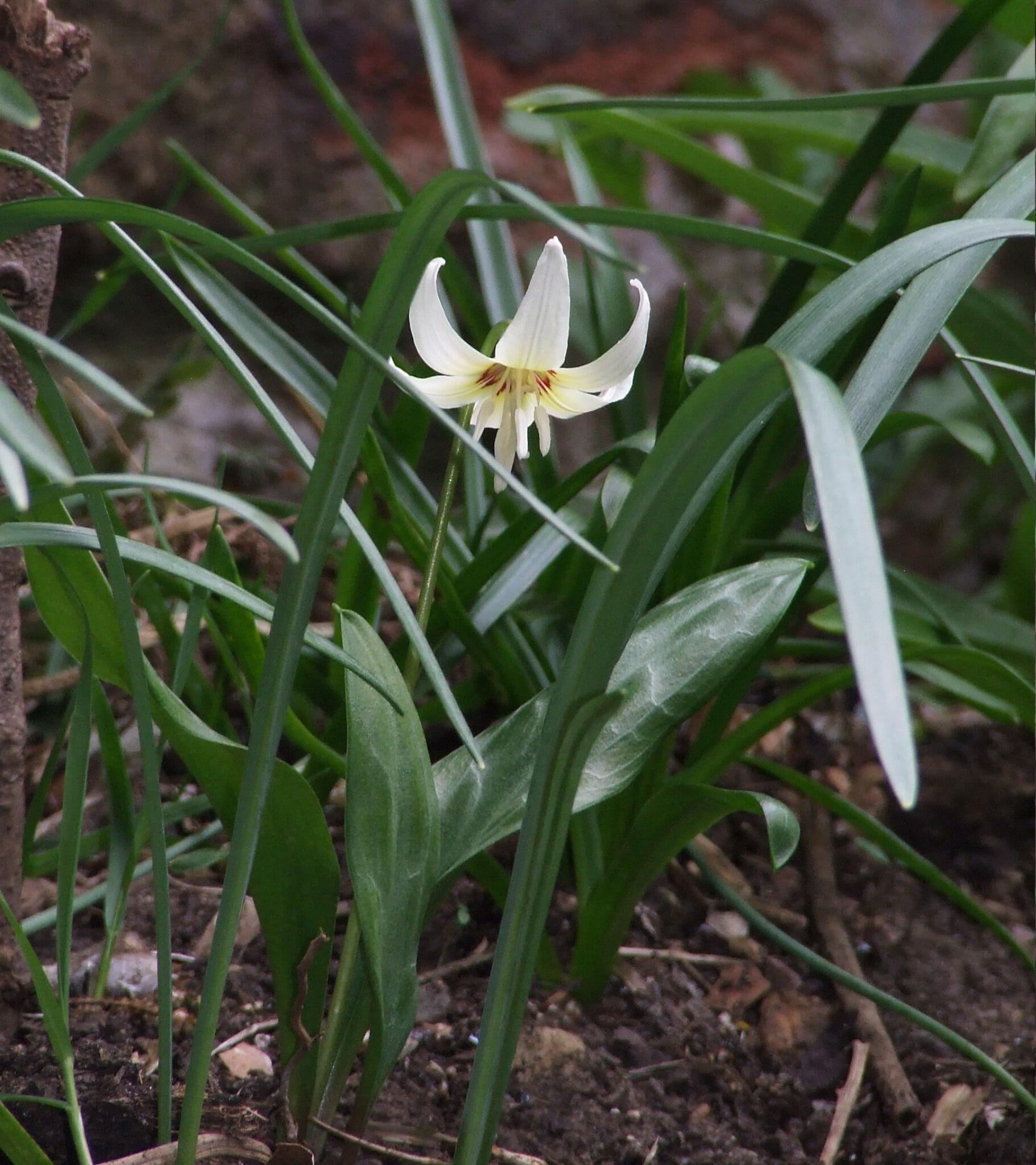
Erythronium californicum ‘White Beauty’
Leopoldia comosa (tassel hyacinth, lampascioni).
Lilium Many edible species including Lilium candidum (Madonna lily), Lilium brownii (Hong Kong lily), Lilium lancifolium (tiger lily), Lilium pumilum (coral lily), Lilium dauricum (Siberian lily), Lilium columbianum (Columbia lily), Lilium canadense (Canada lily), Lilium paradalium (leopard lily).
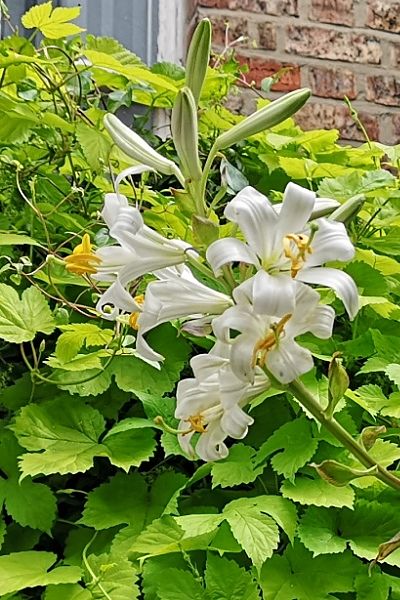
Lilium candidum, Madonna lily
Tigridia pavonia (cacomitl, peacock flower – may need to be lifted and stored in winter.)

Tigridia pavonia, cacomitl.
Triteleia Including Triteleia laxa (grassnut), Triteleia grandiflora (large flower tripletlily), Triteleia ixioides (pretty face), Triteleia peduncularis (longray tripletlily).

Triteleia laxa, grassnut