Caucasian beet – another forgotten vegetable?
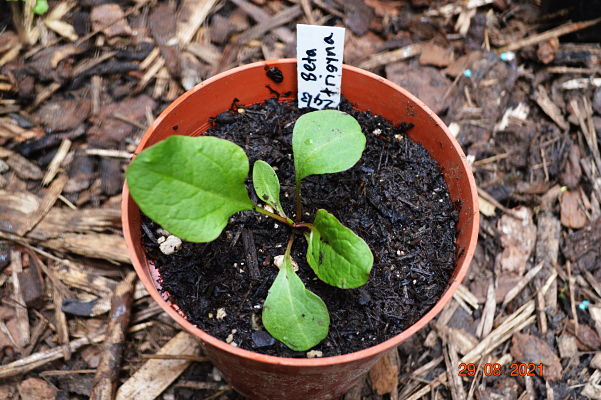
I wonder what this little plant will bring us. It is Beta trigyna, a hardy perennial plant, sometimes known as Caucasian or Turkish wild beet.
Beta trigyna is native to Caucasus, Western Asia and Eastern Europe and was introduced into Czechoslovakia, France, Great Britain and Sardinia. It was first described by Franz de Paula Adam von Waldstein and Pál Kitaibel in ‘Descriptiones et icones plantarum rariorum Hungariae. Vol. 1’ (published 1800). And their book includes the following illustration too.
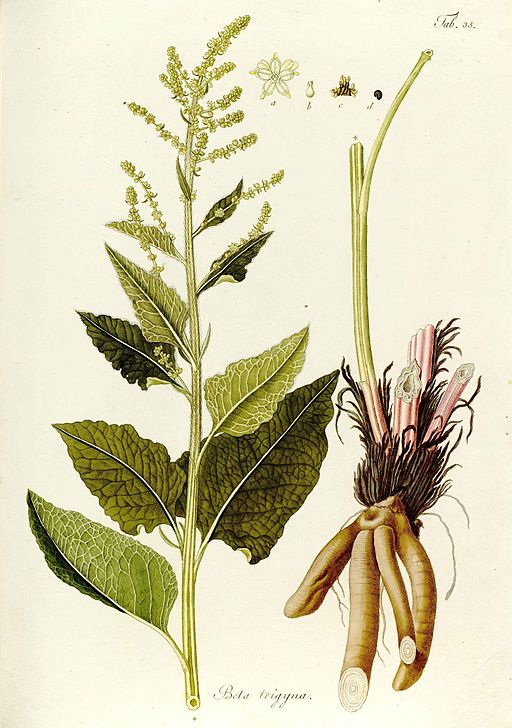
Beta trigyna Waldst. & Kit.
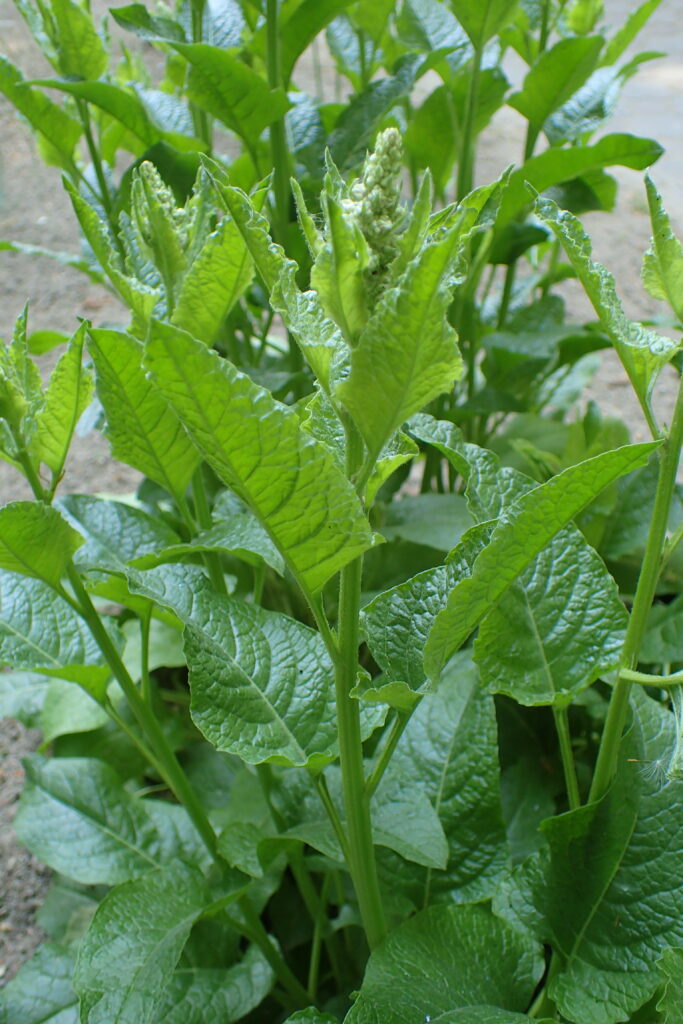
Wikipedia Commons furnished this photo of a full grown plant…..
And Flickr, this one of a flower spike….
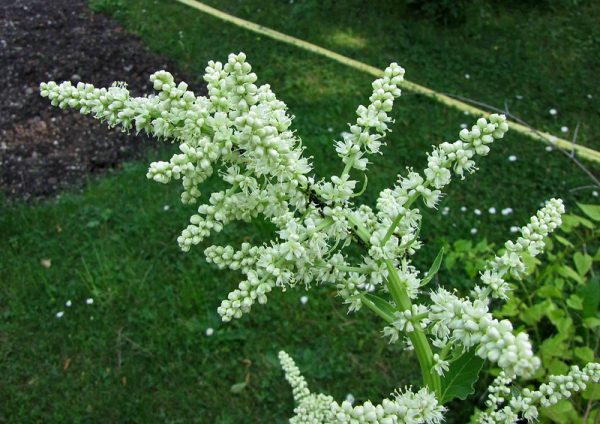
It looks both stately, and attractive in flower to me – and I’m also hoping to eat it!
It may indeed be another forgotten vegetable. In Beta maritima, The Origin of Beets the authors say that Emanuel von Proskowetz (1895) considered Beta trigyna to be a cultivated beet returned to the wild. I cannot find Proskowetz’s paper but, with assistance from Google Translate and helpful people on Twitter, I did try to translate Waldstein and Kitaibel’s original Latin notes:
Florentum invenimus pulchram hanc plantam sub sinem Maji ad hortus pagi, Nova Pazoa dicti, in Comitatu Syrmiensi. Cultura stirpem hanc, quam bobus gratam esse observavimus, sine dubio in usum economicum persicere posset.
I’m not sure if this right but it is our best effort.
We found this beautiful flowering plant at the end of May in a garden of a village called Nova Pazova in Syrmia County. Cultivation of this stock, which we have observed to be popular with oxen, could without doubt lead to economic growth.
It sounds as if they were saying that the plant should be cultivated to feed cattle (rather as Daubenton recommended his kale for feeding sheep in “Instruction pour les bergers et pour les proprietaires de troupeaux” (“Advice to shepherds and owners of flocks”)). But Google Translate appears to update its results overtime – the latest offering finishes with ‘could without doubt have penetrated into economic practice’. So I am still unsure!
Perhaps being found growing in a garden shows that it was already being grown for human food. Also in ‘The Wild Species of Beet’, 1938, American scientist George Herbert Coons, noted reports that in Turkey farmers scatter the seeds of Beta trigyna in wheat fields to provide themselves with a spring salad plant.
For Great Britain the Biological Records Centre reports that Beta trigyna is….
A large herbaceous perennial which is naturalised on a road verge in Cambridgeshire, and possibly elsewhere. It is also found as a persistent relic of cultivation and as a casual in waste places and on rubbish tips. Casual plants are introduced as grain contaminants. Lowland.
B. trigyna was introduced into cultivation in 1796. It was known from the wild in 1891 (Berks.). The Cambridgeshire population was first recorded in 1942.
The introduction into cultivation was by one John Bell Esquire in ‘about’ 1796. (Hortus Kewensis; Or, a Cataloque of the Plants Cultivated in the Royal Botanic Garden at Kew)
I look forward to seeing how it develops, and hopefully harvesting some leaves to eat.