Skirret Splitting.
In order to get good sized clumps of skirret‘s sweet roots, I grow it on a three year cycle. Thus the skirret bed at the allotment is divided into three areas, for one, two and three-year-old roots. Each year the three year plants are harvested and the cleared patch replanted with fresh seedlings.
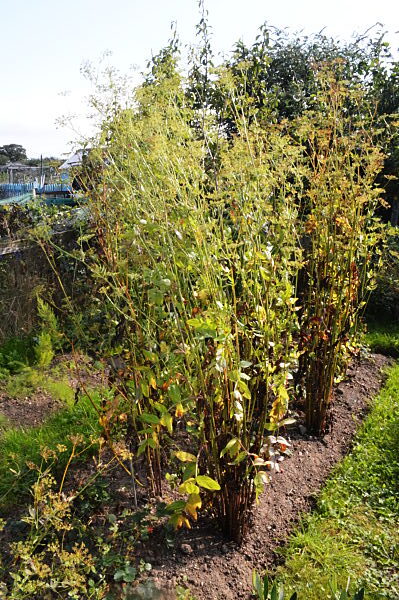
That is the theory at least. But I forgot which were the oldest plants last year, and dug up the two-year-olds by mistake. So today I had the prospect of digging up a four-year-old root (one from last year’s three year patch in the centre of the photo above).


Not a bad lot of skirret for our rather dry clay soil (skirret prefers moist and well-drained!) I’ll make some skirret pasties with these – always popular here.
I split up the clump. Skirret is very obliging – the stems in a clump like this are easily pulled apart with the fingers into separate plants. I got 29 from this clump!
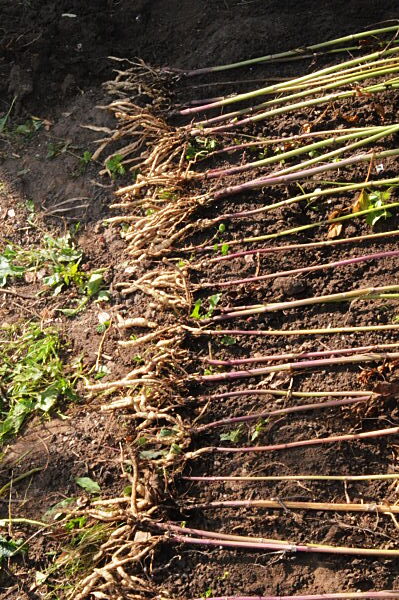
These can have their fattest roots removed for cooking and be potted up or planted out to make new plants. I could put some into the patch I’m harvesting from. But in the interest of breeding fatter skirret I’m planting out new seedlings each year. Seedlings grown from seed from, well from anywhere really, to get as much diverse genetics into the whole patch as possible. (In the bed so far are plants from Austrian, Canadian, Tasmanian, Polish, English, Scottish and French seed.)
The only downside of the three year cycle – waiting so long to uncover the roots of plants grown from exciting new seed!
Anni Kelsey
Wow what a wonderful crop!