Jerusalem Artichoke Plant Profile
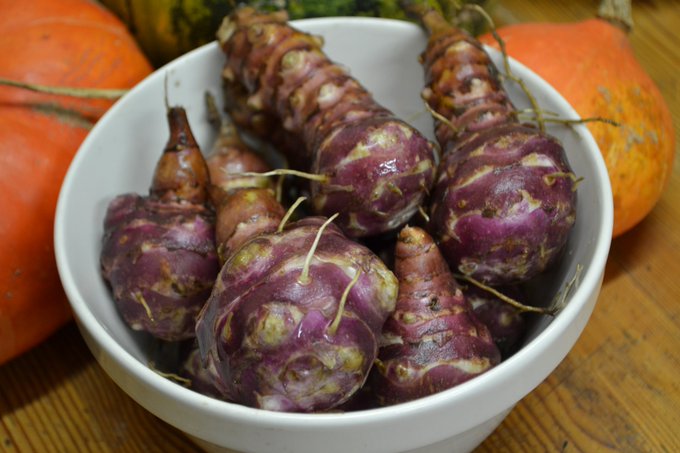
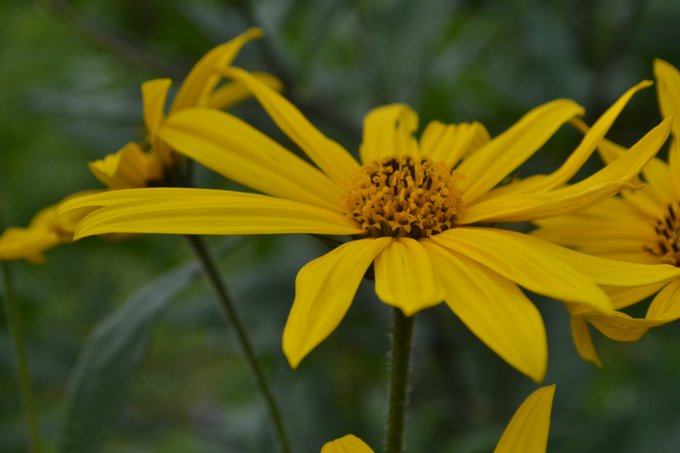
Jerusalem artichoke (Helianthus tuberosus) is a yellow-flowered, herbaceous, perennial plant related to the annual sunflower in the daisy family Asteraceae. It is native to central North America. The plant is widely cultivated in temperate regions for its edible tubers which can be eaten raw, roasted, fried, chipped or puréed in soups. Suggested remedies for their famous flatulence-inducing tendencies include slow cooking, cooking with a various herbs and spices (such as sage, thyme, garlic, cardamon, cloves, cinnamon) and, perhaps most effective, fermenting.
Hardiness
Hardy to about -40°C
Soil conditions and location and cultivation
Yields are highest in sunny locations in heavy, rich, fairly neutral soils which retain moisture during the growing season. But good yields can be produced in a wide variety of soils with a range of textures, pH, moisture and fertility being tolerated. Dappled shade is also acceptable.
Height
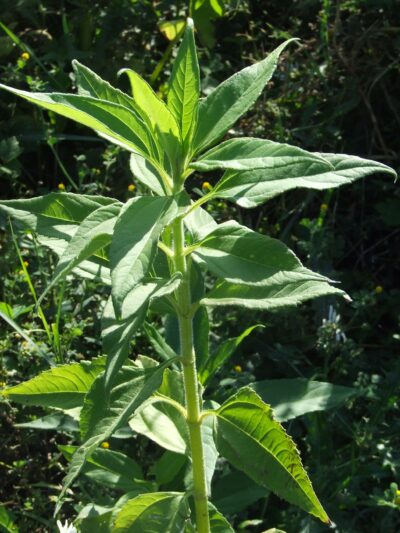
Varies according to variety, from 50 – 300cm. Most varieties grow to about 240cm.
Spacing
Space plants about 30cm apart.
Pests and diseases
Slugs and snails may eat the tubers. Badgers have also been known to dig and eat the tubers.
Harvesting and yield
The tubers can be harvested after the foliage has yellowed in autumn. Tubers can usually be stored in the ground until needed unless pest damage is likely or the ground is likely to be frozen for a long period (although mulching the ground can allow harvesting to continue). One plant often yields 1-2kg of tubers although higher yields have been reported.
How to propagate
After harvesting from a patch of plants, replant tubers at about a 30cm spacing. Depending on the variety grown and the length of the growing season plants may produce flowers. Seed propagation is possible but the seedlings will not be ‘true to type’ as Jerusalem artichoke is self-incompatible and fertile seed is only produced if two or more varieties are grown and allowed to cross-pollinate.
Wildlife value
Flies, beetles, bees and butterflies have been known to visit the flowers.
Botanical name
Helianthus tuberosus
Common names
Jerusalem artichoke, xa’xakw’, sunroot, sunchoke, wild sunflower, topinambur, earth apple.
History
Missouri Botanical Garden Plant Finder says that the native range of Helianthus tuberosus is difficult to determine ‘but probably extends from Newfoundland to Saskatchewan south to Georgia, Tennessee and Arkansas, however plants have naturalized over time throughout the entire U.S. and are currently found in all states except Arizona, New Mexico, Nevada, Alaska and Hawaii.’ The reason for the widespread naturalisation is probably due to the long use of the plant by the indigenous inhabitants of North America. The Native American Ethnobotany Database lists fifteen documented examples of such use. The name ‘sunroot’ for the plant is believed by some to be based on the original Algonquian or Iroquoian name, but this discussion on the Siouan Languages Mailing List, which offers some alternative names, does not seem to support that theory.
….history of the Jerusalem artichoke (which is proving to be rather complex!) to be continued….
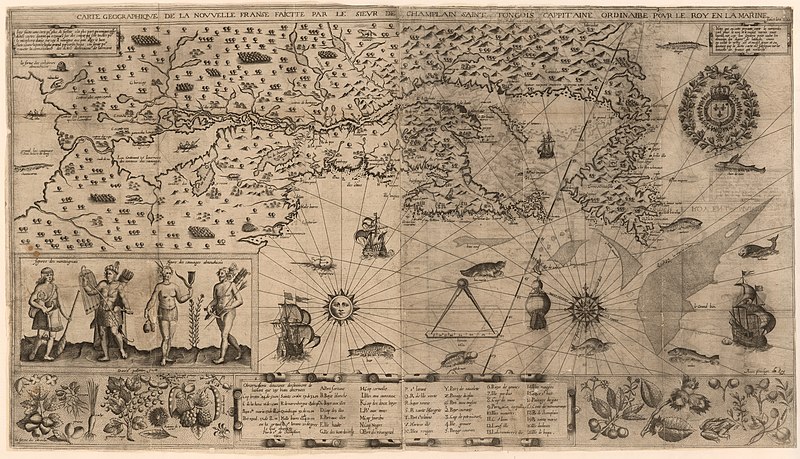 The plant shown between the two Almouchicois people illustrated on this 1612 map ‘Geographique de la Novelle Franse’ by Samuel de Champlain is thought to be Helianthus tuberosus.