2022 Review
The Backyard Larder Blog’s ninth annual review.
When I wrote last year’s review, I was confident I’d be showing photos of the completed new nursery site by now. But things always take longer than I anticipate! However we have made progress. Stew hired a large van at the end of last October and drove us to Norwich to pick up a bargain 12 x 8 ft greenhouse I had bought on Gumtree. We worked our socks off over two days, dismantling it in the cold and the wet, swearing a bit as numerous bolts sheared off and a few panes broke – but eventually unloaded the precious cargo in the dark at the allotment. Then we collapsed in a heap back at home! With help from a friend and our son we cleared the site over the winter, and got the frame up in recent weeks.
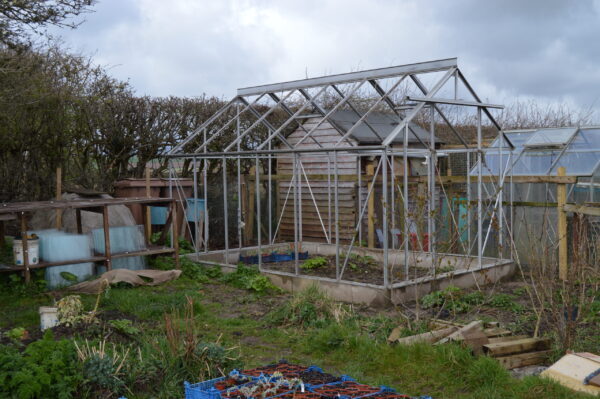
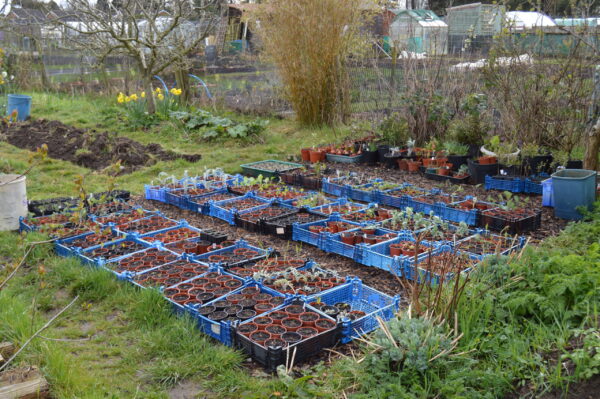
Yes, glass, bench and greenhouse are still waiting to be re-united! I’ve washed a third of the glass, but plant propagation has had to take priority for a bit. I can just about manage this in the tiny lean-to greenhouse on the side of the shed, and so the plant growing-on area is filling up fast (wooden plant bays still to be moved from the old site).
There is plenty of work to do on the rest of the plot too. These two beds will be taking the ‘Dwarf Sunray’ and ‘Dwarf’ Jersualem artichokes.
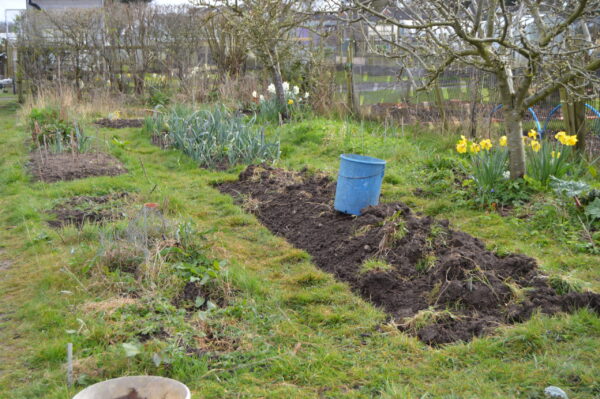
The cardoon, globe artichokes, cabbage thistle and other plants they used to contain are being moved to the herb garden at the front of the plot. I’ll add globe artichoke, ‘Bere’, that somebody kindly sent me, to this collection when I have cleared some more ground. It is said to be very productive.
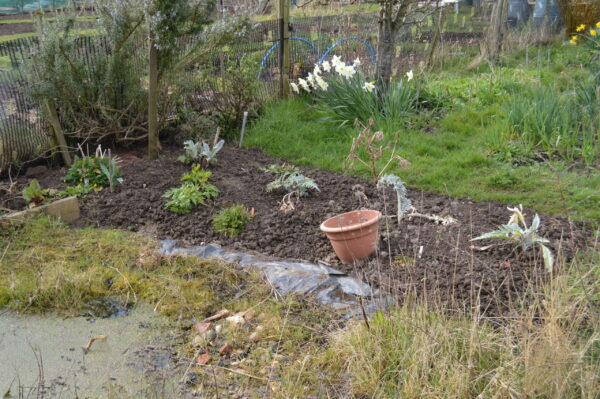
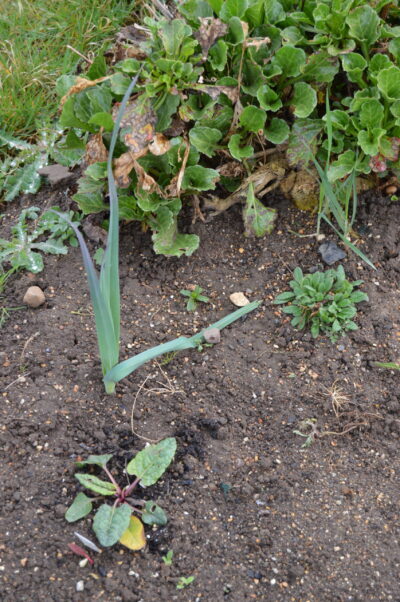
I’m making space for some other newcomers too. Below is Beta trigyna, Caucasian beet (in the foreground) with its sea beet cousin behind.
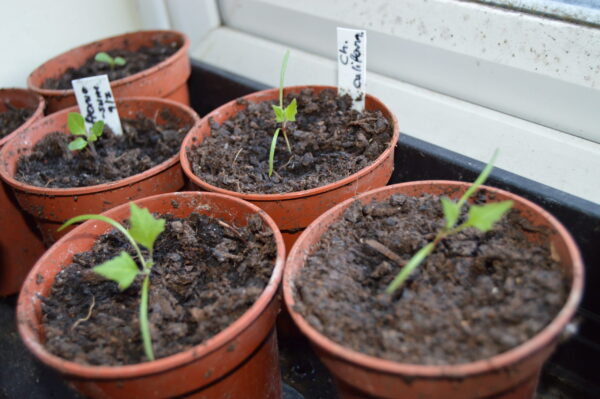
Good King Henry has a relative coming to stay too, in the form of Blitum californicum, another edible perennial chenopod, (currently on the bedroom windowsill).
In other bedfellow news, the strawberries are planted around the skirret now, and the silverweed (Argentina anserina) is being transplanted to the new asparagus bed. It was around the cardoon and globe artichokes but was rather overshadowed by them. Perennial leeks have been happy with perennial kales – but not so the perennial kales with over-vigorous yarrow – out with the yarrow!
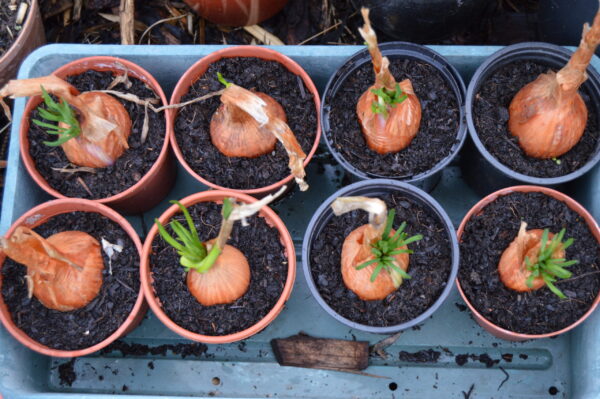
Other new perennial edibles I hope to squeeze in include these great ‘Jermor’ shallots I have been given. They are a good size, can be autumn planted and store well.
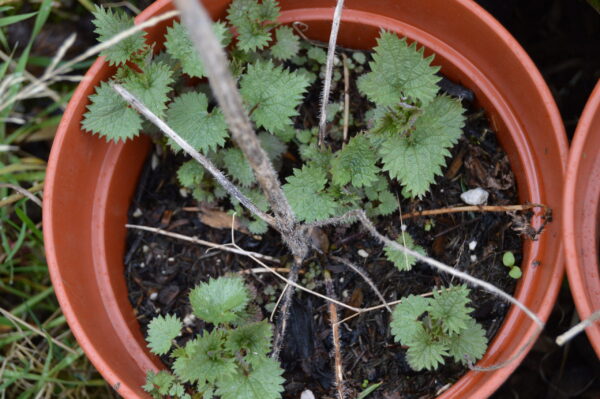
…And some stingless nettles…
The saltbush (Atriplex halimus) came through this last winter well. The oysterleaf plant (Mertensis maritima) which I planted last year in the sand bed to replace the one lost the previous winter has sprouted again – but not the replacement French scorzoneras (Reichardia picroides). I think I will have to plant the latter in the sand bed too this year to try to help them overwinter.
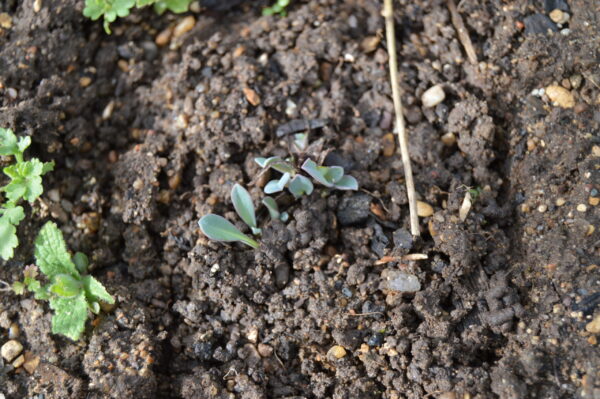
Oysterleaf resprouting
Amongst other ‘less common edibles’ I’ve been watching on the plot, the gomchwi (Ligularia fischeri), brown watercress (Nasturtium x sterile), sweet flag (Acorus calamus), sea kale (Crambe maritima), chocolate root (Geum rivale) and red sorrel (Rumex acetosa ssp. vinealis) are all still with me. So are the rice root (Fritillaria camschatcensis) and poppy mallow (Callirhoe involucrata) – but I have yet to see them flower – maybe this year! I have lost the spignel (Meum athamanticum) but have some seedlings growing in pots.
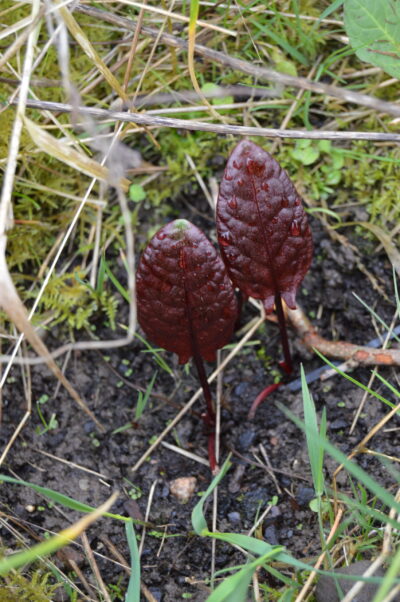
Red sorrel leaves
It is all very much a win some, lose some tale! Thankfully I still have the baby Buniums! They develop very slowly in their first year, only putting up seed leaves. I will be pricking them out this spring, very carefully and with some anxiety in case I should lose them after years of trying to gain them (full story here!)
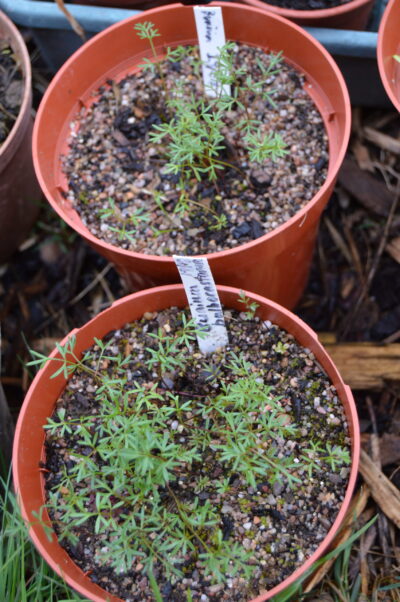
Bunium bulbocastanum seedlings