UK Chayote Update
Out of all my growing attempts the chayotes have been the most satisfying this year. See last year’s post Chayote Challenge? for the background to this project.
The greenhouse plant (with its roots in the greenhouse and the stem trained out of a gap in the glass) is bearing lots of good-sized smooth variety fruits now. They are a little spiny – must have some spiny genes in their heritage.


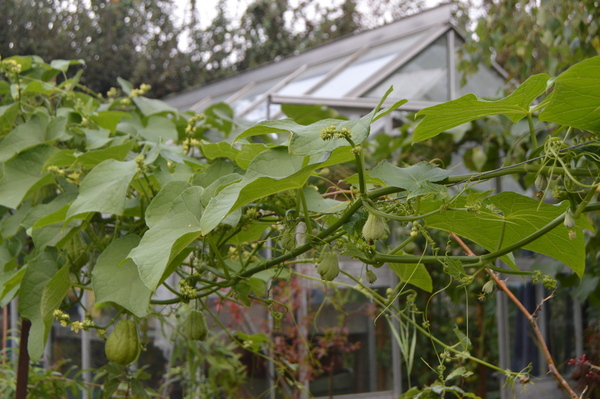
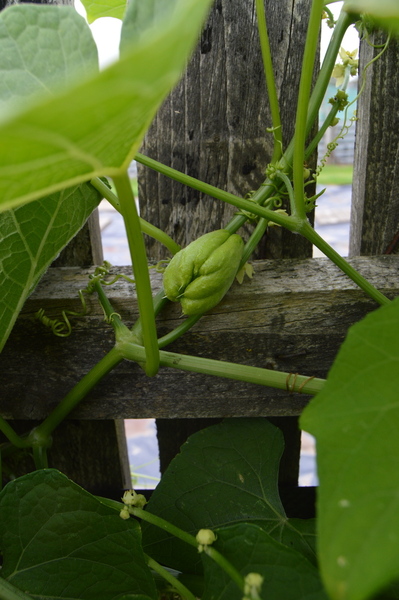
There are also fattening fruits on the outdoor vines but fewer of them. There are three vines planted on the other side of this fence and at least one is showing fruit. The fattest are of the spiny variety. It is hard to tell if some smaller ones are spiny or smooth types yet and, with the plants at close spacing, it is sometimes tricky to trace to which plant a fruit belongs. (The spacing is too close really but I wanted to try as many plants as I could fit in.)
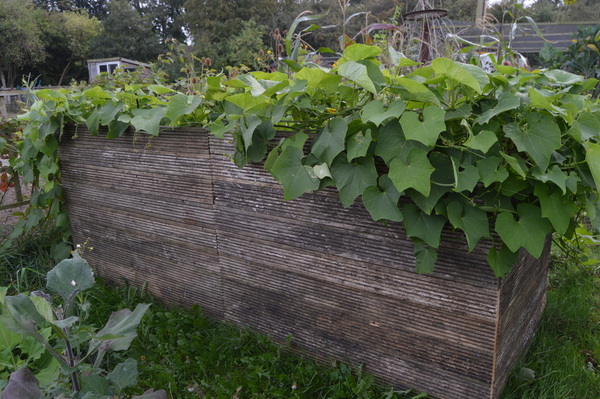
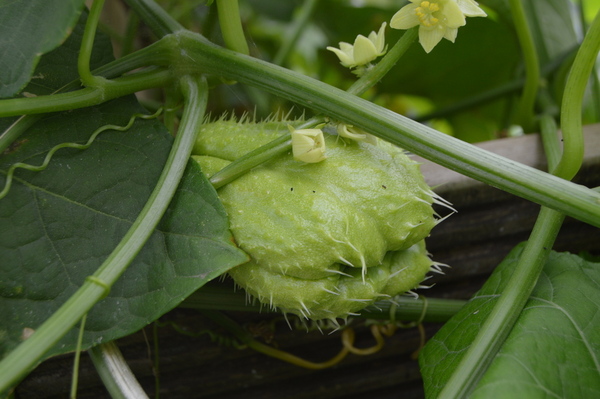
And there are three plants along this fence. One of these is showing less developed but smoother fruit.
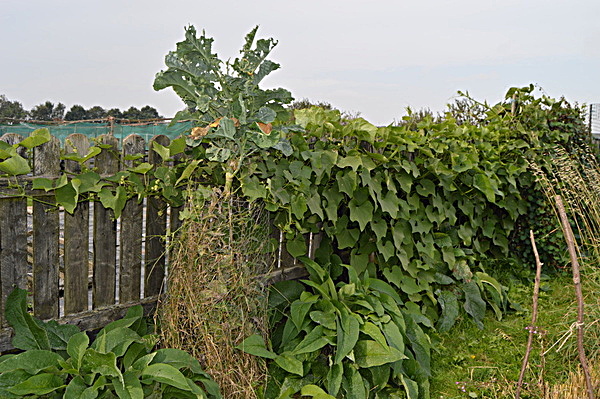
I’m intending to eat some of these fruits; save some to germinate overwinter, grow on indoors and plant out next year; and share the rest with fellow plant breeders from the Chayote Adaptation Project UK : ChAP Facebook group. (Do join if you wish to join in with our chayote adaptation efforts).
The next challenge is to try and overwinter the vines. I don’t think this will be too hard for the greenhouse plant but may be quite a bit harder with the outdoor vines. I’ll try covering the crowns of the withered vines with hay or straw, plastic sheeting and upturned plastic tubs or crates. And also spreading some waterproof sheets on the surrounding soil as I’ve been told that the roots are quite extensive and rot can spread from the root tips back to the crown of the plant.