Creeping Bellflower Mash

Creeping bellflower
The beautiful spires of Campanula rapunculoides (a perennial relative of biennial Campanula rapunculus which is the probable source of the ‘rapunzel’ or ‘rampion’ roots that Rapunzel’s father stole from the sorceress’s garden in the fairy tale). It is a seriously invasive weed in parts of North America and can probably be a problem here too in some situations. As a precaution mine was planted in a bed bordered by grass but I haven’t yet found it to spread fast and haven’t seen any seedlings either.
Rhizowen posted a photo of the plant’s edible roots on Instagram a few days ago. As I was planning to move my plant the next day I decided to both taste the roots and put some divisions in the shop if the plant proved to divide easily.

The roots
I’ve recently taken to enjoying a big bowl of mashed potato for my lunch when I’m not at the allotment wolfing down my peanut butter sandwich. Seeing that mashing the bellflower roots was one suggestion I found online, I set to today to make both my mashed potato lunch and a bowl of mashed bellflower too.

The roots were easy to clean. I tried a piece raw. It was good, sweetish with a pleasant taste. No bitterness even in the skin. Some sources talked of removing the skin before consuming the roots but this was clearly not necessary for these ones.
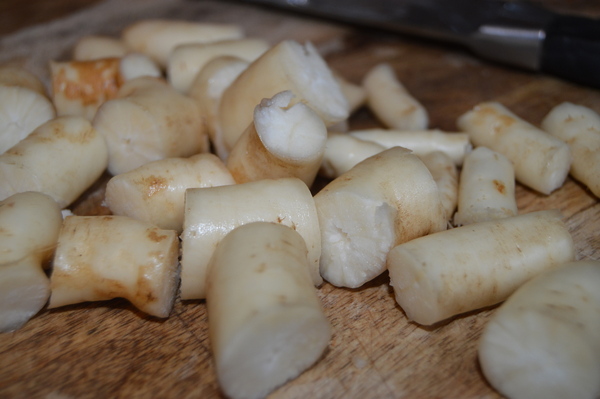
They took perhaps a minute longer than the pan of chopped potato to become soft enough to mash up. The result was fine to eat even before I added some sunflower margarine and salt and pepper. It was very soft but very slightly more fibrous than potato, perhaps akin to the texture of mashed celeriac or daikon radish – although it is a while since I’ve eaten either of those. And the skins didn’t mash quite as well as the potato skins did. The flavour was mild and quite potato-like. It reminded me also of some other vegetable I’ve eaten, but as I often find, not one I could put a name to!
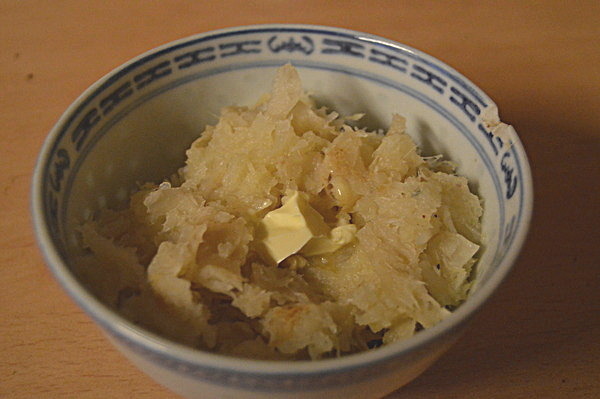
Wikipedia names the principal storage carbohydrate as inulin. I ate a decent portion of the mash – I’ll add a note below if it gives me the same windy gut problem that Jerusalem artichoke does.
But at this stage I would rate it as very acceptable vegetable. Nice as a side dish or as a casserole ingredient. (A few divisions in the shop tomorrow night in case you’d like to try it).
N.B. I did experience excessive flatulence unfortunately! Similar amount of inulin to Jerusalem artichoke I would guess although I cannot find specific data on it (actually some sources name the carbohydrate in Campanula as an ‘inulin-type fructan’). Certainly one to introduce slowly (or to avoid for the very inulin-sensitive). Inulin can give my partner serious pain so, although I’m not a total inulin avoider, the easiest method to gently introduce inulin-rich foods by just chucking increasing amounts into every curry and stew is ruled out here for our shared meals. Fermentation works very well though to reduce the inulin content in roots so that is always an option.