Preparing Prickly Pear Pads
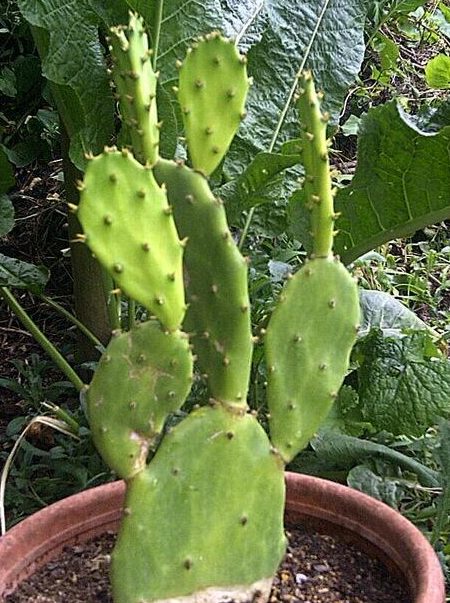
I’d read that they were good to eat, but nopales or prickly pear pads (from Opuntia cactus species) must be the most hazardous food I’ve ever tried to prepare!
The plant I’m growing is Opuntia stricta (erect prickly pear) and it doesn’t have much in the way of spines – but it does have tiny sharp glochids which need to removed before cooking and eating. The glochids can break off in the skin, be hard to remove and cause irritation and even infection. I followed the technique in this video from Yvette Marquez of cutting out the spines and glochids with a sharp knife.
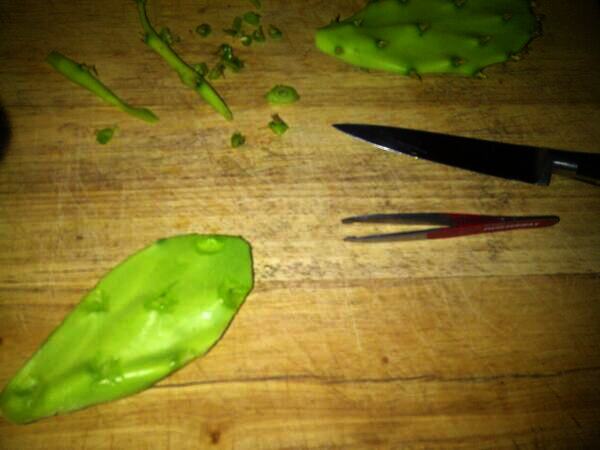
It wasn’t at all easy to do safely though. If an areole (node) flipped over on the pad as I removed it, the glochids immediately stuck into the pad itself and had to be removed with tweezers. Even trying to be very careful I still had to remove a few from my fingers. And, somehow, even one from my tummy (it must have fallen onto my shirt and penetrated the fabric!) Perhaps Opuntia stricta has more glochids than other species – a veritable bunch of them erupts from each areole.
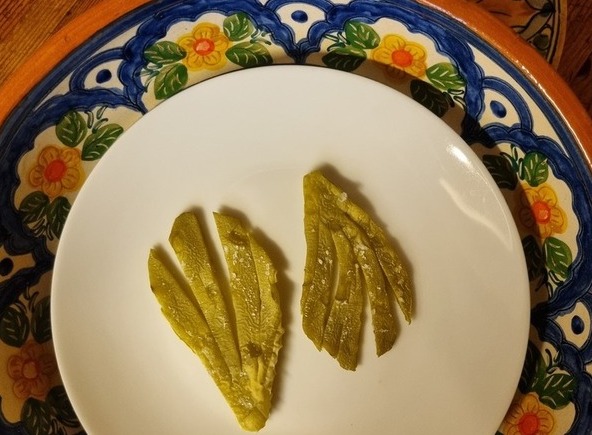
Eventually I cleaned, trimmed, rinsed, scored and salted the pads and grilled them on each side for 5 mins. And ate them. Then I could almost see why people bother – they were sweet, tangy and succulent.
There are other ways to remove the glochids. Wiping with a damp cloth is said to get rid of most of them (but how do you then get them out of the cloth – will it work with disposable kitchen towel?) Searing them with the gas flame or kitchen torch sounds like a better option. Will have to try that when I have pads to spare on the cactus again.