True Bunium Bulbocastanum
It is a long story but I have spent many years trying to grow the true earth chestnut or great pignut, Bunium bulbocastanum. It has a tuber that, I assume from the name, tastes like a sweet chestnut. I have yet to taste it. But I am at last confident that I am growing the right plant.
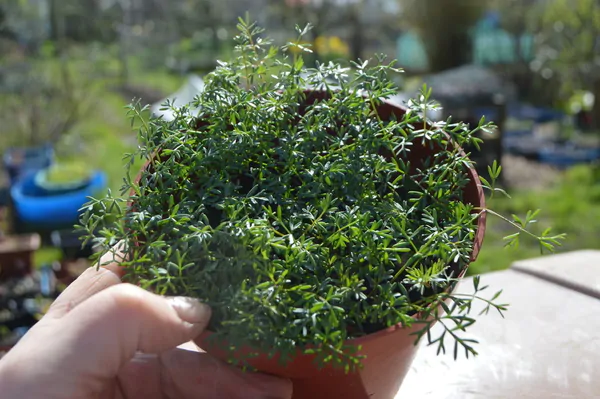
Pot of Bunium bulbocastanum seedlings
It is unfortunate that most plants available in the nursery trade under this name are actually something else – other members of the umbellifer or carrot family of plants, frequently an Oenanthe species. But their foliage looks very similar so it is difficult for both sellers and buyers to tell the difference. Especially since the mix up is so long-standing that there are numerous online sources which show inaccurate photographs or confusing descriptions or both, including the RHS and Plants for a Future sites. (There is a pretty reliable set of photographs here.)
I trusted the first plant I bought until my more knowledgeable nephew raised doubts about a plant he’d bought from the same source. In subsequent efforts to buy the true Bunium I received two other imposters, different to the first and to each other. I finally got genuine seed from a German genebank in 2020. The seed germinated with the characteristic single cotyledon of Bunium but soon disappeared in the pot to resume growth the following year – quite a tease of a plant!
The first clue that what is being grown is not Bunium bulbocastanum is usually when multiple tubers are found on the roots. Bunium only has one tuber, a round one that enlarges as the plant gets older.
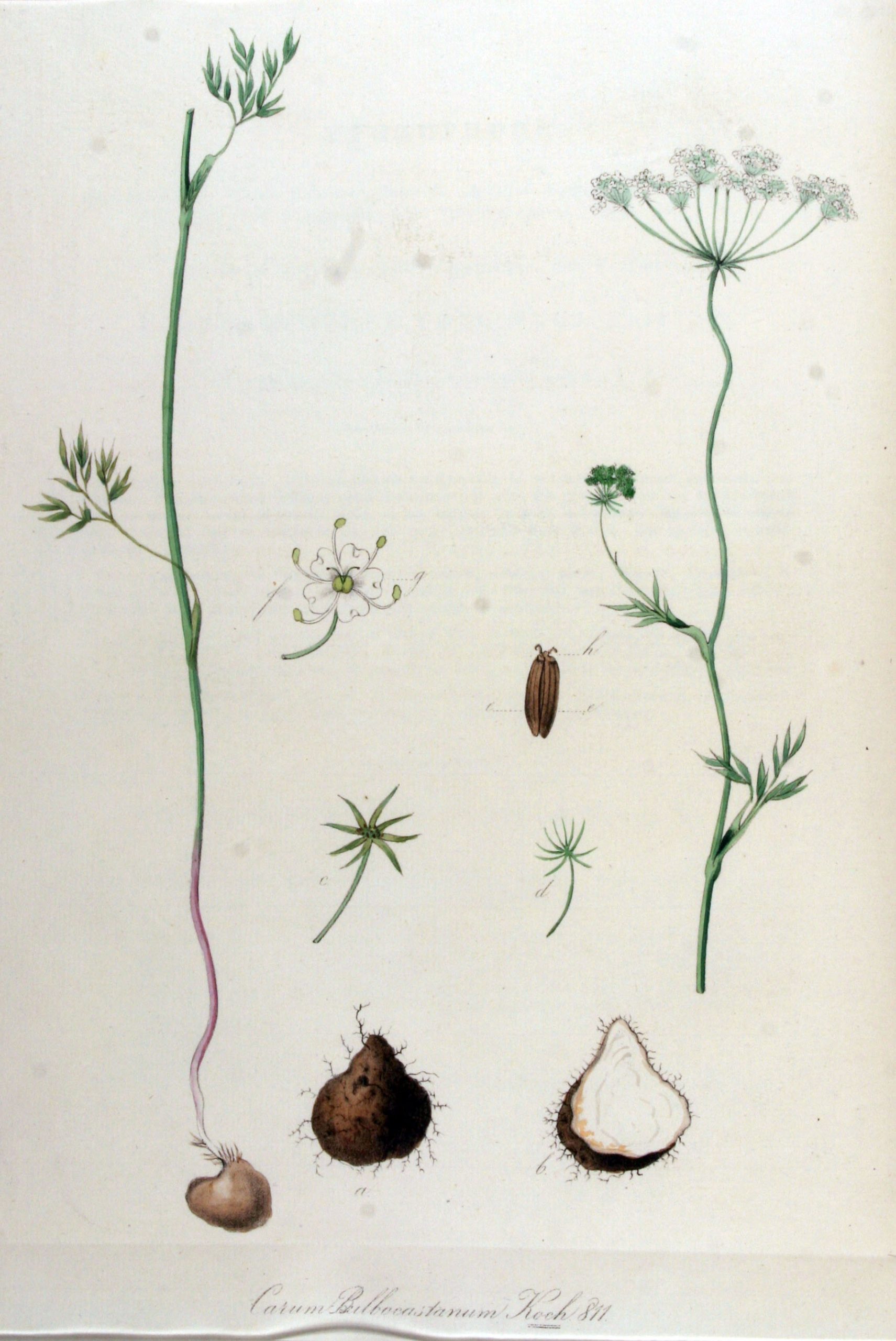
Bunium bulbocastanum (previously Carum bulbocastanum) Flora Batava, Volume 11. 1853. By Jan Kops – www.BioLib.de, Public Domain, https://commons.wikimedia.org/w/index.php?curid=18912664
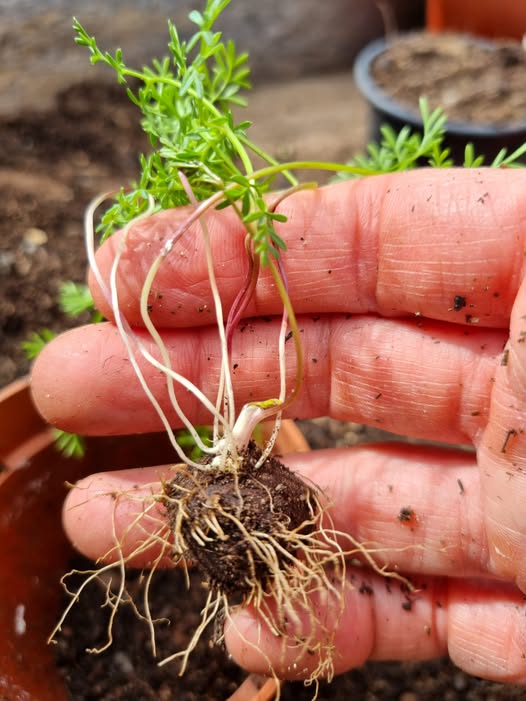
Bunium bulbocastanum tuber
An umbellifer with a single tuber might also be Conopodium majus. This is known as pignut rather than great pignut but shares the earth chestnut name.
The flowers of Bunium bulbocastanum are distinct but only when you start to ‘get your eye in’ as they say!
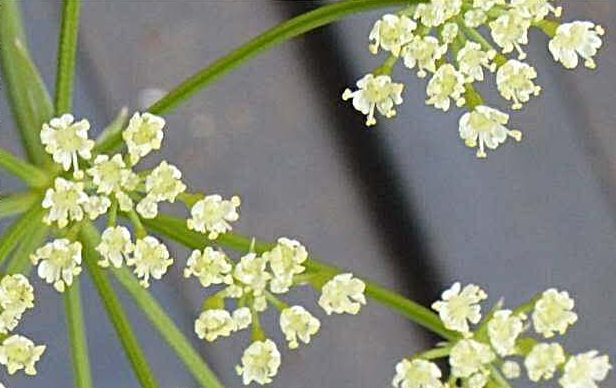
The best way to tell if a plant is true Bunium bulbocastanum is to examine the styles (flower parts) which remain on the immature fruit for some time after the flower is pollinated. They should curve strongly outwards.
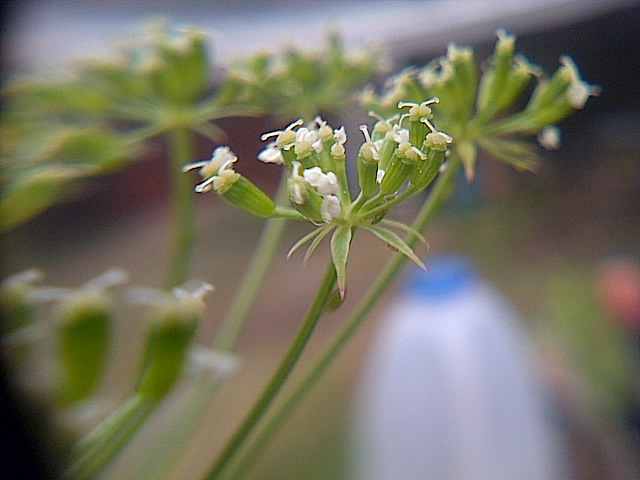
Fruit and styles on Bunium bulbocastanum
On Oenanthe species they are far more upright.
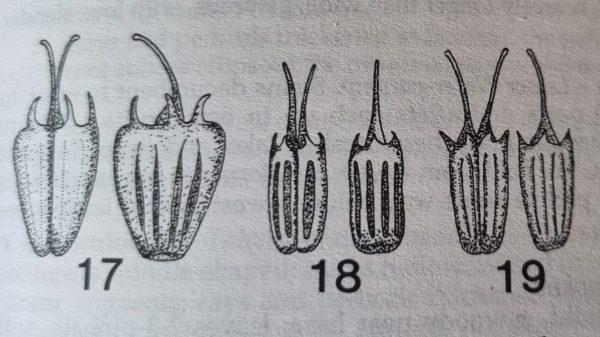
17 = Oenanthe fistulosa, 18 = Oenanthe pimpinelloides, 19 = Oenanthe silaifolia. New Flora of the British Isles, 1991, Clive Stace
On Conopodium majus they are more upright than in Bunium and narrow gradually from their base rather than abruptly.
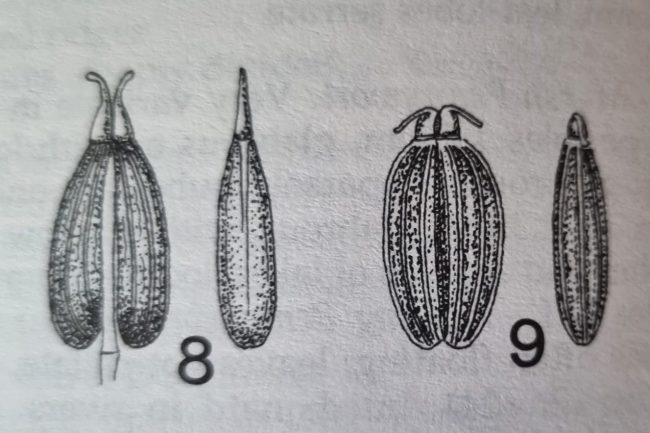
8 = Conopodium majus, 9 = Bunium bulbocastanum. New Flora of the British Isles, 1991, Clive Stace
These are my attempts at photographs of the fruit and styles on my imposter plants using a hand lens and my Blackberry phone.
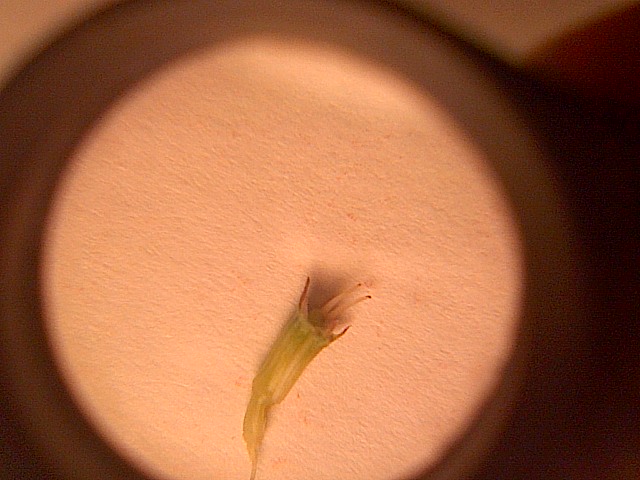
Oenanthe pimpinelloides immature fruit?
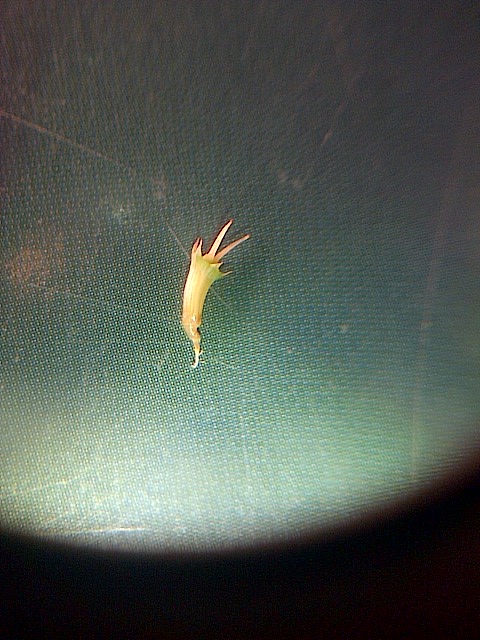
Oenanthe silaifolia immature fruit?
Oenanthe pimpinelloides foliage and tubers are often eaten and the foliage of Oenanthe silaifolia is eaten. The concern is that the tubers may contain some oenanthotoxin (or other toxins). This is the poison that is in hemlock water dropwort, Oenanthe crocata, tubers – to a truly dangerous extent. Oenanthe crocata is a taller, more robust plant, with large flowers, less filigree foliage and bigger parsnip-like tubers, which taste fine but can kill you. Whilst the levels in other Oenanthe species are lower they probably vary between individual plants and caution is advised. I read a study from 1960 regarding the poisonous effects of eating Oenanthe silaifolia.
My third imposter is a more slender plant and, as yet, it is hard to see the styles on the fruit. I’m thinking it may be Conopodium majus. I’ll edit this post to include photos when they are a little further along.
There are other distinctive features I believe. Stace distinguishes between the Bunium and Conopodium noting that the stem on the former is solid at fruiting time but hollow in the latter. And, although the foliage is very variable on the plants depending on growing conditions, maturity and position on the plant, I’m sure with long familiarity it could become a reliable guide. Incidentally Bunium (and Conopodium to a lesser extent) show very little in the way of leaf by the time they flower.
I hope this is useful to other Bunium bulbocastanum seekers!
Stella Carr
wow this is super interesting what a great article thank you I am a dedicated Bunium bulbocastanum seeker, do you have any for sale please? all the best, Stella
Alison Tindale
Sorry, not yet Stella. I need to bulk up the stock here first, not wanting to lose the plant after all this time!