Binahong Bounty
I’m just beginning to get to know binahong, also known as Madeira Vine, botanical name Anredera cordifolia.
It is a tall, fast growing, tuberous, South American vine. Whilst it is hugely invasive in many warmer parts of the world, it is safe (at least for now) to grow in UK gardens.
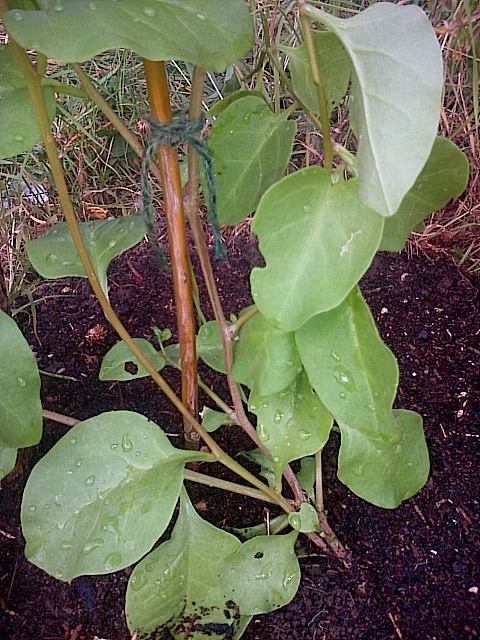
I’ve grown it before but not given it proper attention. I’ve got two plants this year, grown from a couple of forgotten tubers I found in the cellar many weeks after I’d replanted all my other tubers. But they were fine and were soon sprouting and growing in pots in the greenhouse.
My attention was drawn back to the plants last week. I was nursing an leg injury from falling onto a stake stuck in the ground the week before. It wasn’t healing as fast as I’d hoped and caused me to remember reading about the wound-healing properties of Anredera leaves – even taken internally. Things did seem to start going the right way after I’d had some leaves for breakfast and stuck some into my sandwiches for lunch. I draw no conclusions of course, but there are many research papers looking into the many potential medicinal properties of Anredera which make interesting reading.
I was pleasantly surprised by the leaves. They are said to be slimy, and they are a bit, but that made them juicy and cooling to eat raw. I’m sure they’d be great in a mixed salad. I have yet to try cooking the leaves or baking the tubers (even slimier raw I hear – but good baked).
As I’m now an Anredera adherent, I planted one of the two plants out today. If I can find a suitable space I’ll do the same with the other plant too.
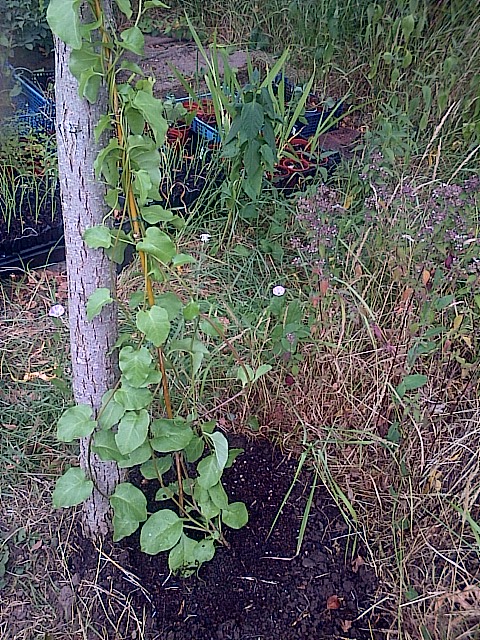
Binahong tubers survived the winter outside here one year in a plastic bucket which I’d wrapped some hessian around. I think with a thick mulch this plant will be fine in the ground this winter. Just in case it isn’t I’ll keep a couple of tubers from the other plant – and try baking the rest.
I’m looking forward to the flowers too – they are said to smell sweet.