Chives
Chives – a perennial vegetable?
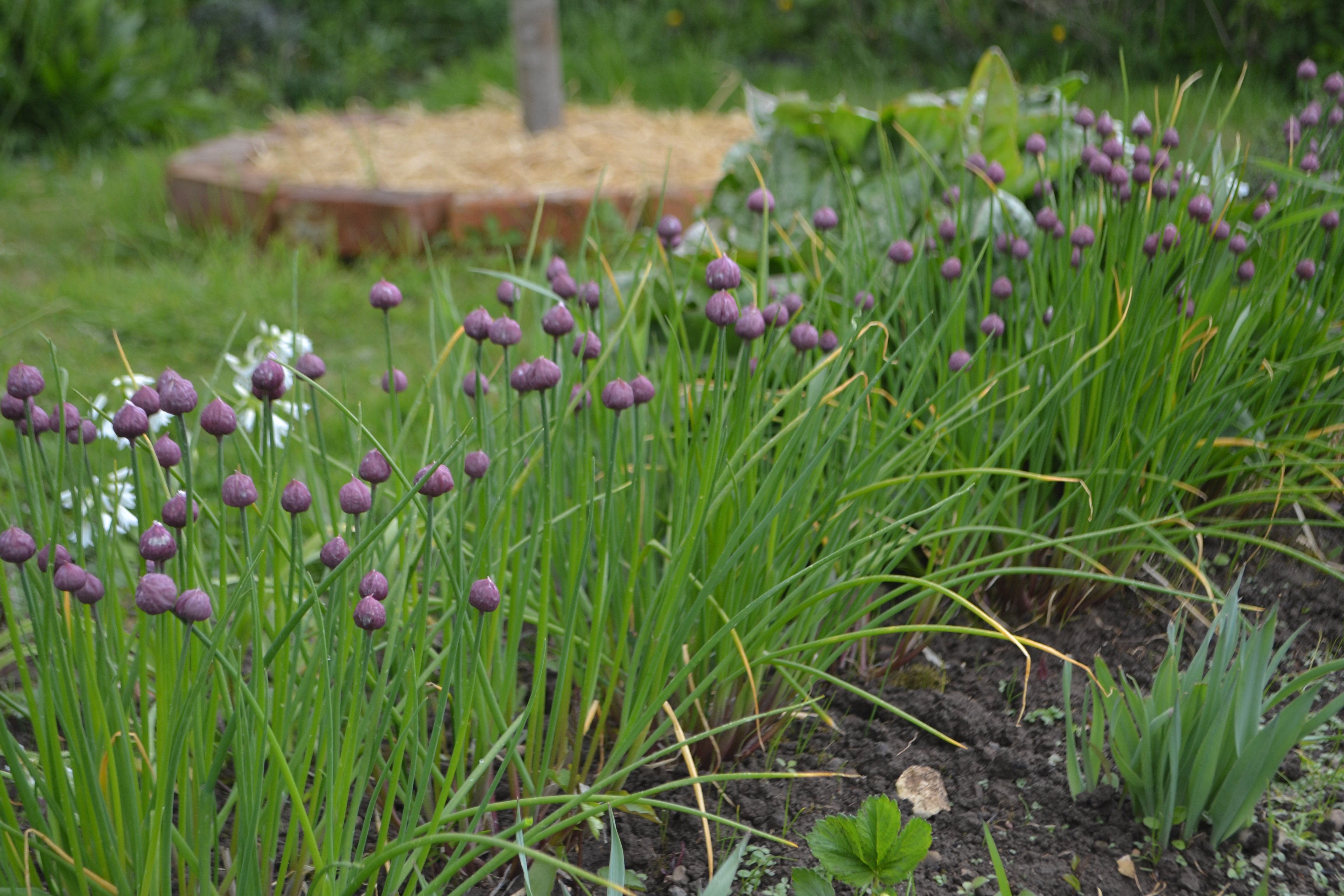
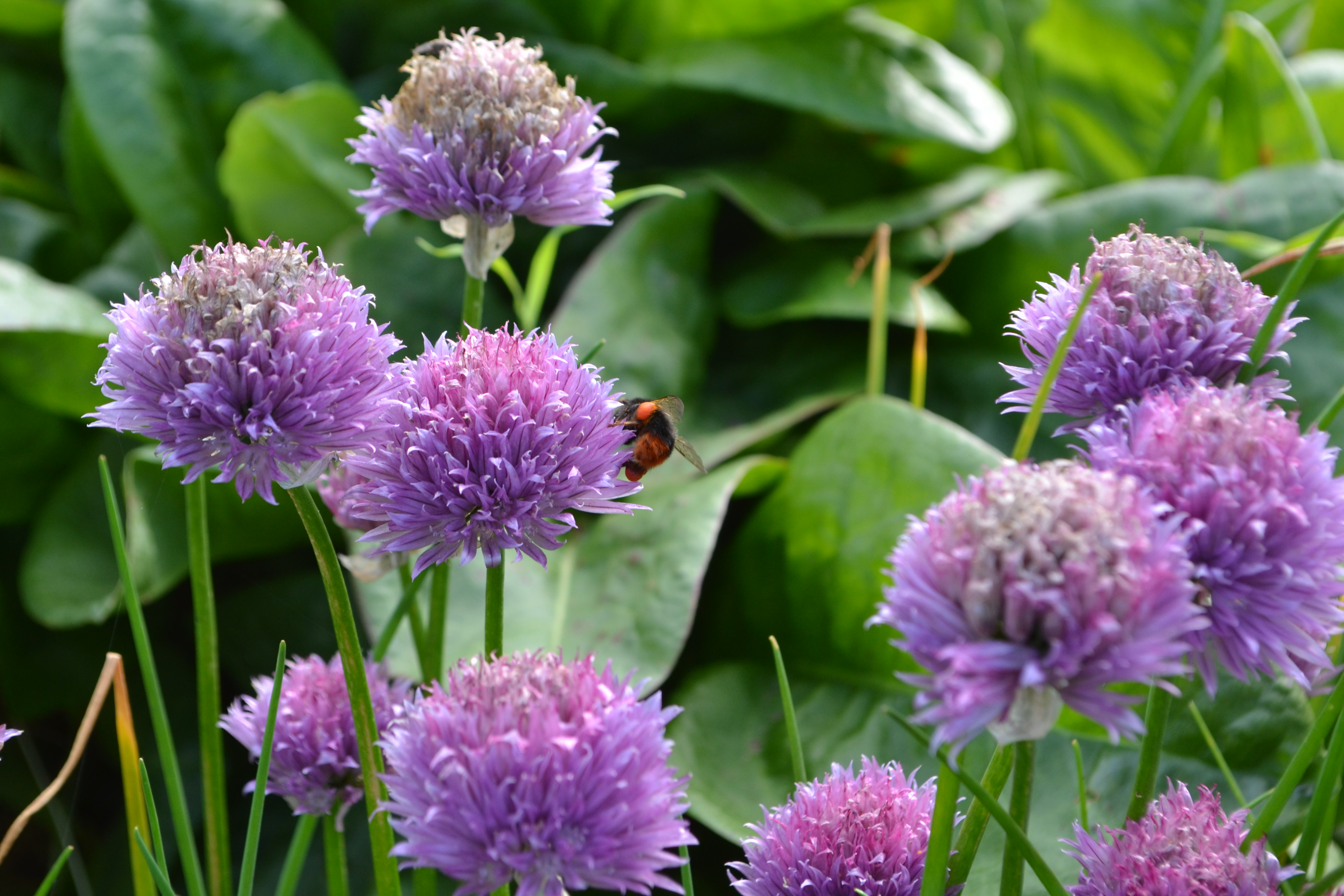
When I first started selling perennial vegetables I pondered whether I could count chives as one. (I know ‘edibles’ is a handier term really, as it avoids not very meaningful distinctions between vegetables and herbs – and dafter ones about whether to categorize tomatoes as vegetables or fruit! But I’ve stuck to ‘vegetables’, wanting to emphasise that there are on offer many perennial versions of what is already growing in the vegetable garden. ‘Edibles’ might sound to some like a whole new set of plants to eat.)
Then I found ‘giant chives’ for sale from Poyntzfield Herb Nursery and decided that this should surely qualify. I’ve lost the label but I think the plant I bought is Allium schoenoprasum sibiricum, rather than the more common Allium schoenoprasum.
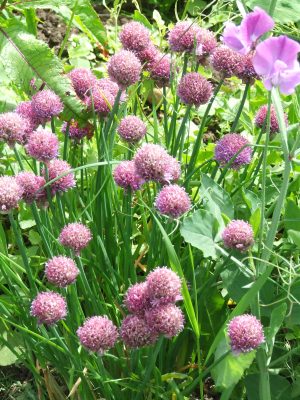
At first I was unimpressed by its claim to be a giant as it only grew to 35cm, not much taller than my other, unnamed chives (I can’t now remember their origin, possibly my mum’s garden). But I’ve improved the soil since then, and when I measured today, the tallest leaf on the giant chives was 59cm high, and the height of the ordinary chives was 51cm high. The leaves of the ‘giant’ are perhaps a little fatter too, although not very much so. In ‘Around the World in Eighty Plants‘ Stephen Barstow has a wonderful description of meadows of A. schoenoprasum sibiricum growing wild in the far north of Norway and lit by the midnight sun. He reports that it grows to 60cm in the wild and can reach 100cm when nurtured in a garden. I can imagine that now, seeing as my plants have increased their height after some modest soil improvement (and also after seeing massive chives once in my sister’s herb patch – which was adjacent to a cow farm!) Chives clearly respond to a rich soil.
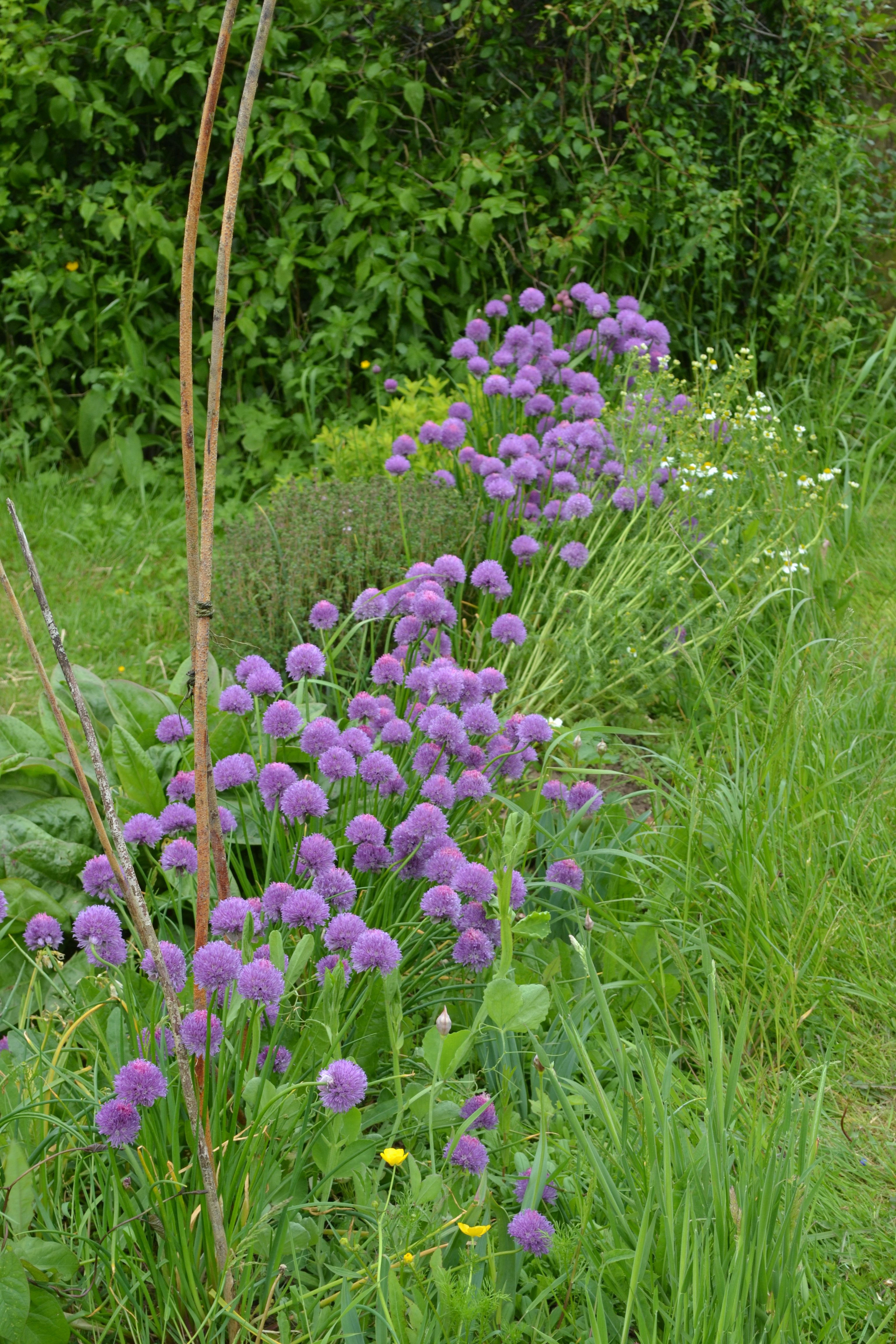
Having said that, it still isn’t a great deal bigger than the ordinary chives. Maybe there is something in what Christopher Lloyd wrote in ‘Gardener Cook’ when he said that, when he was younger, chives were small, fine-textured plants with ‘squinny’ little flower heads. Now, he reckoned, only giant chives are grown. I’m not sure about the latter but perhaps it is the case that giant chives used to be comparatively giant until other chives got bigger. Certainly my Reader’s Digest Encyclopaedia of Garden Plants and Flowers (1978) gives their height as just 6-10 inches.
While I was despairing of the short stature of my giant chives I bought Allium ledebourianum which is also known as giant chives. It’s still small at the moment – I’ll let you know…
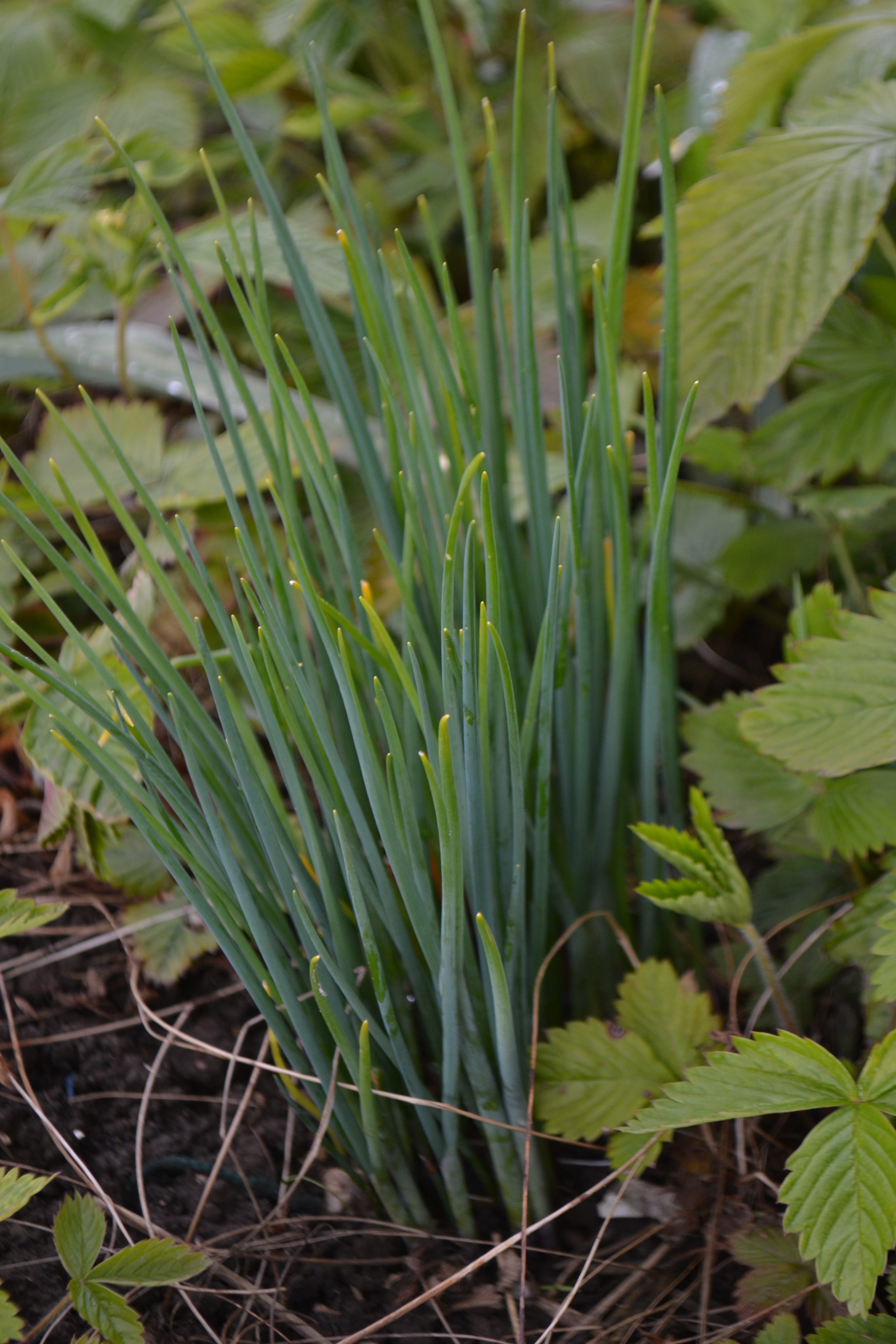
Of course it’s not really size that matters here – but more whether the plant in question can be used as a main ingredient in a dish, rather than ‘just’ a flavouring. In a perennial vegetable garden I reckon you want to be able to harvest something ‘oniony’ all year around for when your recipe calls for onions. I don’t know enough about cooking to say when the green leaves of various Alliums will or won’t work as a substitute for bulb onion, but I often do substitute them with good results. I can certainly go to my chives patch for that from March until November, especially if I chop them down after flowering to give fresh new growth (this also prevents them self-seeding which is quite a good idea as baby chive plants are like blades of grass and can be fiddly to weed).
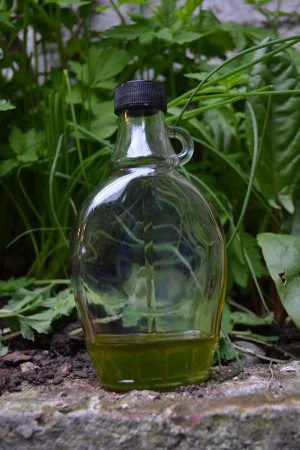
I had a look for existing recipes that use chives in quantity. Chive and potato soup seems to be rated highly (this recipe asks for one cup of chives). You can make chive oil to pour on your new potatoes – for quickness I used the recipe on this page (using over half a cup of chives but I doubled the olive oil amount) – other recipes tell you to blanch the chives briefly to give a brighter green colour to your oil.
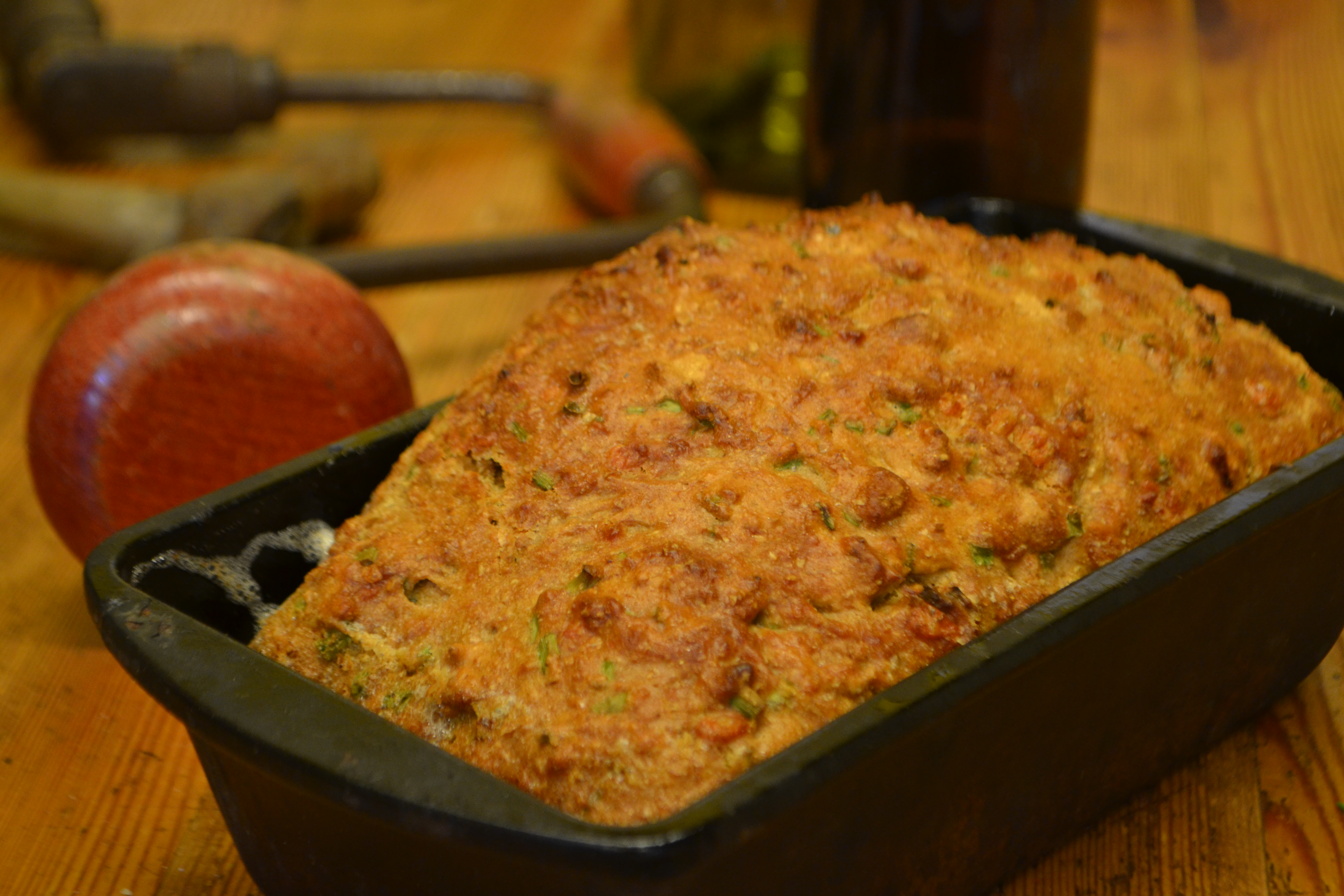
And I found a recipe for Cheddar Chive Beer Bread that uses half a cup of chives – a wonderfully easy, ‘chop, mix and bake’ recipe – my favourite sort!

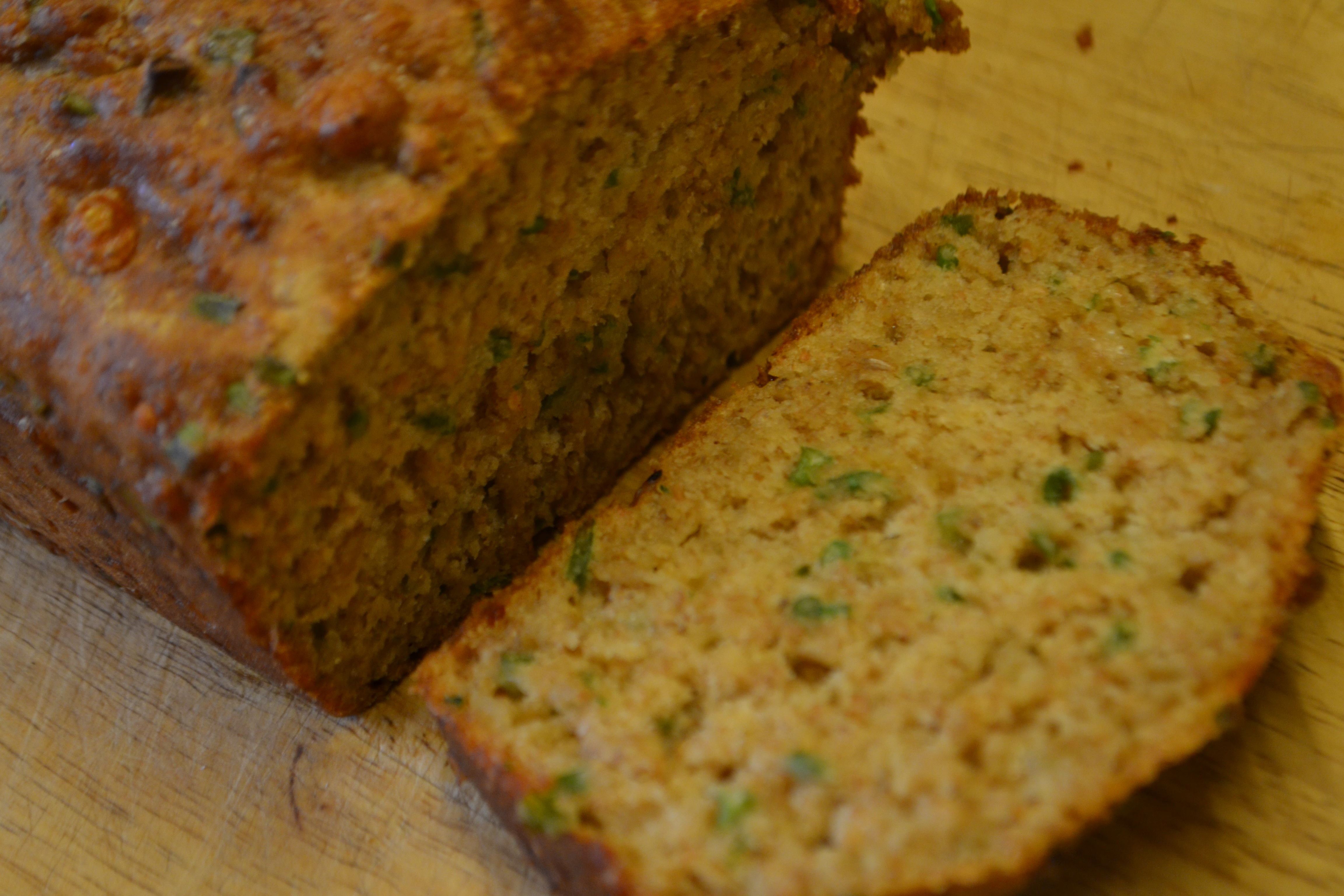
So, heck, vegetable or herb, chives can certainly stay in the perennial vegetable garden!
Sarah Shoesmith
I wouldn’t want to be without chives in the garden – useful and so very pretty at this time of year. I have some by the back door and they are as eye-catching as tulips at the moment. Two different chives known as ‘giant’? I can only imagine the story behind that common name!!!
Nina fenner
I had chives from several different sources at one time, growing close to each other in my allotment. One was definitely far superior, and that is the one I brought with me when I moved. It is no taller but grows much earlier (useful in the spring) has much thicker leaves and doesn’t produce as many flowers. Next to the other one it looked very much like a ‘cultivated’ plant next to a wild one. I often cut the whole clump down to ground level when it gets out of hand in the summer, sort through the leaves/flower stalks and chop the whole lot up and add it to soups or stews, or to any meal in place of onions. Definitely counts as a vegetable in this context.
Alison Tindale
Your superior chives sound interesting. If you are in the UK would you consider a swap perhaps for a tuber of Jerusalem artichoke ‘Dwarf’ (a true dwarf – just 60cm) as you like JAs, or something else you’ve read about on the blog?