July Plant Profile: Chinese Artichoke
The fourth in a monthly series of perennial vegetable profiles. Practical aspects of growing and harvesting the plant are outlined first, with further relevant information following on. Please let me know in the comments if there are more details you would like me to include.

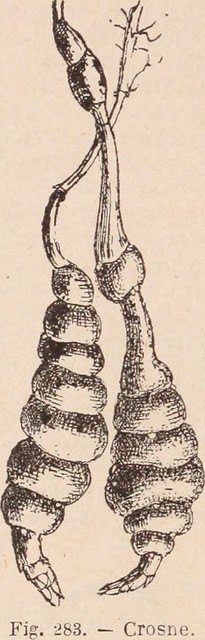
Chinese artichoke (Stachys affinis), is a perennial herbaceous plant in the mint family. It bears small white root tubers that can be eaten raw or cooked and are often also pickled. The tubers have a distinct shape and a crisp and mild but nutty flavour. They work well in a stir-fry, added towards the end as they only need to be fried for a few minutes..

Long cultivated in China and Japan, Chinese artichokes are mostly pickled in China, and in Japan the tubers are dyed red with shiso (perilla) leaves and as chorogi are a common ingredient of Osechi-ryori cooked for celebrating Japanese New Year.
Hardiness
Hardy to about -28°C.
Soil conditions and location and cultivation
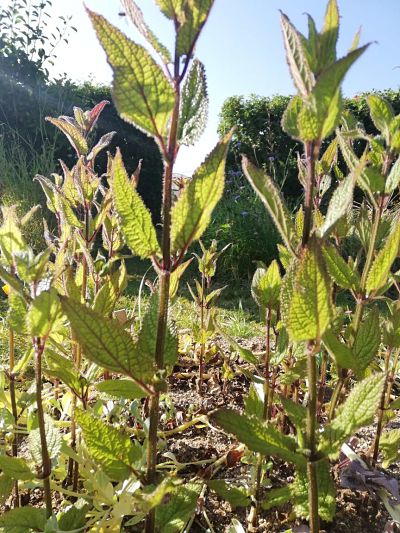
Best results come from growing in full sun in a rich and moist soil but also one which is light and well-drained. If you have a clay soil (or a lighter but poorer one) add lots of organic matter before planting or replanting in the autumn and add mulches of garden compost in the spring also. Sandy soils give pleasingly white tubers: they tend to be pale brown in clay soils.
Height
12 – 18 in. 30 – 45cm
Spacing
12 in. 30cm.
Pests and diseases
I haven’t yet found any problems with Chinese artichoke but Cultivariable reports that spider mites sometimes become serious pests and viruses may eventually reduce yields and require starting again with new tubers in fresh ground.
Harvesting and yield
Yield is roughly 20-30 decent sized tubers per plant. Harvest the tubers from November onwards as needed.

How to propagate
At harvest time replant a tuber in the spot from which each plant has been harvested.
Wildlife value
Not a native plant but flowers are popular with visiting insects.
Botanical name
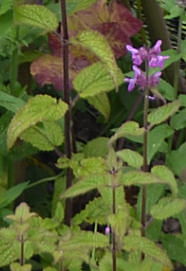
Stachys affinis. First published by Alexander Georg von Bunge in 1833. Stachys tuberifera and Stachys sieboldii are synonyms.
Common names
Common names include chorogi (Japan), T’sao-Shih-Ts’an (Herbaceous Rock Silk Worm – China), crosne (France – pronounced crones), Chinese artichoke, Japanese artichoke, knotroot, knotweed and artichoke betony.
History
Stachys affinis originates in Northern China and has a long history of cultivation in China and Japan (it features in the herbarium “Chiu Huang Pen Ts’ao” (Famine Relief Herbal) 1406 by Chu Hsiao, fifth son of Hongwu, emperor of the Ming Dynasty.)
In 1882 Dr. Bretschneider, a doctor at the Russian Legation in Pekin, sent tubers of the plant to the Society of Acclimatization of France. From there they were sent to Nicolas-Auguste Paillieux and Désiré Bois who grew the plant, found it exceedingly productive (they got 5kg of tubers per plant), named it Crosnes after the village near Paris where they grew it, and were subsequently tireless in their, ultimately successful, efforts to introduce it to the horticultural world. (See their book ‘Crosne épiaire à chapelets : Histoire d’ un nouveau légume‘, 1889.)
In 1886 it appeared in the catalogue of French seed company, Vilmorin-Andrieux and Co. and in the same year it was exhibited in England by Mr. Haskings, gardener to Sir Henry Thompson of West Mousley, in 1887. ‘Crosnes of Japan’ became very popular in France and remained so until after the second world war when it succumbed to viruses and its productivity fell. In the 1980s work on tissue culture of Stachys affinis at the then National School of Horticulture and Landscape Engineers in Angers began to reverse this situation and the vegetable has become more popular again in recent years.
Cindy Madou
A lot of my fellow gardners aren’t that fond of chinese artichoke. They see them as invasive, to small and a horror to clean. I gave them a permanent spot in half shadow, where they are less invasive and i don’t have to bother about not harvesting all the tubers. I also covered the soil with a layer of wood chips, because in previous years I observed how they escaped from the beds and grew much larger, cleaner tubers in my wood chip paths. Cleaning goes best if you put them in a bucket of water and twirl them around by creating a vortex with your hand
Alison Tindale
They do need the right spot don’t they – I have had small tubers from clay soil with mud in every crevice! Chinese artichokes in wood chips sounds like a great idea Cindy and top tip for cleaning ones which don’t come out so clean also. Stachys palustris (marsh woundwort) tubers are nice too and I’m starting to experiment with Stachys floridana (Florida betony) too.
Nadya King
I want to try these!!