March Plant Profile: Taunton Deane Kale
The twelfth and last entry in this current monthly series of perennial vegetable profiles. Practical aspects of growing and harvesting the plant are outlined first, with further relevant information following on. Please let me know in the comments if there are more details you would like me to include.

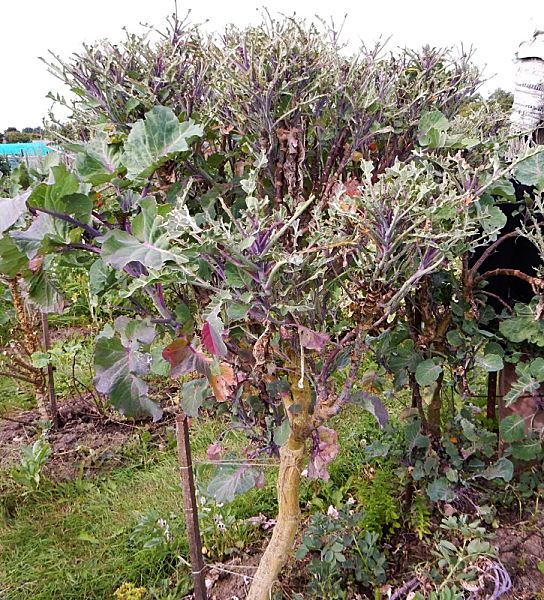
Truly perennial kales were once less rare in Britain than they are now. Most have vanished from cultivation. One that has survived is Taunton Deane kale from the West Country which was preserved in the gardens at Knightshayes Court in Devon. It is a strong growing plant which develops a woody trunk within a few years of planting and can grow over 2m in height in a favourable spot. A mature plant can provide plenty of good-flavoured, green leaves (with a purple tinge and purple stems and veins) throughout the year and these are replenished quickly after harvesting even in winter. It lives for five years or more and is best propagated by stem cuttings as it rarely flowers and sets seed (and seed that is occasionally produced may not come true to type).
Hardiness
Frequently described as ‘very hardy’ but more precise observations of how low a temperature it will stand and for how long do not seem to have been made.
Soil conditions and location and cultivation
Tolerant of a wide range of soils but preferring a soil pH of 6.5 or higher. Plant in full sun. A rich moist soil will give the biggest most succulent leaves.

Height
Can grow to 2m tall or more.
Spacing
100-120cm. A row of plants can be grown at the 100cm spacing. Plant 60cm away from a path (can be pruned back if it outgrows this space).
Pests and diseases
Mealy cabbage aphids can be a problem. Check inner leaves for colonies of these grey aphids and remove them. Cabbage whitefly can also feed on the leaves but rarely in large numbers on this kale and can usually be simply brushed off when harvesting. Cabbage white butterflies will lay eggs on the leaves in early summer and the caterpillars which emerge can strip a plant of its leaves.
Enclosing the plant in fine netting (0.8mm) will prevent the butterflies laying their eggs (the netting should not rest on the leaves but be held above them so the butterflies cannot lay their eggs through it).
Planting flowering plants around the kale such as yarrow and daisies, which attract insect predators that prey on the aphids and whitefly (e.g. ladybirds and lacewings) or caterpillars (e.g. parasitoid wasps) is another approach. Growing the kales amongst an array of other plants may also hide the plants from butterflies to some extent. (Trials have shown that under certain conditions brassica plants growing in bare soil are colonised by significantly more insects than those undersown with clover).
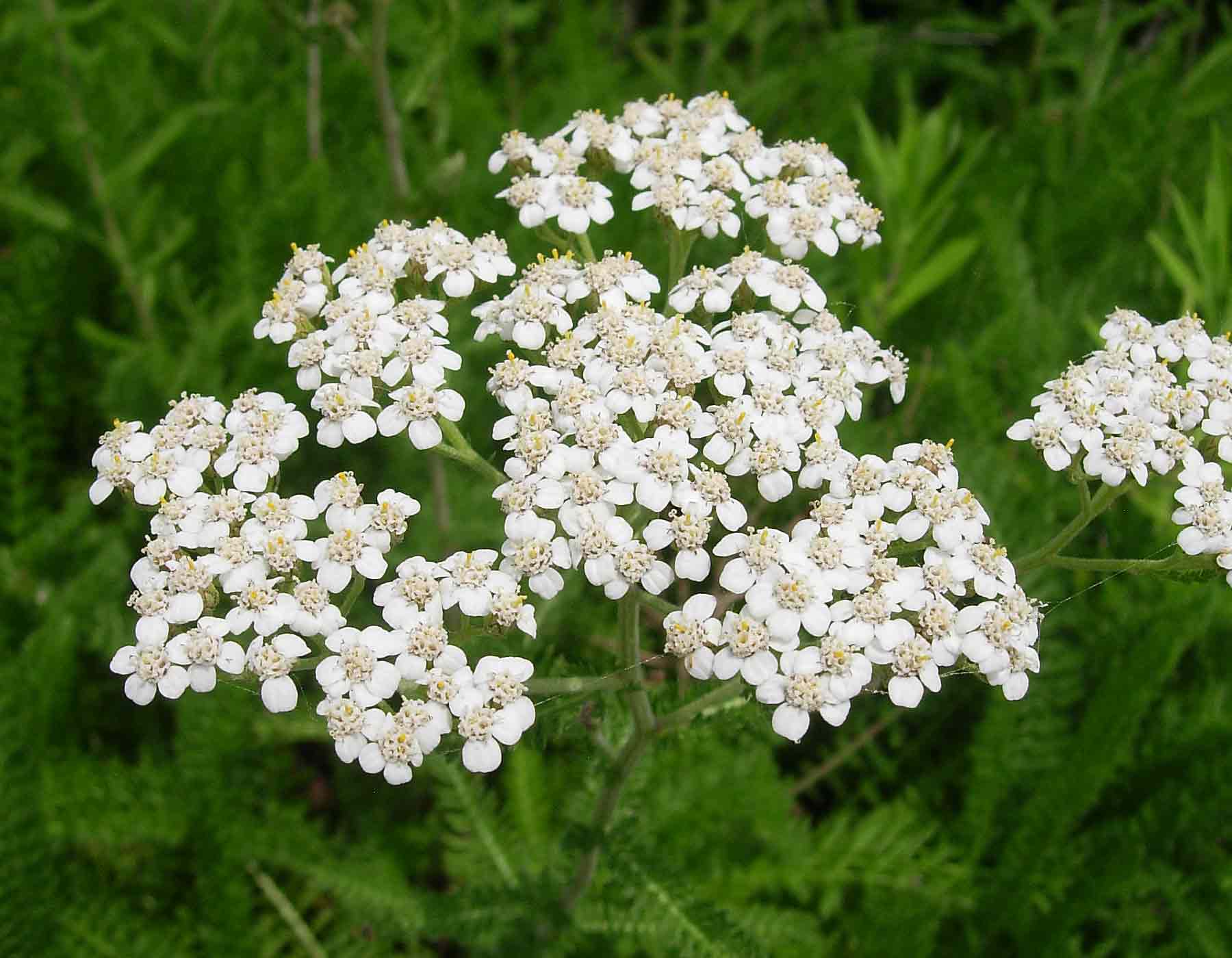
Yarrow – Photo by MDC Staff, courtesy Missouri Department of Conservation.
Wider netting is useful to protect the kale from pigeons during the winter months and in early spring to allow harvests at this time. If plants are eaten by pigeons over winter they generally recover well later in the spring although they are likely to push out a multitude of smaller leaves rather than fewer larger ones and they may also develop a flat top appearance.
Harvesting and yield
Pick leaves from the plant once it is well-established and growing well. They will soon be replaced and can be harvested again. Refrain from harvesting for a while if regrowth seems slow. Harvest can often continue through the winter especially when the weather is mild.
One plant will probably be sufficient to feed two people during the warmer months of the year but two plants enable harvests during the colder months when leaves are smaller and regrowth is slower.

How to propagate
Flowers and seed pods rarely appear on Taunton Deane kale so propagation is usually done by taking cuttings. Stem cuttings will root easily. Gently pull a side stem downwards from a main stem leaving a small ‘heel’ of woodier material still attached. Insert into moist ground, or into a pot of potting compost planting out when roots start to emerge from the base of the pot.
Wildlife value
The wildlife that Taunton Deane kale attracts (aphids, whitefly and cabbage white butterflies and their progeny) may detract from its food value for humans. However planting an extra large crop can serve to feed both wildlife and people.
Botanical name
Taunton Deane kale is cultivated form of wild cabbage (described in 1753 by Carl Linnaeus as Brassica oleracea). It is placed in the cultivar group ‘Acephela’ (without a head).
Common names
Cottager’s kale (a name also applied to other kale varieties).
History
In 2010 BBC Gardener’s World featured this kale being grown at NT Knightshayes Court in Devon. It had been given to Lorraine the kitchen gardener manager there some years earlier by a visitor from Somerset who said it grew widely in their locality. It isn’t clear if it was already named Taunton Deane kale at that point or if it acquired that name at Knightshayes to mark its geographical origin. (Taunton Deane was a modern administrative district of Somerset from 1974-2019 but was also an Anglo-Saxon ‘Hundred’ of Somerset before the Norman conquest, deane coming from denu, Old English for valley.) Charles Dowding, author of Organic Gardening, The Natural No Dig Way recalls being given a cutting of the Taunton Deane kale by Lorraine in 2007. I cannot find any records of a kale by this name prior to 2007.
It is said to also have been called ‘Cottager’s kale’ a name which occurs frequently in gardening journals from at least 1859 onwards when Charles Turner of Slough introduced a new plant under that name. This Cottager’s kale had been developed by Mr Prior, gardener at Midgham park in Berkshire, by crossing a kale/Brussels sprout hybrid (found at Sherburn Castle, Oxfordshire) with ‘Old Purple Broccoli’. From its description it sounds like modern-day ‘kale sprouts’, small, non-heading, purple-tinged frilly cabbages sprouting all the way up a longish stem (about 3ft) topped with a mop of larger leaves.

Image from page 146 of “The Gardeners’ Chronicle and Agricultural Gazette” (1859).
Seed was sold for this plant by Turner and although it was attested by some to grow true from seed, Charles Darwin grew the plant and recorded that he hadn’t found it to do so. Cottager’s kales of varying descriptions crop up in gardening journals in the following decades and seed for Cottager’s kale (for a plant of a more purely kale-like appearance) can be found today in seed catalogues.
It seems likely that Taunton Deane kale originated as one particularly vigorous descendant of Turner’s Cottager’s kale, passed on from gardener to gardener via cuttings (and losing its ability to flower regularly in the process due to the tendency of plants which are propagated vegetatively for a long time to accumulate mutations).
Sequoiah
Thank you for this article! I believe in the United States this is very similar genetics to what we call purple tree collards. Purple tree colors are also brassica oleracea var. acephala. The plants here look identical to the ones in your photograph. They seldom bloom here as well and I have long tried to figure out why they do bloom when they do. It doesn’t seem to be stress induced.
For years I have collected the seed from this plant as well as some others in the same species. Of course, they are not true to type but they are fun to experiment with and thus I have discovered some cool new varieties. If anyone is curious, I have a website: http://www.projecttreecollard.org
Alison Tindale
Hi Sequoiah, I know your website and have admired the plants you have there! I direct people to you if they are looking for seed. I do grow purple tree collards from the US alongside the Taunton Deane kale and they look quite different close too. The Taunton Deane is a sturdier plant, the leaves are less purple and mine haven’t grown as tall as the purple tree collards (although I think they can). Of course the purple tree collards I’m growing may be different than yours…..
Alison Tindale
I’ve changed the first photo in the post Sequoiah. You were quite right, the previous one was of a purple tree collard! Well spotted. The leaves of the Taunton Deane kale have some hues in the leaf brought on by the cold weather at the moment – in summer they are greener, although the stems and veins are still purple but of a more subdued tone than in the purple tree collard.
Vaughn Barclay
Thanks so much for this excellent website which I’ve just come upon. I share your perennial perspective on gardening and my small allotment plot shares features described here, but with only a fragment of your knowledge, which is hard to find! So this is especially appreciated. I will be referring here often. For instance I have a beautiful taunton deane kale, now huge and woody, and have learned more about it in your article above than I have in five years of having it. A couple of questions if possible. How would you go about pruning it if necessary? And should I always remove the top layer sliced up by pigeons? (it never seems to make the plant poorly).
Thanks again for your work on this site.
Alison Tindale
Hi Vaughn, Thank you for your kind comments. I have always wanted the site to be useful to others and to pass on what I figure out along the way -so good to hear! But as to your questions on pruning, well I just lop off the branches which stick out in to the path between the (3.5ft wide) beds where I grow the kales. Kales seem to take well to pruning especially if you don’t prune right down to the woodiest stems – these will often still sprout but not quite as readily as the greener ones above. But I have just left the layer where the pigeons do their nibbling (which just seems to make the plant bushier). Nice to hear about your allotment – would be good to do a blog post with descriptions and photos of other people’s perennial vegetable plantings.
Vaughn Barclay
Many thanks Alison, look forward to following your site and learning more
Vaughn Barclay
p.s. I have shared your website with my allotment facebook group
Roger Lloyd
Hi
Can you tell me where I can get cuttings of the Taunton Dean Cale ?
Kind Regards,
Roger Lloyd
Alison Tindale
Hi Roger, If you are in GB you can buy rooted cuttings when I have stock (a few going into the shop from time to time at the moment – hope to have more in May. There is an e-newsletter you can sign up to to get news of when they’ll be in the shop). Incredible Vegetables and Quercus Edibles do them too – a few other places also.