Pop some Daylily Buds into your Stir-fry Today!
In this lovely sunny weather the daylilies growing on my allotment are flowering happily:

Daylilies are lilies belonging to the Hemerocallis genus and are popular and easy to grow ornamental plants. Pretty as they are, I planted them on the allotment because daylilies are also perennial vegetables.
I should qualify that and say that some varieties of daylily are perennial vegetables. Some doubt exists about the edibility of certain species and some of the many hundreds of cultivars – and there are also reports of a few people having had an adverse or allergic reaction to them. I’ve been experimenting with the three varieties I’m growing (two of which came from a generous soul on Freecycle who told me the variety names which I then carelessly forgot). But I mean to do more research before recommending or selling any particular daylily.
If you like the flavour and assuming you’ve got a safely edible daylily to hand, Hemerocallis really earns its place in the ornamental vegetable garden! You can feast on the young stalks, the flower buds, the flowers and the root tubers. I’ve only tried the buds so far. They are satisfyingly substantial to pick, snapping off the plant like the green beans they are said to resemble in taste. I stir-fried them with what we had available, which was broccoli, young broad beans, onion greens, a few fresh peas and some yellow pepper.
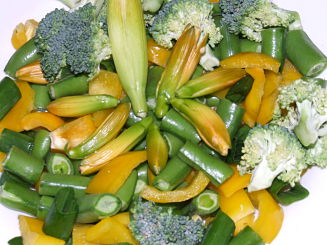
They don’t really taste like green beans to me, perhaps more like slowly cooked sweet peppers or onions, but certainly enjoyable and so easy! I think they are probably best cooked. The first daylily bud I ever tried (from Hemerocallis ‘Stella d’Oro’) was raw and was an amazing sweet buttery experience, but subsequent raw buds have never quite matched it!
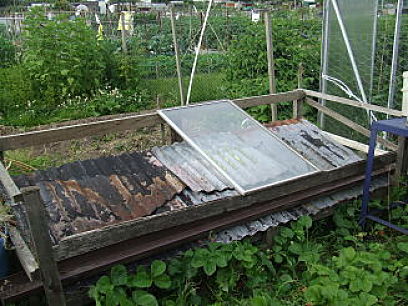
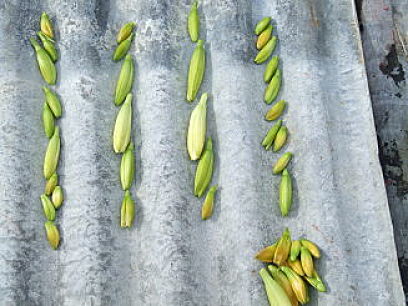
You might like to try the recipe on this site, which also has some clear advice on when to pick the buds for drying. Dried daylily buds (Golden Needles or gum jum) are sold in Chinese markets and used in traditional recipes such as hot and sour soup and moo shu pork. I’m having a go at drying some buds. Here they are on my Dual Purpose Onion Drying and Rainwater Collection Device which I bodged together from scrap on the allotment! (I have yet to finish this project. In time the brown gutter will be fixed lower down to collect water and feed it into a small pond to the left).
In other news, the non-flowering “Profusion” sorrel is still happily not flowering on the allotment.

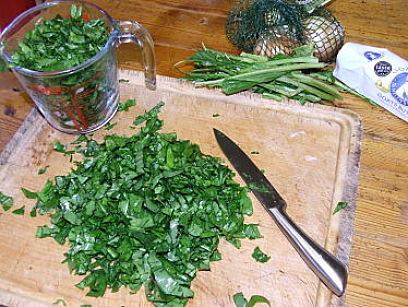
I’ve been looking for recipes that use lots of sorrel as it truly is profuse – I can stuff a bread bag with leaves and barely notice the difference to the plant’s appearance. Following a chat with friends on Twitter about goat’s cheese and buffalo cheese I was pleased to find a recipe for Goat’s Cheese and Sorrel Tart. As I’m rather intolerant of cow’s milk I varied the recipe a bit, using goat’s butter and soya milk. I didn’t have any shallots so I used onions and I also substituted a wholemeal pastry we know we like and I know I can cook without disaster.
I usually trim a tart and wonder what to do with the spare pastry. Why not just leave it on!
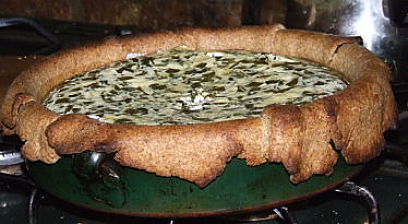
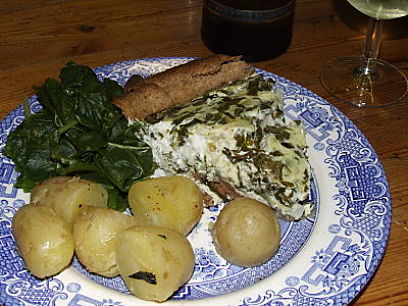
Yummy! Creamy goat’s cheese balanced with lemony sorrel.
Stew
The goat's cheese and sorrel tart was delicious!
(a fan)
Alison
Thank you. I will make it again!
Anonymous
Re left over trimmings from your pastry… Why not use them for decorating the top of the pie! My mum always does this, much to my amusement 🙂
Alison
Good idea. I remember making pastry apples to put on my mum's apple pies when I was a child. I used to put the leftover pastry on the bird table – but the birds ignored it – I'm sure they ate my mum's pastry! My raggedy edges did make it a bit difficult to get the pieces of pie out of the dish!