Skirret Update 2
I’ve been harvesting skirret in the drizzle today. But I started off keeping dry – upending the two pots of skirret which I had growing in the yard…..
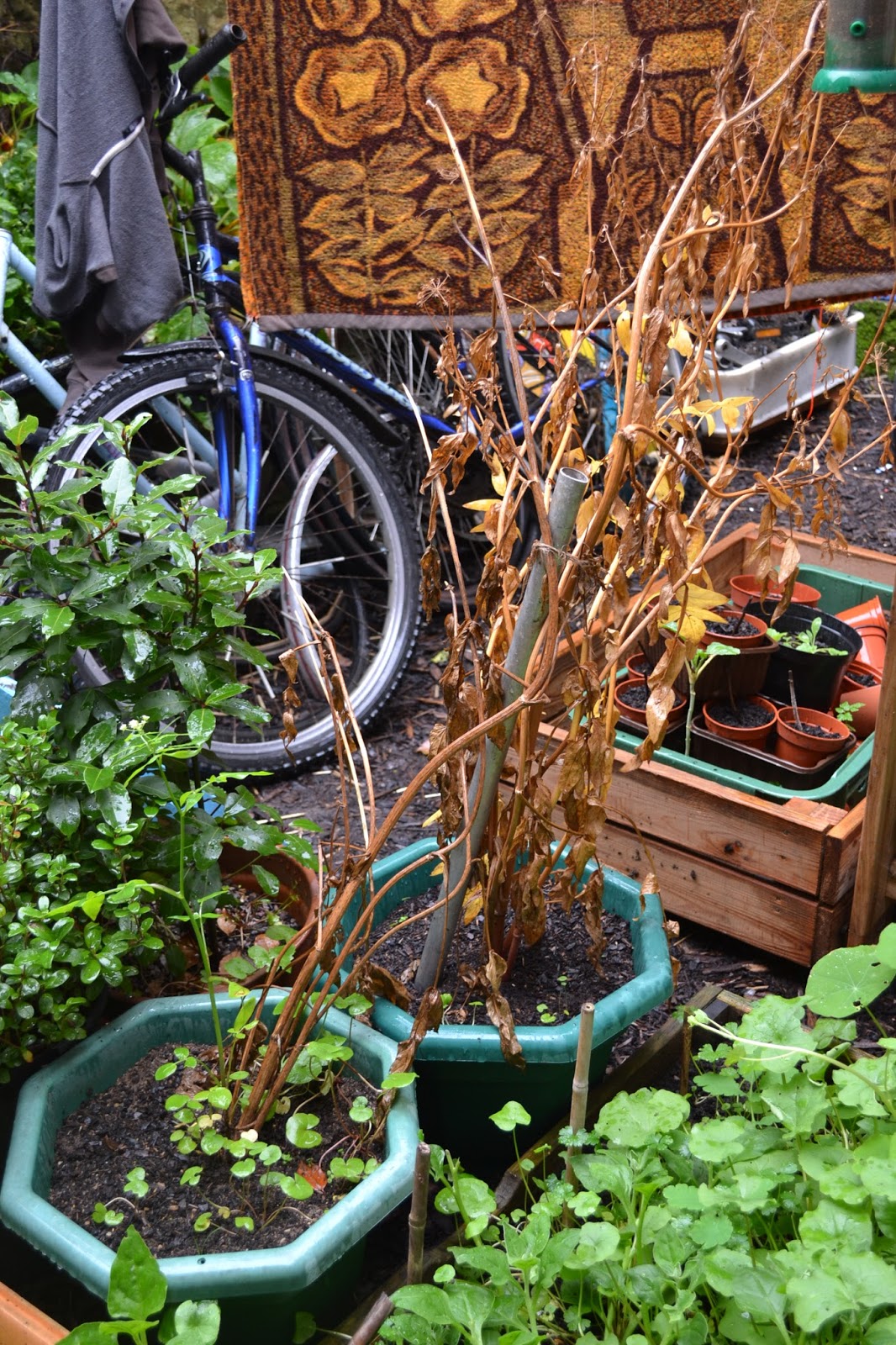
…onto an old shower curtain lain on the kitchen floor. This skirret was kindly sent to me by Mat who writes a great gardening column in the Morning Star. (I found it after I’d been skirret-hunting online, googling ‘fat skirret’, and came up with his description of his skirret with ‘fat fingers, thin skin and no backbone at all’). I’m calling this skirret after the newspaper – have a read of Mat’s article to see his name for it!
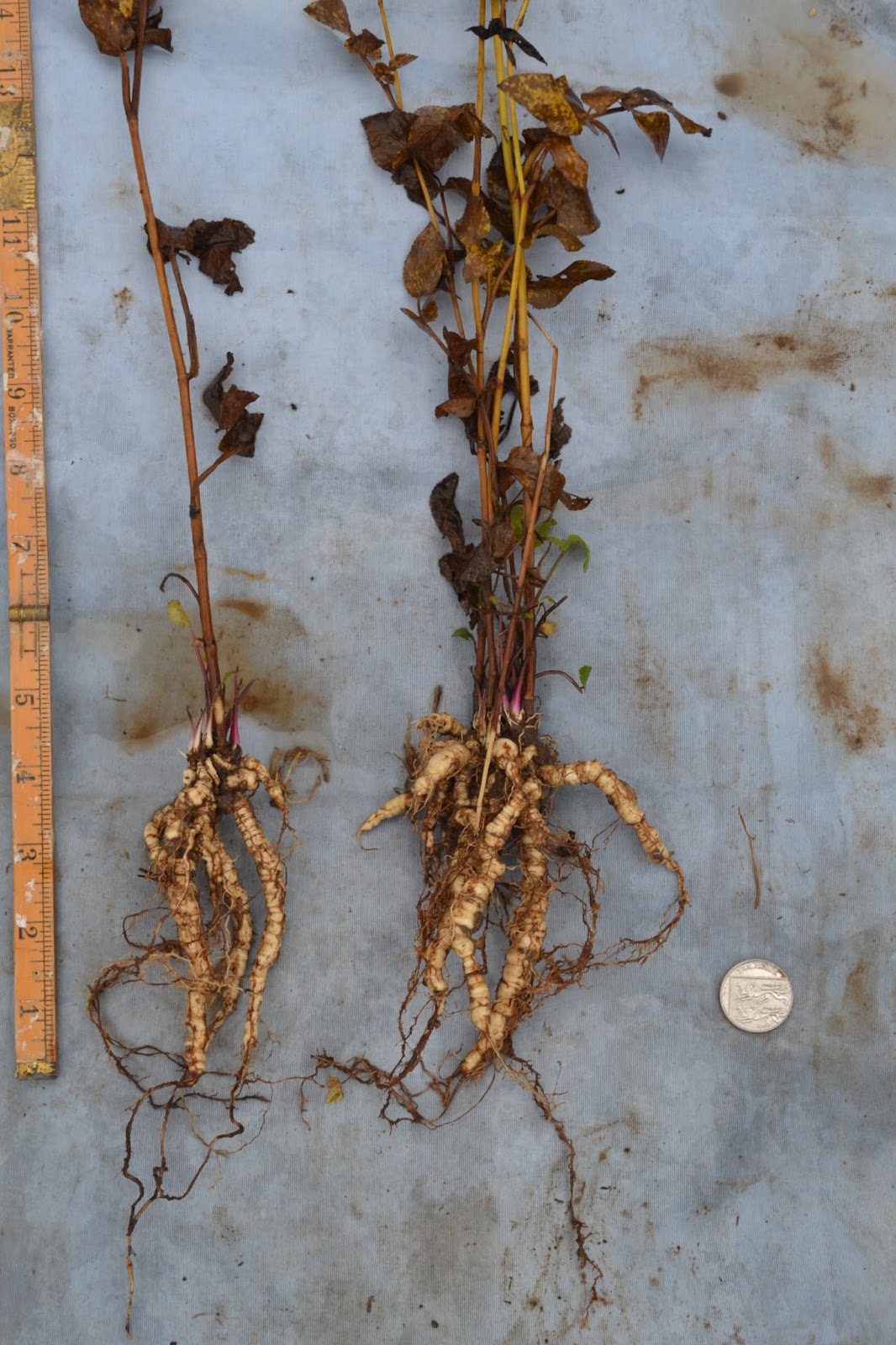
Skirret is said to do well in light, moist soil so I had given the plant in the foreground potting compost with lots of sand mixed in and the one behind it compost with rather less sand mixed in. When I tipped it out it appeared that the sand in the less sandy mix had separated out to lie at the base of the pot.
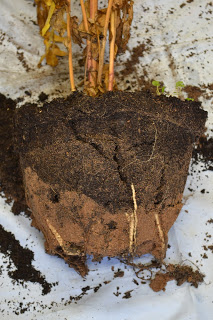
The skirret seemed to have done better in this mix than the sandier one – probably because it could hold onto more moisture. (50p piece in the photos below – 27mm across)
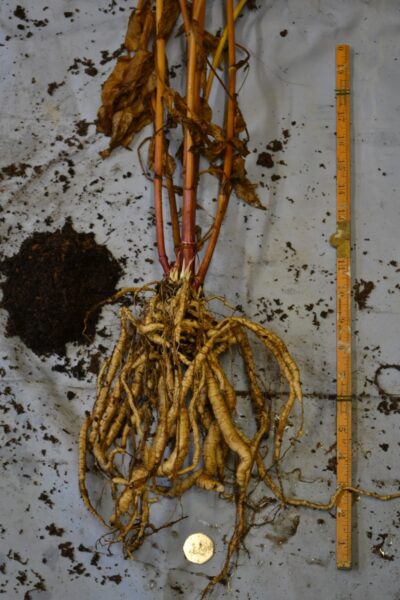
Morning Star skirret from less sandy pot
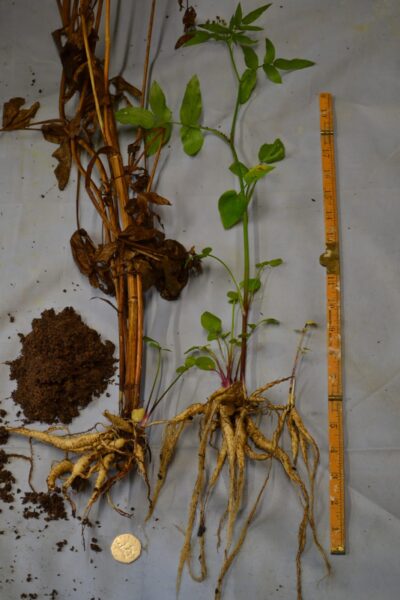
Morning Star skirret from very sandy pot
Then I ventured out into the drizzle. At the allotment I have planted skirret from various sources both in the ‘bog garden’ (an area by the pond which I’ve lined with plastic) and in one of the beds (both areas had added compost, sand and gravel).
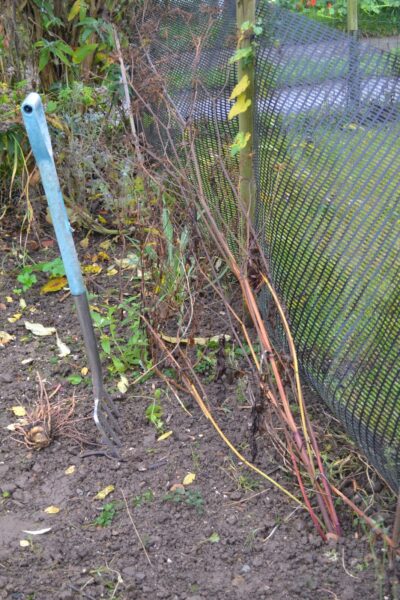
Skirret in the bog garden
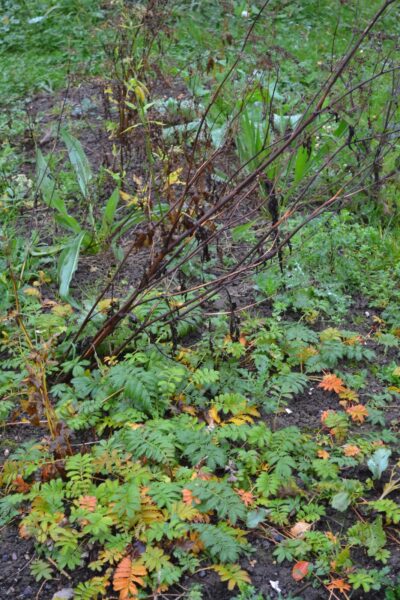
Skirret in the vegetable bed
So this is what I dug up at the plot.
Note: I forgot to take my 50p piece with me to the allotment but I had a 10p piece in my pocket (24mm across)!
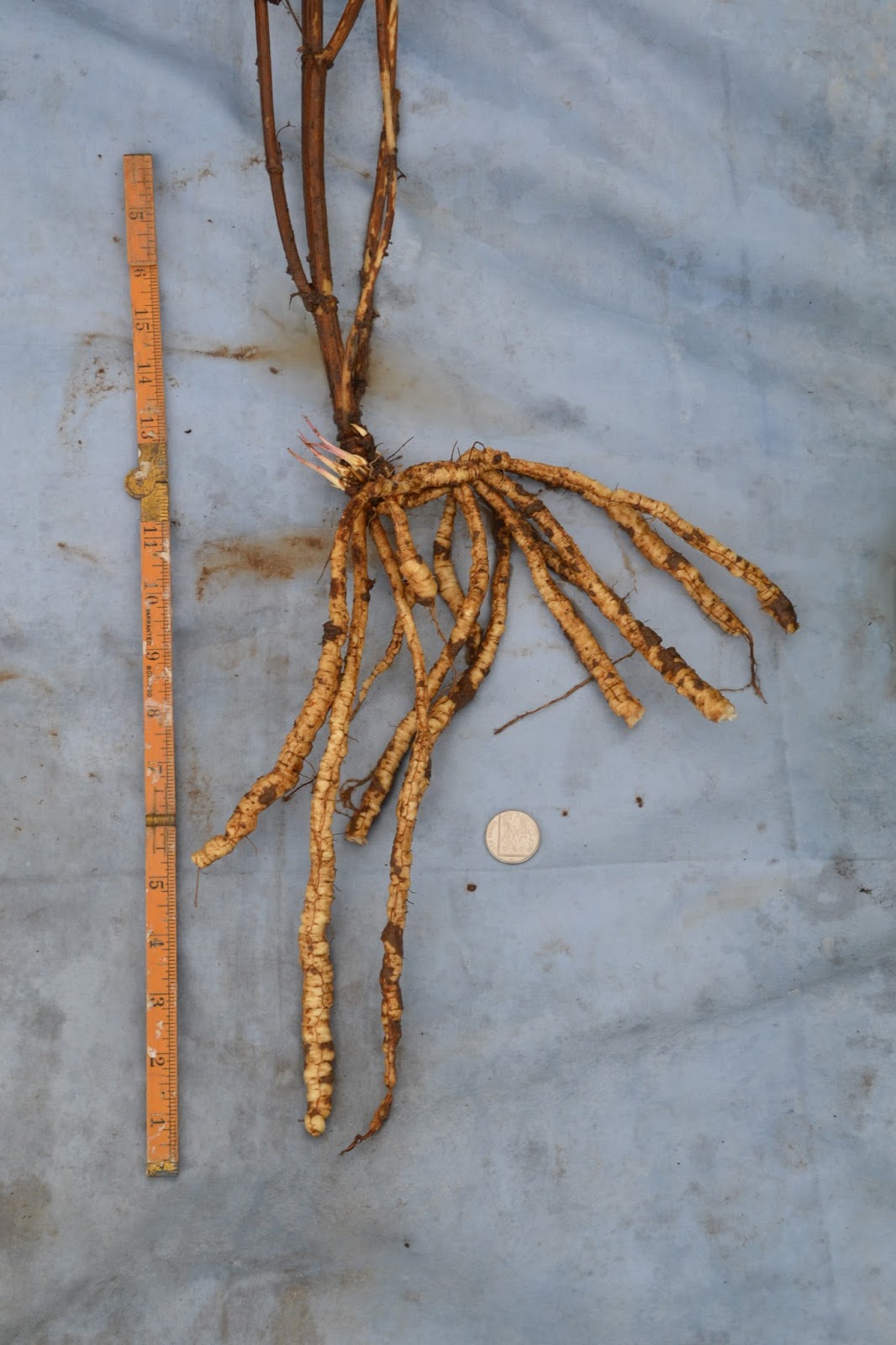
Morning Star skirret from the bog garden
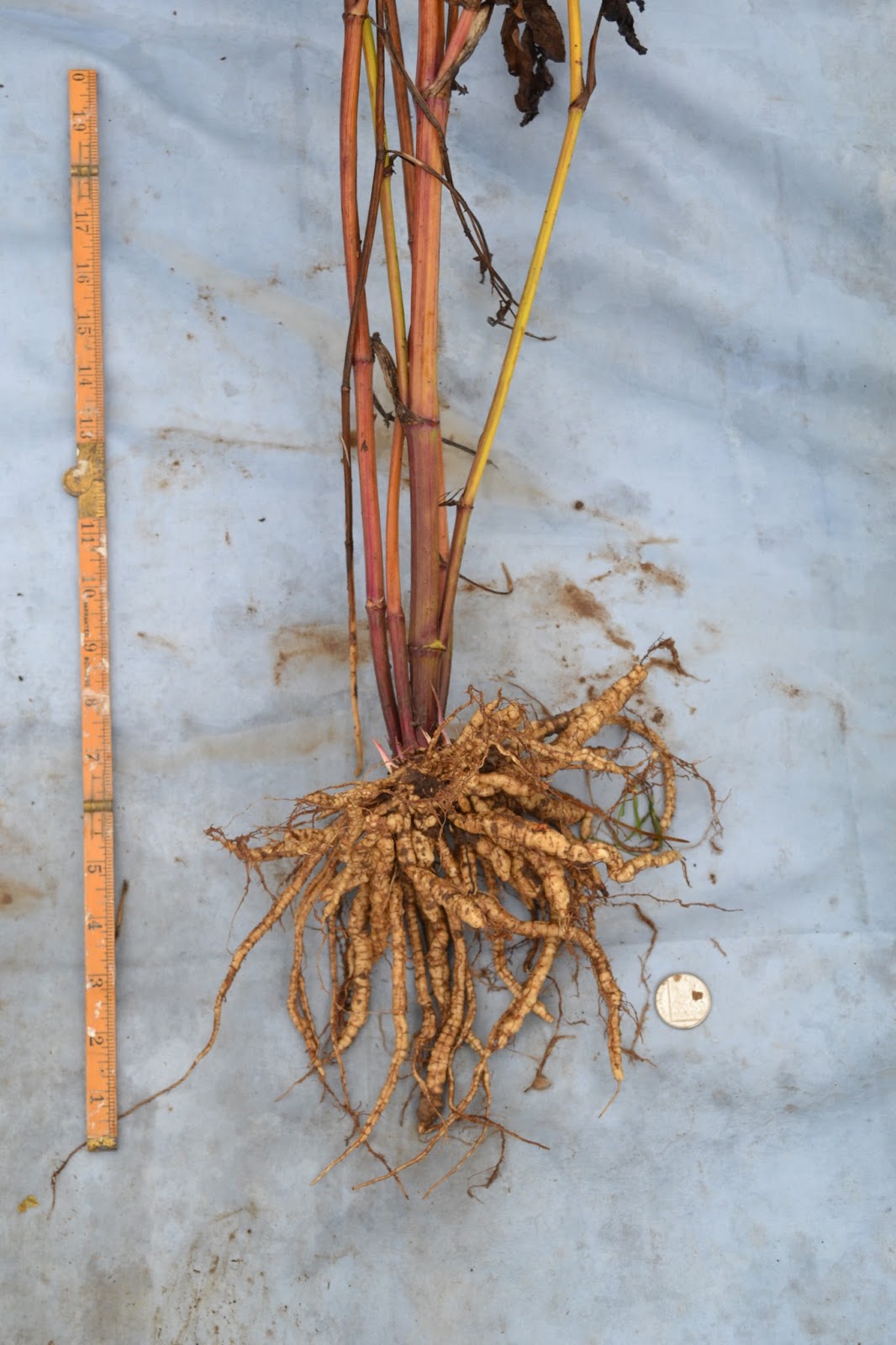
Another skirret from the bog garden
Deaflora skirret from the vegetable bed
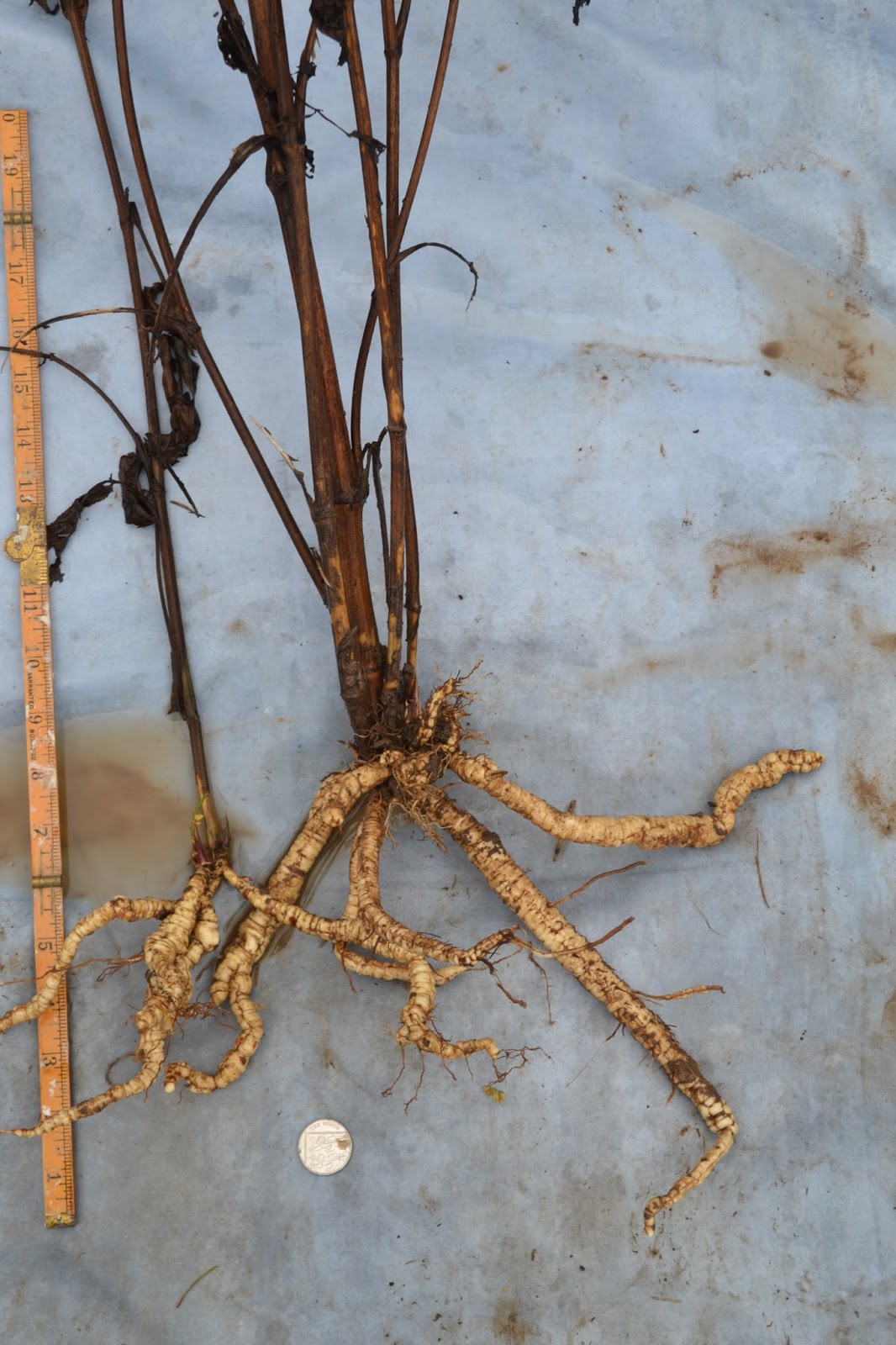
Morning Star skirret from the vegetable bed
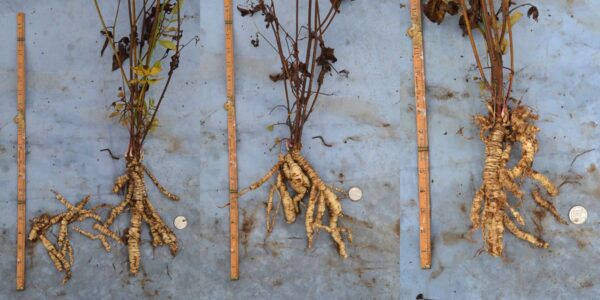
Largest three plants of some seed-sown skirret
The seed sown plants were very pleasing with surprisingly thick roots (the thickest was 27mm diameter). They were also very wrinkly which is not such a good trait. A combination of the smoother, longer roots of the Morning Star plants and the thickness of these seed sown types would be great. Well, I’ve got offsets from both types to replant and seed from both too (hopefully cross-pollinated) to sow next spring.
I made a sort of skirret shepherd’s pie for tea.

Pan of skirret roots
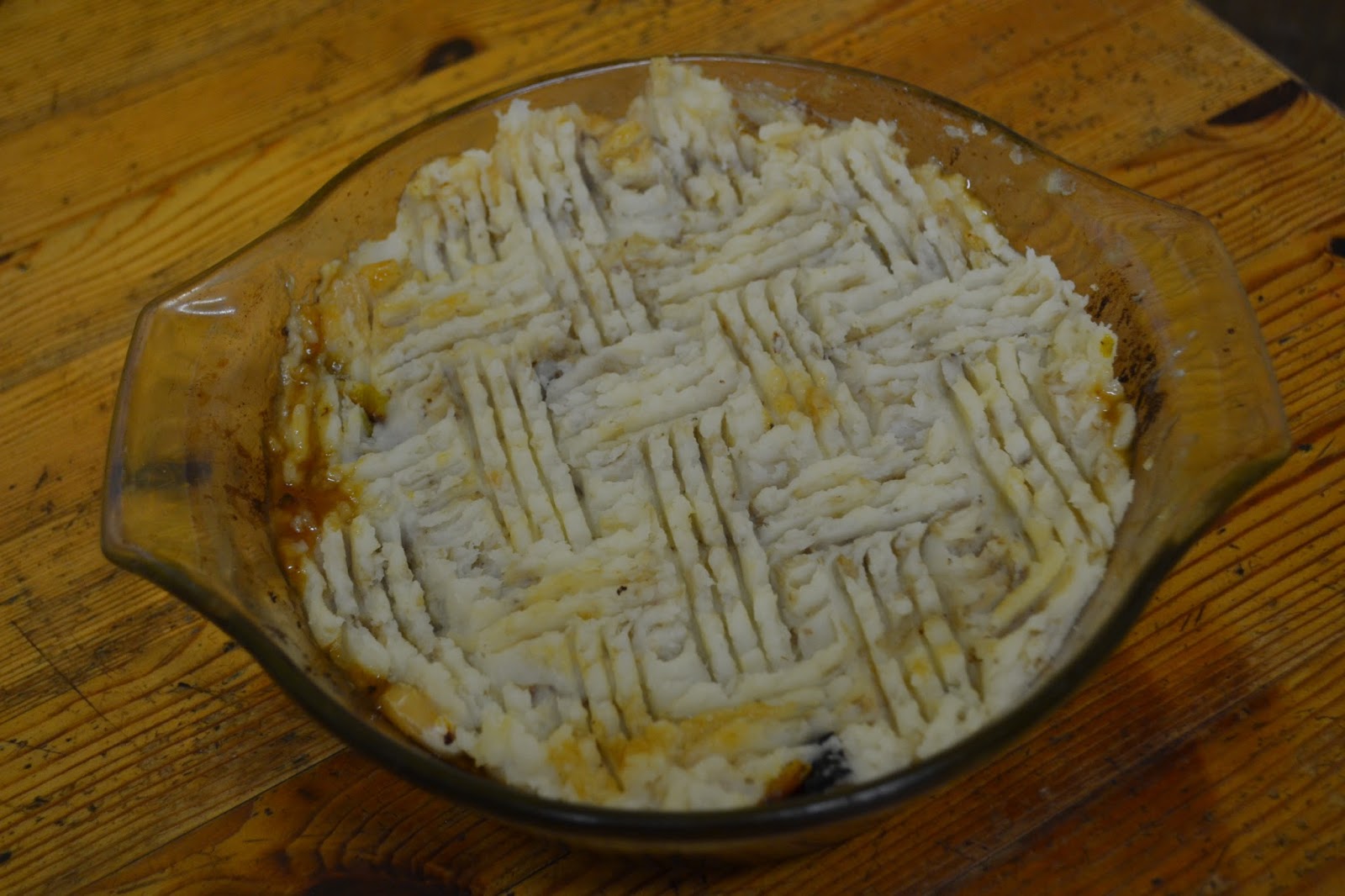
Skirret shepherd’s pie
There were just a few fibrous centres amongst the skirret roots which I had to extricate from the mash. They seemed to be from the Morning Star roots but only the ones from the allotment and not the ones from the backyard. Mat hadn’t found any in his plants so I am doubtful and wondering now if I muddled up one of the plants (although I don’t actually know if this is a genetic trait or a cultural one). There were none in the seed-sown plants.The skirret mash was just like mashed potato but sweeter. I’m encouraged – the future is sweet for skirret!

Plate of skirret shepherd’s pie
Emma Cooper
I've heard mixed views on whether the woodiness is cultural or a trait in certain varieties, so I guess we need to do some more experiments on that one 🙂 Thanks for the sharing your idea for skirret mash, I can see that coming in very handy in the future!