Do ducks eat duck potatoes?
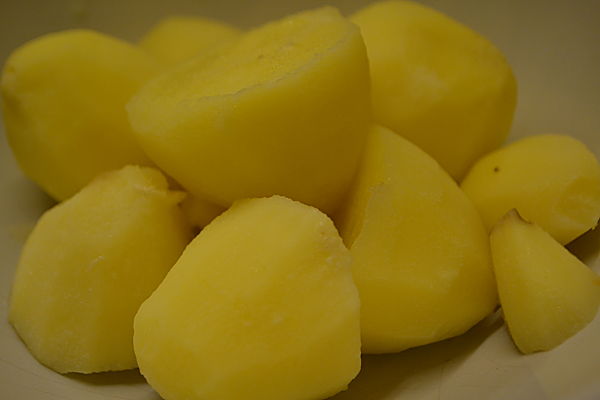
I’m not too sure whether ducks eat duck potatoes. The sources I read disagreed about that! But we do. Well we did for the first time last Friday evening – and they were excellent.
‘Duck potatoes’ are one name for the turions (underwater buds) of the beautiful water plant Sagittaria latifolia, also called broad-leaf arrowhead, or wapato. It is the plant with the arrow-shaped leaves and white flowers in the fuzzy photo below.

The word wapato may be derived from a Chinook word (waqat) and a Tualatin word (mamp-du) for the plant – but there are multiple Native American names for it (including pshitola, kirit and katniss) as it was an important food for many indigenous groups.
Other plants in the Sagittaria genus are also eaten. Although Sagittaria sagittifolia is native to Britain there doesn’t seem to be any history of its use for food here. But cultivated forms are grown and eaten in China (chi gu) and Japan (omodaka and kuwai).
I decided to harvest the wapato just as I was packing up to leave my allotment late on Friday afternoon. I pulled a few small turions from the mud at the edge of the pond. But I wanted a good few to cook with so I tried to get some of the deeper ones by pulling at the dying stems of the plant. This doesn’t work – the stems just pull away from the roots. So I got the rake to dislodge them from the bottom of the pond. The light was falling by now and working away in the dark I began to feel like a moonraker. Moonrakers were Wiltshire villagers who were caught by excise men raking in a pond at night. Pointing to the moon’s reflection they managed to convince the excise men that they were idiots trying to get a ‘cheese’ out of the water rather than canny smugglers recovering the illegal liquor they had hidden there. Well they got away with their booty – and I got away with mine because some lovely big turions bobbed to the surface! I threw the smaller ones back into the pond and went home.
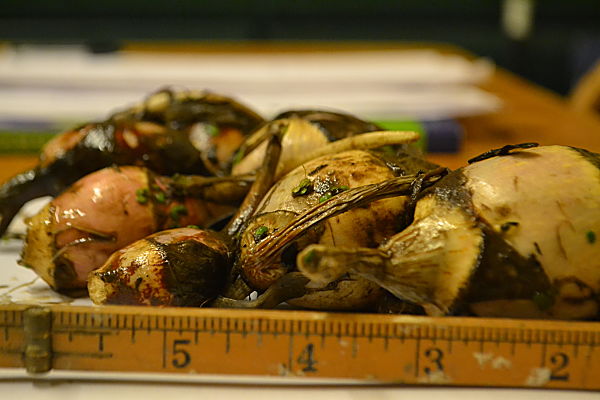
The biggest turion was about 3 inches long but about 2.5 inches once prepared for cooking.
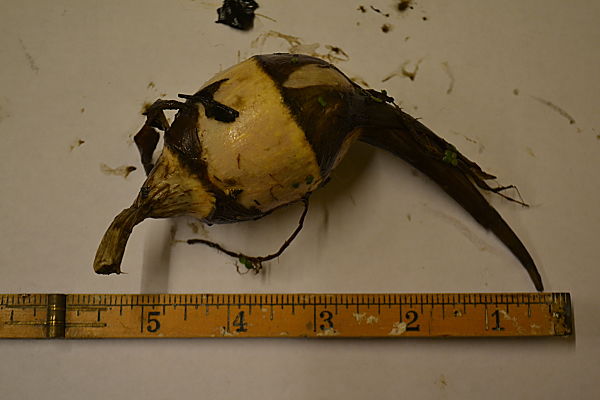
Preparation was very easy. I just had to wash and trim them,….
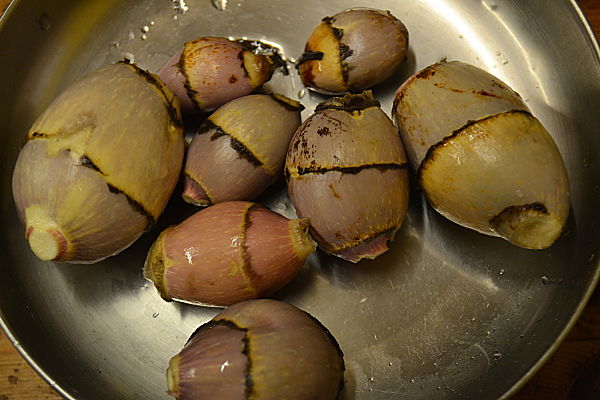
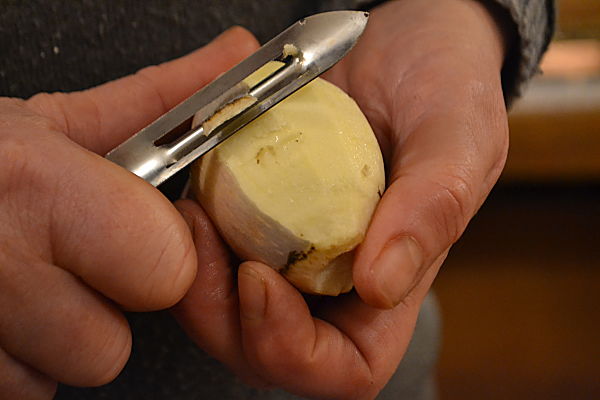
peel them (even easier than peeling regular potatoes)….
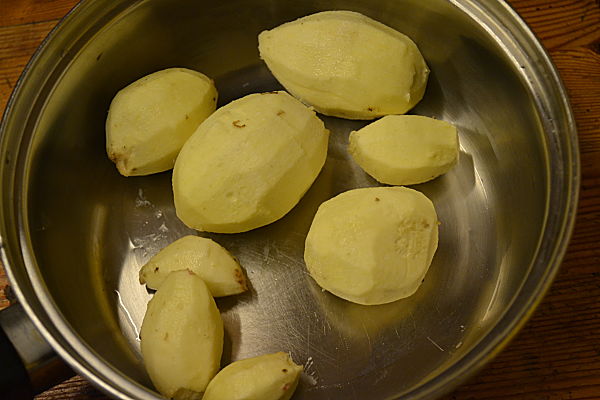
and then boil them (for about 15 minutes). They can also be roasted.
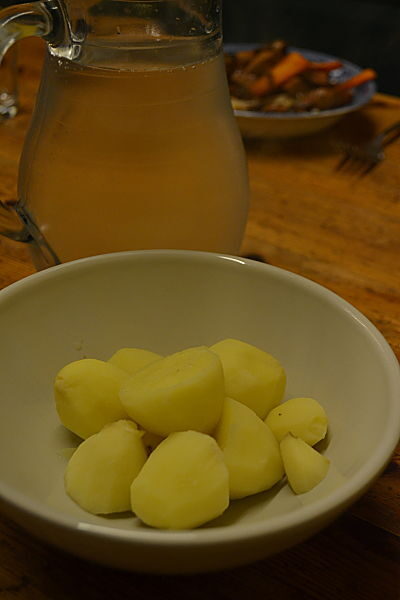
They tasted amazingly like ordinary potatoes, but they have a very slight bitterness which reminded me of the flavour of roast chestnuts, and they are very slightly grainy in texture too.
Actually I’d love to have some ducks at the allotment one day. So I rather hope they don’t eat duck potatoes.
Nathan
Hi Alison,
Is that a Lycopus plant you have growing alongside the Wapato? If so, is it one of the more appetizing American species, or our native L. europaeus?
Alison Tindale
Hello Nathan, well spotted! Yes it is rough bugleweed, Lycopus asper, sent to me by Rhizowen Radix – but as yet untasted by me!