The Resilient Allotment
It’s been a busy spring. Some kind friends have lent us a piece of land in their garden for The Backyard Larder nursery. We’ve been clearing out a greenhouse, starting off sale plants, and weeding and levelling an area for standing out beds for growing them on.

I managed meanwhile to keep on top of my regular ‘annual’ allotment. But on the perennial allotment the spring jobs of weeding and mulching got neglected. Still, with the arrival of the warm weather, progress on the new plot was a bit speedier and I imagined being able to catch up this month.
And then a setback. I’ve been ill and pretty useless for the last three weeks. Stew has helped me keep on top of the greenhouse and plant orders (he does most of the packing up these days) and mowed the grass at the annual allotment, but the perennial plot was left yet again to look after itself.
I was well enough last Sunday to walk up there and see how things were. The plot looked fairly neat on the outside.
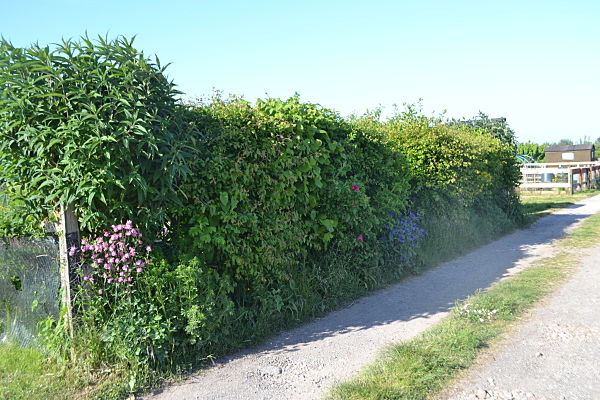
Through the gate (which had lost a plank) the view was a bit messier!
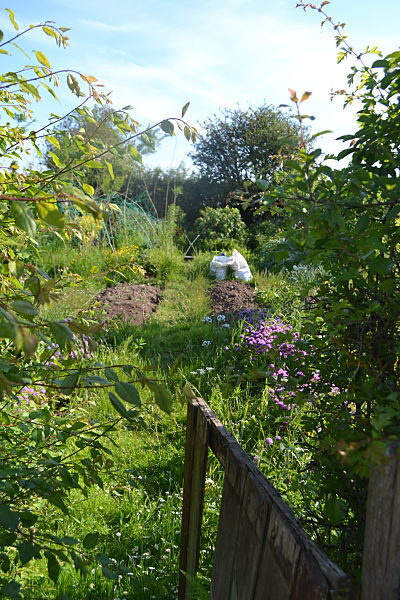
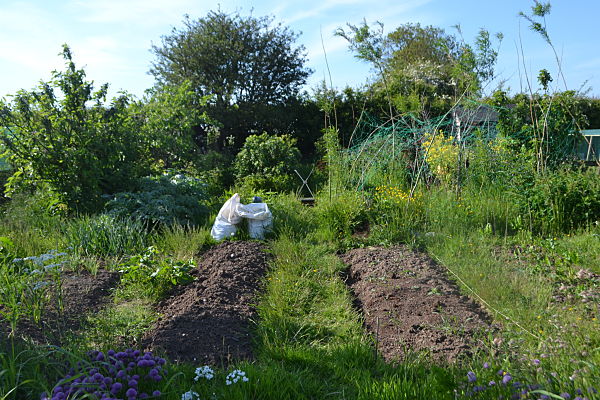
It was mostly a problem of tall, flowering grass on the paths. I’ve been battling to establish clover paths on this plot. This has worked well on my other allotment but on this one they have always reverted to grass quite quickly. I might have one more go this winter. Whilst bark or gravel paths would be easier I like the nitrogen-fixing, plant-food-providing potential of clover paths.
But, looking beyond the long grass, most of the toughy perennial vegetables, such as the sorrel, sea beet, Good King Henry, globe artichokes and cardoon, were doing just fine.
The new allium bed had survived, but would have been more weed-free and moister and the plants more lush if I’d got around to that mulching. Spot the dandelion growing amongst these perennial leeks. Alas, the piles of finished compost for mulching were still lying at the back of the plot!
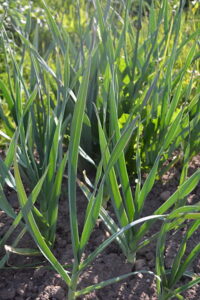
We’ve had several weeks of dry weather with only one decent downpour. The skirret was even more desperate for a protective mulch as it likes moisture and this is a dry site. It was quite diminutive – but at least still healthy.
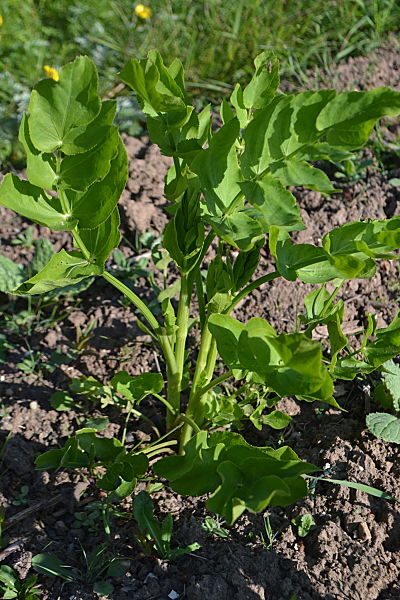
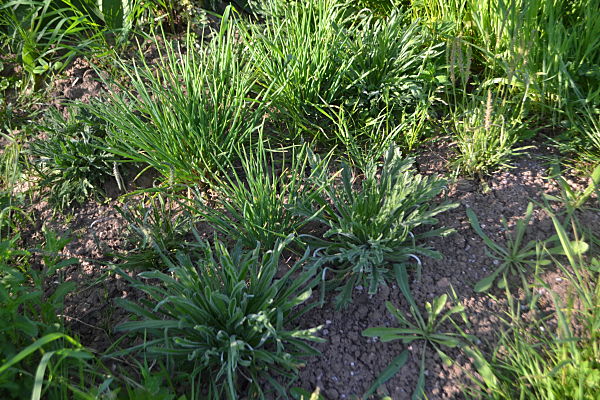
In this new planting of perennial salad plants, the everlasting onion, buck’s horn plantain, and young French scorzonera plants were fine, but I’d lost a variegated wintercress I’d transplanted there in the spring.
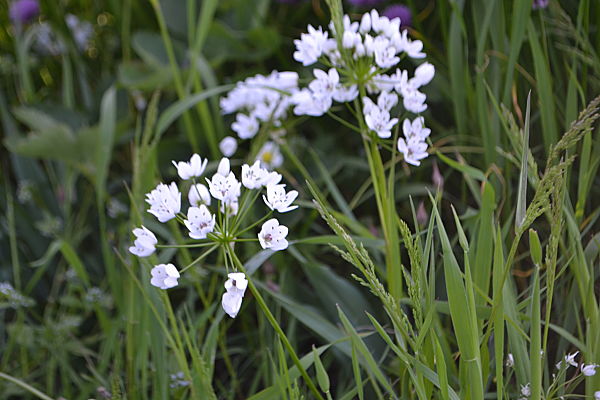
Amongst the weeds in the herb garden a new edible allium, Allium neapolitanum Cowanii, had flowered.
In short, things weren’t too bad. With a working path strategy, and a timely weed and mulch in the spring, a planted up perennial allotment is very resilient and can pretty much look after itself.
I wish I’d been as resilient – but I should be better by next week. I hope so as I had almost a tonne of sand delivered just before I fell ill! It needs shifting to those two bare beds either side of the central path. The idea is to provide oyster plant, hopniss, rock samphire, spignel, tuberous peas and various other plants waiting in the wings some good free-draining conditions that I hope they will love.
But on this visit I just made myself feel better by an easy chop-and-drop of the comfrey which had grown tall around the fruit trees……

and a trim of the long grass down the central path…..
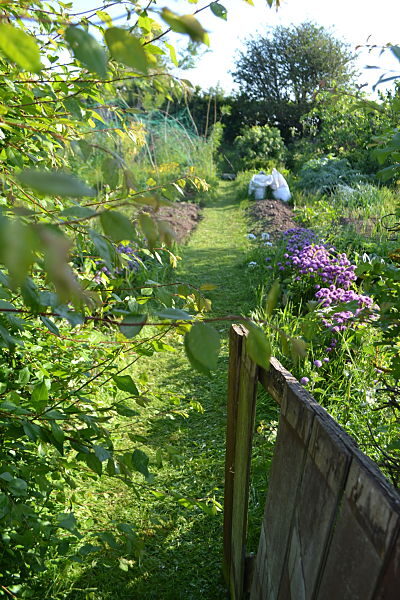
I made a feeble attempt to mend the gate but failed. That will do for now!
Julieanne Porter
I hope you feel better soon. Don’t push yourself too hard though. The perennial plot certainly seems resilient.
I’ve not seen that Allium before. Will it be available for sale this year?
Alison Tindale
Thanks Julieanne!
It is a pretty one, isn’t it? I don’t have any plans to sell it but you’ll find it is widely available. I got mine from R.V. Rogers and they assured me their bulbs hadn’t been treated with pesticides. They will have some again this autumn I should think.
Anni Kelsey
It looks lovely – and of course – resilient!
Alison Tindale
Thanks Anni!