May Plant Profile: Wild Cabbage
The second in a monthly series of perennial vegetable profiles. Practical aspects of growing and harvesting the plant are outlined first, with further relevant information following on. Please let me know in the comments if there are more details you would like me to include.

Wild cabbage (Brassica oleracea) is a biennial or perennial plant that grows around the coasts of western and southern Europe. It forms a loose head of large green or blue-green leaves often with wavy edges and/or purple tints.

Hardiness
Probably hardy down to about -23°C.
Soil conditions and location and cultivation
Will grow in a wide range of soils (pH 6.0 – 7.5) although it does particularly well in nitrogen-rich, alkaline ones with good drainage. It produces best in full sun conditions. Part-shade is acceptable but good ventilation is vital to avoid fungal disorders such as downy mildew.
To maximise the chances that the plant will leaf up again after flowering cut out the flowering stems when the flowers show the very first signs of forming seed pods in order to preserve the plant’s resources. Attempting to remove flowers before this stage usually results in more flowering stems being produced.
Height
24-36 in. (60-90 cm). Up to 7ft (2.1m) when in flower.
Spacing
60 in. (150cm)
Pests and diseases
May be vulnerable to any pest or disease that attacks garden cabbage. Especially look out for and protect from slug, snail and sparrows attacks on young plants and mealy cabbage aphid, cabbage white caterpillar, pigeon attacks on plants of any age. Mildew may occur due to prolonged damp conditions in autumn or poor ventilation. However we have found greater resistance to all of these problems (apart perhaps from pigeons) compared to cultivated cabbage and kale varieties.
Harvesting and yield
Allow at least a plant or two per person.
Pick the youngest, freshest looking leaves throughout the year. They are usually enjoyed boiled or steamed until just tender and served alone as a green vegetable or added to stews etc.
How to propagate
Wild cabbage germinates very easily from seed sown in spring from April onwards. The resulting seedlings will probably be very variable in a wide range of characteristics and desirable traits can be selected for, at seedling stage or later, after observing plants which have been growing for a while. Stem cuttings will also root easily (for soft cuttings gently pull downwards from a main stem leaving a small ‘heel’ of woodier material still attached). Insert into moist ground or into a pot of potting compost.
Wildlife value
Wild cabbage is a host plant to a very large range of beetles, butterflies, moths, flies and sawflies. (Source: BRC Database of Insects and their Food Plants)
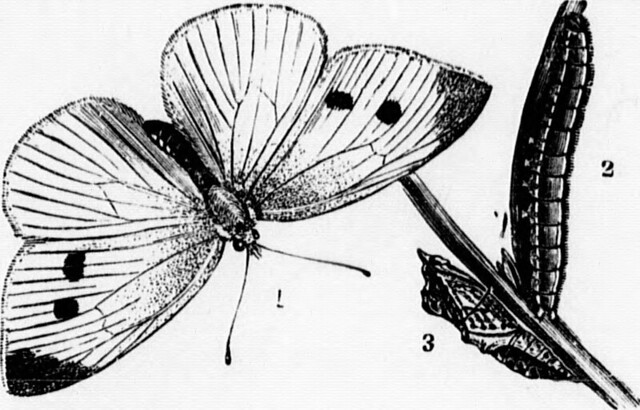
Green-veined white butterfly
Botanical name
The species was described in 1753 by Carl Linnaeus as Brassica oleracea.
Common names
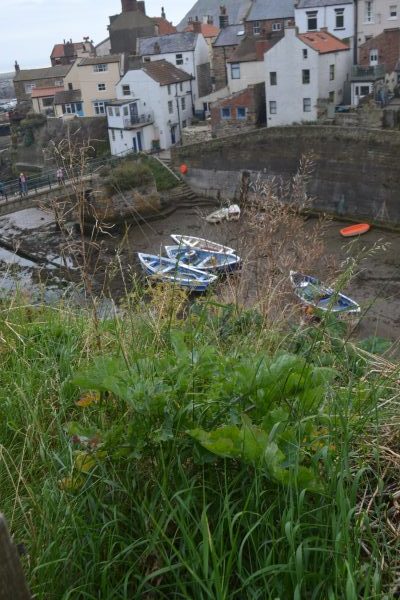
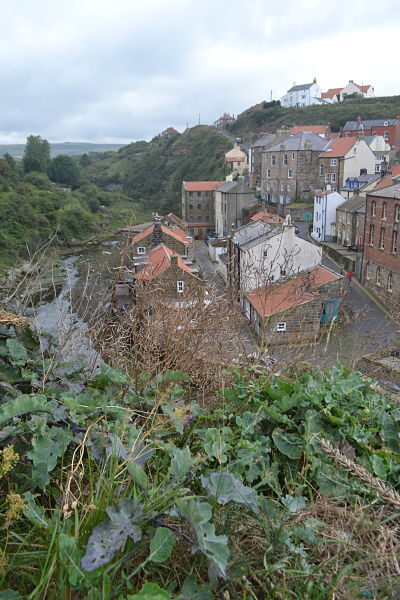
Wild cabbage. Sea cabbage. Wild mustard. Silverwhips (Staithes).
History
Brassica oleracea has been cultivated for probably more than 2000 years with a possible site of origin in northern Spain. Development of the wild plant by humans has given rise to cabbage, kale, kohlrabi, cauliflower, broccoli, Brussels sprouts and other cultivated brassicas.

In the British Isles the wild plant is probably an escape from cultivation as it has been shown to have spread out from sites close to coastal towns and villages. See the work of Dr Neil Mitchell (Appendix E).
SkyeEnt
This article is very timely for me, thank you, since I have just germinated some ‘sea cabbage’ seeds that I collected from a forest garden in Devon last year. I’ll have to find a nice sunny spot to plant them out. Brassica seem to do well here, although they aren’t supposed to like acid soil.
Sonya Lambert
Where may I purchase wild cabbage seeds?
Alison Tindale
Try elfskin_edibles on Ebay.