Perennial Vegetables for the Time-Pressed.

Last month someone wrote to me with a vegetable gardening dilemma. Basically he’d become a dad and was now only getting to his allotment plot once a week or less. The fruit and perennial herbs on his plot were doing well but the annual vegetables he was growing hadn’t survived the neglect. Not finding time for watering was the problem he mentioned, but I thought that weeds may have been crowding his vegetables too. Having discovered this website he was wondering which time-saving perennial vegetables might best suit his new gardening schedule.
Having checked up on the soil conditions on his plot (loamy and fairly neutral pH with stones) and his preferred annual vegetables (‘basically everything’; potatoes, green beans, peppers, courgettes, broccoli, spinach, cauliflower, sweetcorn, peas, cabbage, and carrots), I wrote my reply. Having written it I wondered if it might be useful for other very busy people too. So it is reproduced below.
‘Here are some suggestions. I’ve tried to focus on substitutes for the vegetables you mentioned and gone for the most self-reliant plants. The only plants here that I might water once they were established would be the perennial kales and then only occasionally on a very warm windy day.
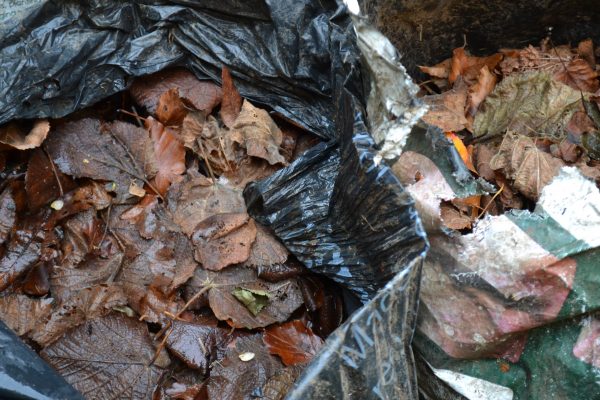
Weeds of course will creep in on bare patches between plants – heavy mulches of something like leaf mould (or just wet leaves) work really well to minimise weeding (and keep in moisture) – just watch out for when they need replacing. Straw is cheap and quick to spread around when you run out of autumn leaves – it can harbour slugs but I don’t usually find that is a problem on well-established plants.
I have the same problem as you with Jerusalem artichokes! You could try wapato or duck potato (Sagittaria latifolia) – a water plant – if you could arrange tubs full of water or something similar. The tubers taste very much like potatoes, the yield nothing like but not entirely stingy either. (I can supply tubers in winter – just 1 or 2 to enable people to get started).
Wapato or duck potato
Maybe also worth saying, if it isn’t too obvious, that with heavy mulches you might still get pretty good crops of potatoes with no extra work after planting them.
Oca (Andean tuber plant) is an excellent potato substitute in taste and grown in a similar way but yields are only good if the climate happens to be just right for it that year.
Oca plant
Skirret has a bunch of thin roots which are a bit fiddly to prepare but sweeter than carrots (slight parsnip flavour, lovely cooked texture like mashed potato). It needs no extra care after planting but does need a moist, but well-drained spot.
Skirret
Perennial kales are the perennial vegetable gardener’s cabbage. No heads but lots of leaves. The flavour is slightly more bitter but cooking methods and seasoning make a lot of difference to how much it is enjoyed. The best is perhaps Taunton Deane kale but Daubenton kale and purple tree collard are also good. The only problem is pest damage – you need to protect them from slugs and birds when establishing (maybe worth getting them quite big in a pot first in your circumstances!) and then you’ll need to protect them from cabbage white butterflies and aphids in summer and pigeons in winter with nets. But on the plus side you don’t need many plants because they are big and leafy! Give an organic mulch like garden compost to feed them once a year.
Taunton Deane kale
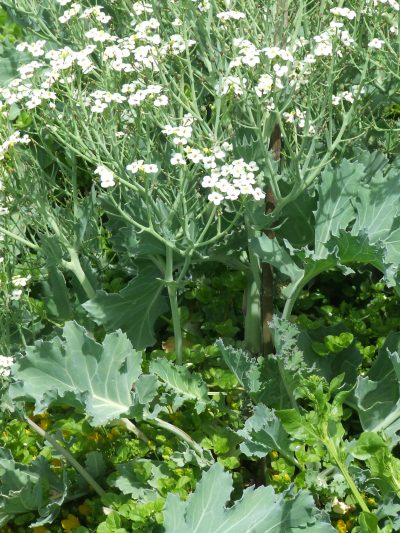
There is also sea kale which is pretty impervious to pests – but only really productive in spring and early summer. You can eat the blanched shoots (cover with a bucket from when the shoots first appear for a period of one month), un-blanched shoots and leaves, flower sprouts, even the new seed pods which look just like peas but have a cabbage taste!
Sea kale
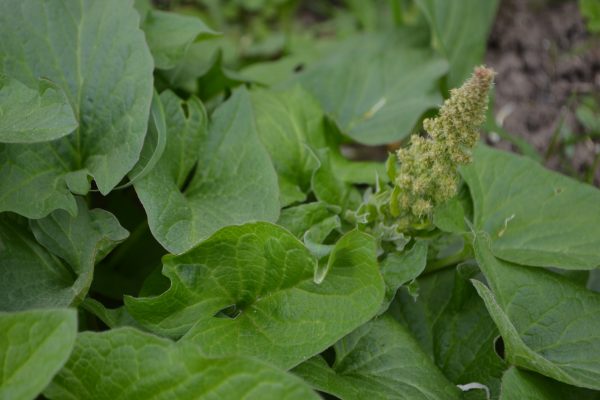
Excellent spinach substitutes are sea beet (in a well-drained spot), Caucasian spinach (which likes shade, needs something to climb up – runner bean supports would work well I think – and has a mild flavour) and Good King Henry (a bit bitter for many people but fine in a stew).
Good King Henry
Perennial Nine Star broccoli needs as much protection as the kales above and the yield isn’t great but the ‘broccolis’ (flower sprouts) of Good King Henry, Turkish rocket (spicy flavour) and sea kale are very good eating – I steam them together.
Edible flower sprouts of Nine-star broccoli, sea kale, Turkish rocket and Good King Henry.
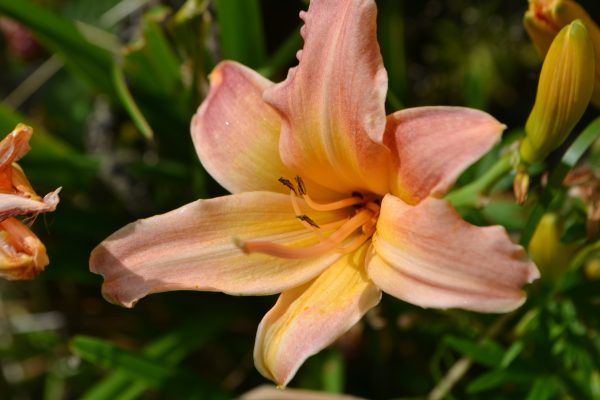
There aren’t many good perennial counterparts to vegetable fruits like peppers and courgettes but you might want to try daylily buds. They are eaten a lot in China and Japan – you snap off the buds when they are fat and succulent and cook them in a stir-fry. (Sometimes said to taste of green beans or peppers but to me they seem more like slices of onion). They will look after themselves once established on your plot.
Daylily flower and bud
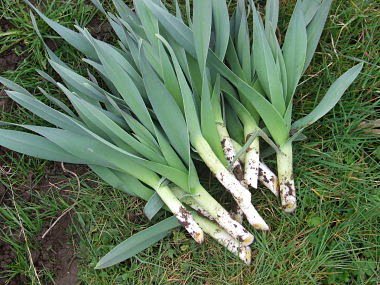
I have problems with perennial onions (potato onions, Welsh onions and tree onions) on my allotment as they seem to get diseases there – but the leek family ones (Babington leeks, elephant garlic and a St Victor x Oerprei leek cross which I sometimes have for sale) stay quite clean. Mulches are even more valuable with easily swamped slender plants like leeks – or try growing them through your herbs – they seem to push through low herbaceous plants quite happily.
Babington leek
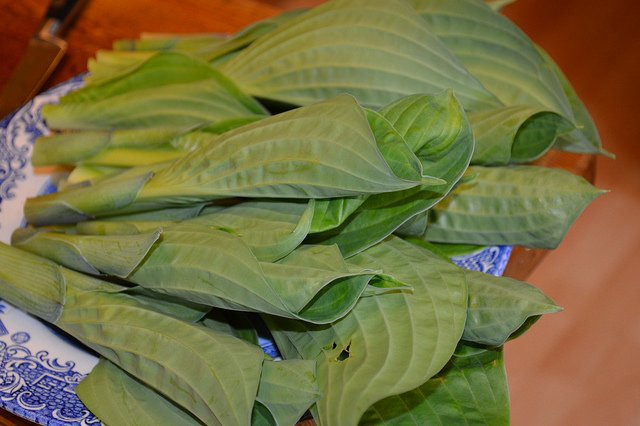
The other plant that comes to mind at present is hosta (best in shade if you have any). The young unfurled shoots are quite delicious cut off at ground level and steamed or fried with seasoning and the plants quickly replace them and go on growing without seeming weakened at all. Slug and snails like them a lot but for the purpose of getting the early shoots a dressing of sand around the crowns of the plants will probably be enough to protect them.’
Hosta shoots



Of course this is just a partial and particular list and many other perennial vegetables could feature in a busy person’s garden. Any perennial vegetable greatly cuts down on garden work from its second year onwards, because it is the establishment of young plants which is the most time-consuming part of vegetable growing. That and protection from pests and diseases – but most perennial vegetables are fairly resistant to these. Not brassicas I hasten to add! They do need a bit of fussing over. But I included them above as a substitute for cabbage, and because, with the help of suitable nets, a pretty much perpetual harvest can be enjoyed.
My correspondent wrote back and said he’d decided to try leeky alliums, elephant garlic, Taunton Deane kale, sea kale, daylily and oca – which sounded like a very good place to start. I hope that, once established, his future allotment greets him each time he visits it with the sight of healthy, self-sustaining vegetables.
Helen Butt
Thanks very much for your advice. I do already eat hosta and would urge others to try it, if they haven’t done so yet.
John
Hi
You really should add New Zealand spinach. I have it in my garden in zone 8 (near Bilbao, Spain) and it grows even in the shade in winter. Mine is grown in excellent earth – product of horse manure and shredded straw and it has grown to 2-3m in diameter. It’s a plant that keeps on giving, and then self seeds.
Alison Tindale
Hi John,
It is an excellent plant – but not perennial in most of the UK – although yes it does reseed well.
John
Hi Alison,
Here we get frost a few times and even the odd snowfall and although it is affected it is not severely damaged (provided the snow melts quickly) and easily survives the winter. I reckon it could deal with even a zone 7.
Alison Tindale
I expect it does survive here in some southerly counties. I must admit I was hopeful it would here as it stays green and healthy very late into the year and copes with the first frosts. Unfortunately in my experience it is killed root and all by later frosts and we are in zone 8.