‘Eat Your Front Garden’ – book review
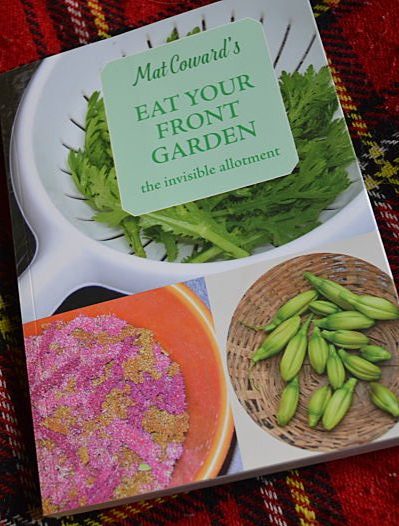
Eat Your Front Garden is a new book by Mat Coward, gardening columnist for the Morning Star newspaper, and also a writer of crime novels, children’s books and much more besides. I was sent a copy of his book to review, and I was delighted because I already knew about it through Twitter and very much liked the sound of it. How could I not, when I have spent many a bus ride looking out on front gardens, thinking of the quantity of food that could be grown in even the smallest of them – and wondering why more people didn’t do it?

The reasons are myriad of course, and probably shared as much by people who acknowledge the need to maximise home food production as by those who have no interest in it. So here is a book for someone who would like a front garden that provides useful food harvests, but that doesn’t feature traditional fruit and vegetables and won’t raise the eyebrows of a passer-by, except perhaps by its beauty!
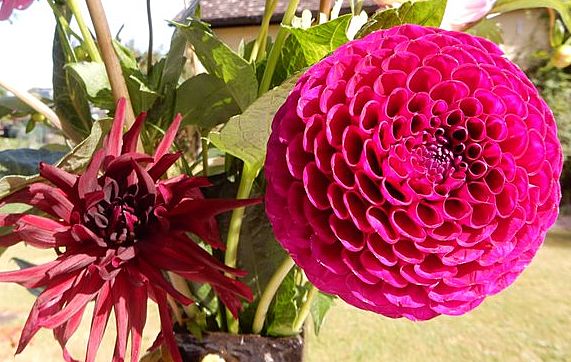
Dahlias
Mat writes not about how to blend food plants with flowers, but how to grow a garden of ornamental plants that are nevertheless genuinely and usefully edible (i.e. not in need of difficult processing, or miserly in what they will yield, or only for those with very obscure tastes). In his words,”We’re not planting a potager. We’re planting an invisible allotment.”
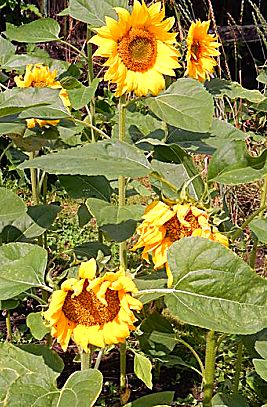
Sunflowers
So what does he suggest we grow in our invisible allotments. Here are a just few of the plants that appear in his book…dahlias in a rainbow of colours, bright daylilies, purple mallows, delicate bladder campions, grassy tiger nuts, rustling bamboo, red-leaved orach, decorative vine leaves, shade-loving hostas, trifoliate oca, dancing fuchsia ballerinas and early-flowering Japanese quince. All edible? Yes! (I would have also included sea kale, which he doesn’t mention, for its fabulously textured blue-green leaves and honey scented flowers).
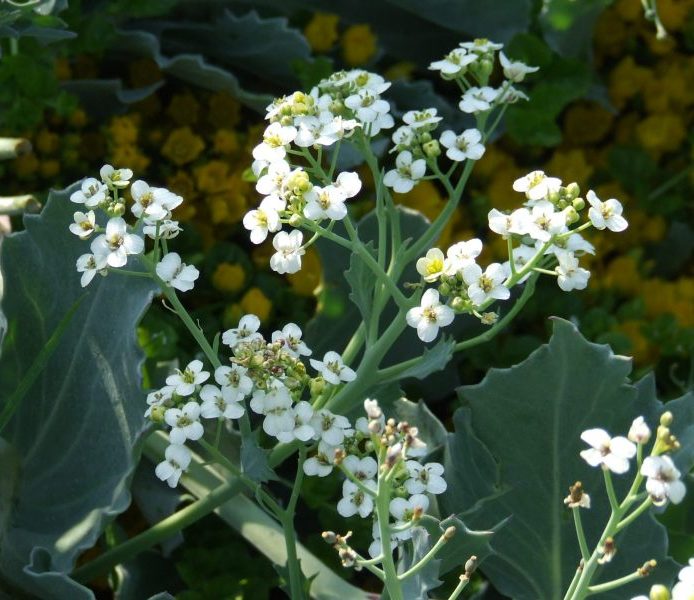
Sea kale
Mat tells the reader exactly how to propagate, grow, harvest and eat all of the edible plants he recommends. Each plant has its own chapter. That’s one of the things I especially value the book for: I have heard about the edibility of a lot of these plants but he gets down to the nitty-gritty of growing and cooking them. And he makes his instructions accessible by assuming no gardening expertise on the part of his readers nor a stock of gardening equipment. And then tosses in some gentle humour too, which makes it a rather friendly little book.
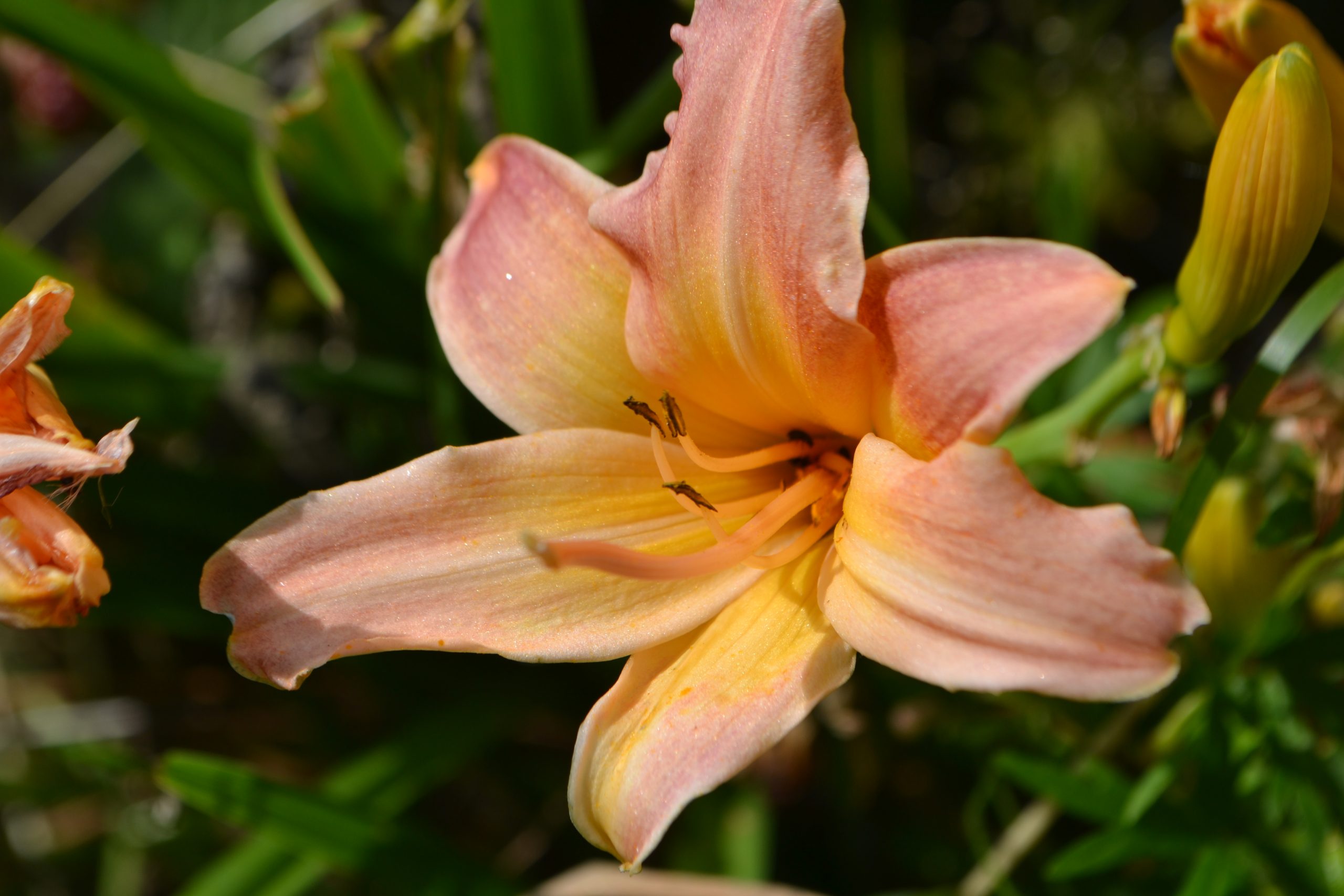
Daylily
It is quite a little book in length and breadth although quite chunky. A nice size to hold and peruse. And put me in mind of another similarly-sized book on my bookshelf which you might want to turn to if you get really inspired by the invisible allotment idea. This is the The Garden Forager by Adele Nozedar. This book is actually focused on the back garden but features many of the plants in Mat’s book and some others too. It has less explanation of how to grow them but includes some delightful recipes. A nice companion volume!

Oca
I first came across Mat’s garden writing when looking up potato onions or some such unusual edible. And discovered that he has been growing and writing about unusual edible plants, such as burdock, Chinese artichokes, mashua, tiger nuts, mexican sour gherkins, walking stick cabbage and dandelion, for years before the recent popularity of such crops. You can buy an ebook of many of his Morning Star gardening articles. He is a good person to be writing a book about eating your front garden.
Gwenfar
This sounds like a great book. I’ve had edibles in my front garden, grown with ornamentals, but not thought of making it a pretty edible space entirely. Will check it out.
Nadya King
In the 70s I was friends with Kate Gessert, who wrote the Beautiful Food Garden on creating front yard gardens …
Like you, I’d often drive by yards here in Western Oregon, and wish they had more edibles – this year, so many do!