Nettle Seed Protein
It is seed collection time in the garden and with plant-based protein on the mind I’ve been wondering which of the perennial edible plants I’m growing might furnish edible seeds – and slowly making a list of possible candidates. We often look to peas and beans for plant protein but there isn’t much in the way of hardy perennial legumes that will grow in the UK. Other seeds are worth considering as all seeds tend to be high in protein (needed by the seedling that will arise from them).
Poppy seeds are great for protein and I’ve discovered Czech makovec recently – a delicious cake made from a large amount (200g) of poppy seeds, enough to make a serious contribution to one’s protein intake with their 18% protein content.
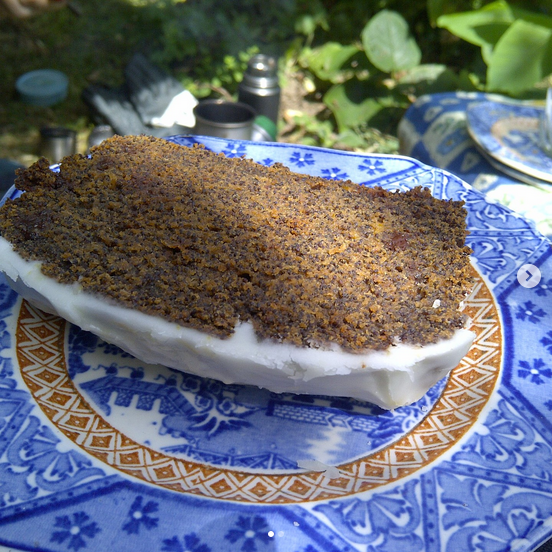
Makovec made with 200g poppy seeds
I worked it out at 3.6g protein per portion from the poppy seeds (with the cake cut into 10 portions) and 7.3g total per portion if you count the protein in the flour and milk in the recipe. An adult female needs about 45g protein per day. Papaver somniferum (opium poppy) is the best source of edible poppy seeds. An annual of course, albeit one that pops up from self-sown seeds perennially.
So I wondered about perennial poppies and broke apart these Papaver orientale capsules….
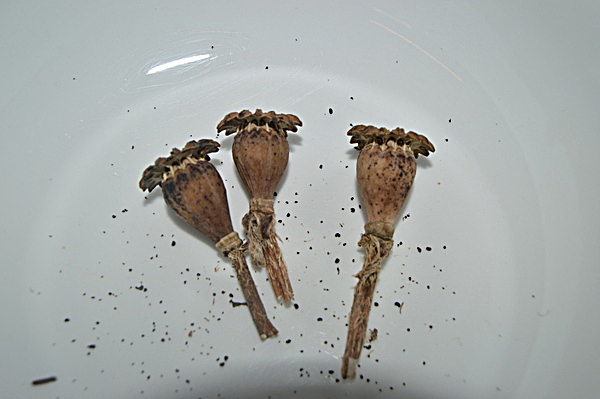
which yielded a very small amount of very tiny seeds….
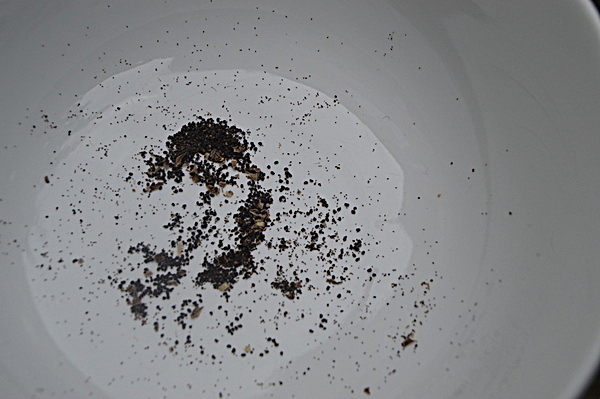
Not much to offer the protein harvest!
I went on to consider nettle seeds (from perennial common stinging nettle, Urtica dioica) which I discovered have a 30% protein content.

Female nettle with drooping triangular seeds ready for harvest.

Male nettle with more upright catkins of four-sectioned flower buds.
There is also a lot of information online about the beneficial fatty acid content in nettle seeds and numerous health benefits from other compounds they contain (such as serotonin). It is said they will, ‘give you an energy boost and help to put you in a cheerful mood‘. That is from this article from Monica Wilde which is a good place to start to find out more.
So could I use a lot of nettle seeds in cooking? I learnt that, for sensible consumption, there is a limit usually given in the region of 25g per day, as they are very stimulating and you’ll ruin your sleep if you have more (and I expect that amount could be too much for some individuals). A lot less will give you the energy boost – maybe just 5g but if you went up to the 25g limit you’d get 7.5g protein. The trouble is 25g of nettle seeds seems quite a lot to incorporate into cooked food that just one person would eat in a day.
This is what 25g of nettle seeds looks like….
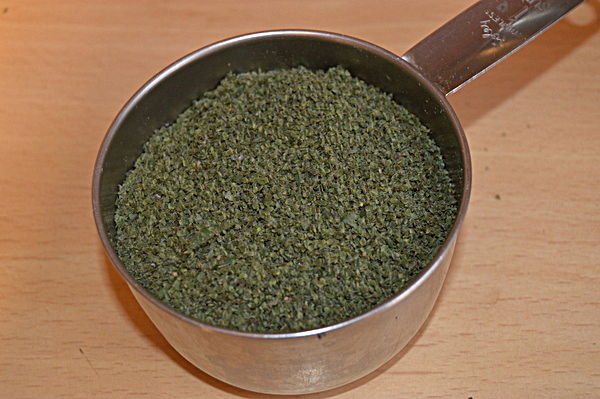
….quite a lot of seeds, they are quite light!
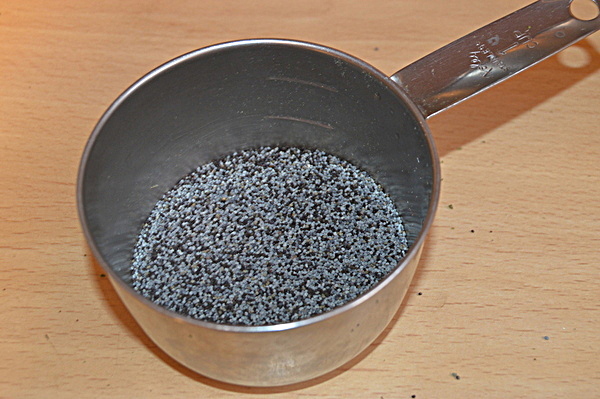
By comparison this is 25g poppy seeds….
But I decided to have a go. My first thought was tofu, which actually means bean curd, so perhaps just ‘curd’ is a better term when not using beans. I’d just made some red lentil curd following Camilla Salisbury’s recipe for her extra firm version. A very pleasing result and it was very easy so I thought I’d try the same with nettle seed. Green gunge was produced which didn’t set. Shrek might have liked it but I didn’t. I’ve spared you the photo!
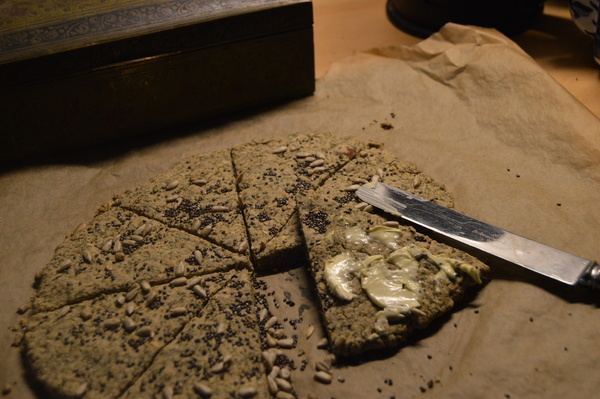
Cautiously I next tried these nettle seed and hazelnut oatcakes using only 13g nettle seed, adapting a recipe from Nest and Glow. They came out quite well. Tasty with a bit of margarine on them. Each triangle gave 0.5g protein from the nettle seeds and 4.2g total counting the protein in the hazelnuts and oats.
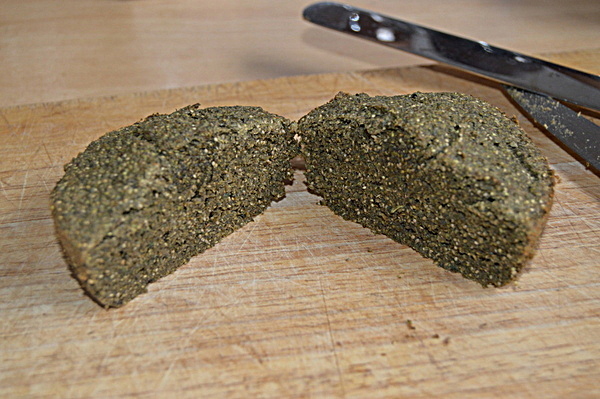
Encouraged by the flavour but aware that the nettle seeds were only making a small contribution to the protein content I thought I might as well try going back to the original makovec recipe and substituting nettle for poppy seeds. I only had 25g of nettle seeds left so I made an eighth of the mixture and baked it in a stainless steel measuring cup. I didn’t really expect it to work – but I liked it. The sugar complemented the slightly sour, musky flavour of the nettle seeds. True, it doesn’t look as inviting as poppy seed cake and was a bit on the worthy rather than the delectable side! But would be very nice along with savoury ingredients such as olives, hummus and sauerkraut.
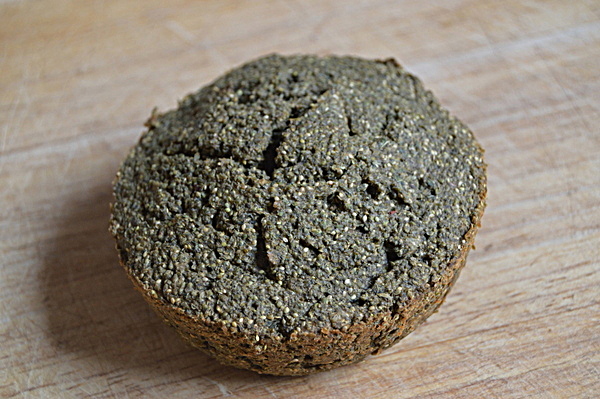
I ate half of it, in case the whole bun made me too buzzy!
I don’t know much about how digestible such seed protein is or if there are problems with anti-nutrients such as lectins, especially when a particular seed is eaten in quantity. Also one source suggested that some of the health benefits of nettle seeds might be lost if they were cooked – I don’t know much about that either. This is experimentation and speculation rather than recommendation but I hope it is of interest to some.
Meanwhile I’ll keep working on that list.