Ärtvicker – A Potential Perennial Pea
Ärtvicker is the Swedish for pea vetch and is the common name for Vicia pisiformis, a hardy perennial legume, also known as pale-flowered vetch. It is native to Scandinavia and central and eastern Europe and into Asia.
There are some indications, e.g brief notes by Kunkel, Tanaka and Sturtevant, suggesting that the plant was cultivated in Europe in the past and the seeds used as lentils. But the evidence is scant. The Scottish botanist, John Claudius Loudon, in his, ‘An Encyclopaedia of Agriculture‘ (1831), mentions Vicia pisiformis in the context of ‘Various Legumes which might be cultivated in British Farming’ and equates it with ‘Lentille du Canada’. He doesn’t say explicitly that it is cultivated at this point. Although he does mention further on that that Lentille du Canada is cultivated in France, he here identifies it as Vicia sativa alba (and gives another common name, ‘Vesce blanche’ for the plant). Vicia sativa alba is the white form of common vetch.
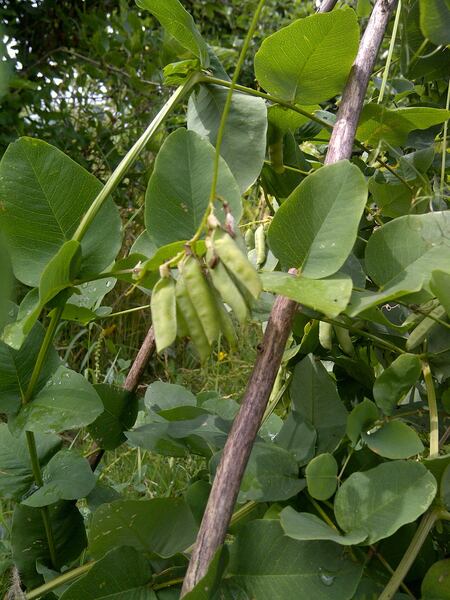
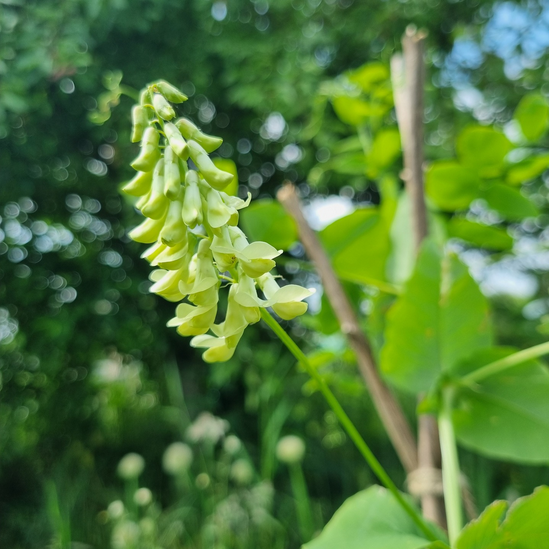
But vetches as a group have certainly figured greatly in the history of human food and are still eaten today in some regions. So I’ve been considering whether ärtvicker might be a good candidate for a perennial pea. It is hard not to be interested in it as such. It has been growing on my plot for several years now and comes up strongly in spring, with multiple robust shoots emerging from the hidden roots and growing to about 120cm. It has large leaves for a vetch, and a rather lovely raceme of yellow-green flowers. These are followed by many clusters of pods each about 5cm long and wider than many other vetch pods.
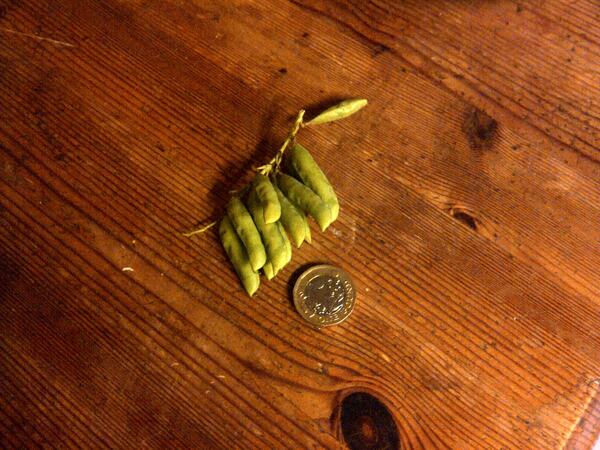
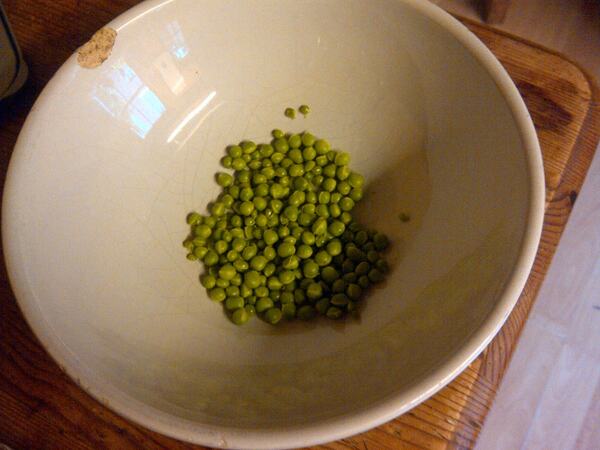
The pods can be podded to reveal 3-7 small green peas. Petite petis-pois to be sure but not tiny. But the small size does makes podding them more of a fiddle than with garden peas. Perhaps mange-tout is an option (I need to check the tenderness of the very young pods). In addition, as the pods don’t shatter and distribute their peas around, the vines could be gathered when brown and threshed to yield dry peas. This might be the most efficient way to use them, with ample soaking and cooking to make them palatable and safe.
Safe? Yes, the essential problem is that Vicia species can contain dangerous toxins and one always has to be cautious when deciding whether they are safe to eat.
So are they safe?
The main toxins that are commonly found in vetches are canavanine (which can inhibit arginine, an essential amino acid important for protein synthesis, wound healing, immune function, and the production of nitric oxide, which helps regulate blood flow, ß-cyanoalanine (a free amino acid, found also as part of a larger molecule, y-glutamyl-ß-cyanoalanine, which can inhibit the production of cysteine, an essential amino acid which is a component of proteins and is involved in antioxidant defence, detoxification, and collagen formation), vicine and convicine (pyrimidine glucosides which can cause favism in individuals with a genetic G6PD enzyme deficiency) and vicianine (a cyanogenic glycoside which may release cyanide on breakdown under certain conditions).
Toxin levels vary greatly between different species of vetch. Unfortunately Vicia pisiformis has been barely studied. But it is encouraging at least that, in this study, a sample from Hungary was found to contain no canavanine. It is also to be noted that a) toxins in vetch seeds can be much reduced by various methods such as soaking in water, treating with sodium bicarbonate or acetic acid, cooking and pressure-cooking, and b) vetches are considered safe to eat in small amounts and infrequently. (See, ‘The toxicity of Vicia species and their utilisation as grain legumes,’ by Dirk Enneking)
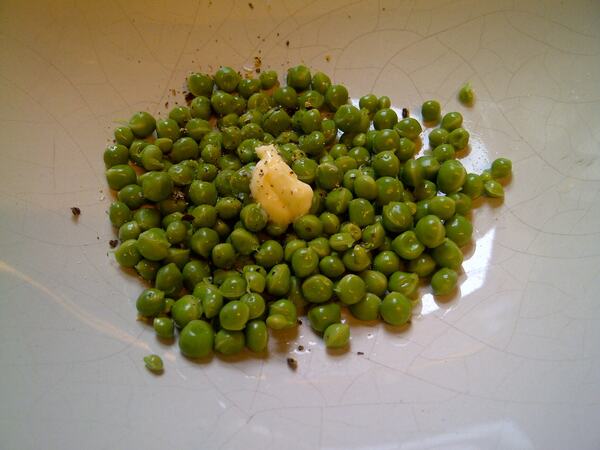
Until someone undertakes a thorough biochemical analysis of Vicia pisiformis, I don’t feel able to recommend that others eat the peas. But I do agree with Magic Garden Seeds who note, ‘The unripe seeds taste pleasantly sweet and are surprisingly similar to young peas.’ I will eat small portions myself occasionally, as lightly cooked green peas, and I’ll be experimenting with them as mange-tout and as dried peas too at some point.