Mallow Patties
Today I made mallow patties, known as chubeza or khubeza patties in the Middle-East. They are eaten in both Israel and Palestine.

They are made from khubeza, common mallow leaves (Malva sylvestis), a short-lived perennial wildflower which is very common in Britain and has lovely mauve and purple flowers (there is a white form also).
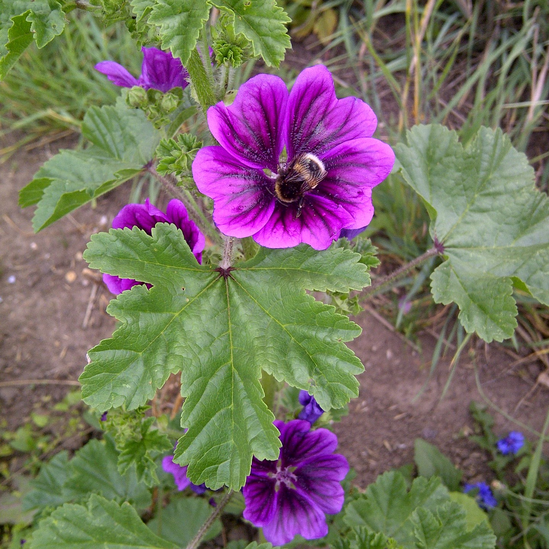
It is native to Europe, Asia and North Africa and has spread to many other countries across the globe. Mallow sylvestris is a variable species, varying in flower size and colour, life cycle, habit, and hairiness. Selections have been made and there are cultivars with great names such as Inky Stripe, Zebrina, Mystic Merlin, Purple Satin and Magic Hollyhock. Seeds for some of these are easy to find (but if grown together will cross readily so take stem cuttings for further propagation).
I find it frequently as a weed on my allotments. I recently noticed there were especially big leaves on one growing at the base of a raised bed where I was regularly weeding and feeding a chayote vine.
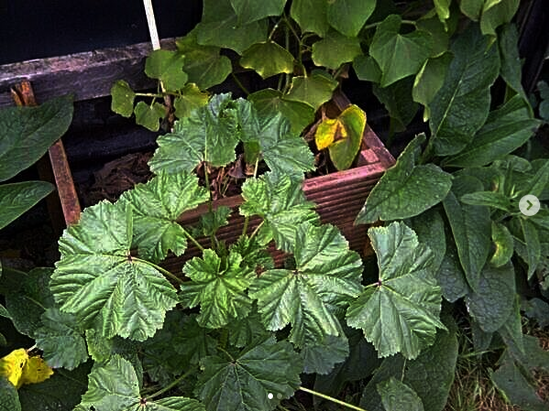
This decided me to make more of this useful plant by making some deliberate sowings (perhaps with some of the showy varieties) and feed the plant well for larger leaves. It also reminded me that apart for gathering the leaves for salads and mixed cooked greens I had only so far used this mallow for one dish, warm mallow salad (called khoubiza or bakoula in Morocco).
For these patties I used a recipe from Katherine Martinelli. It was quick and simple and gave me eight patties.
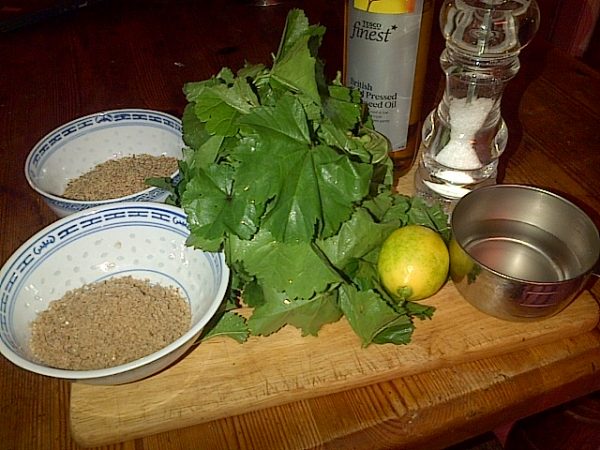
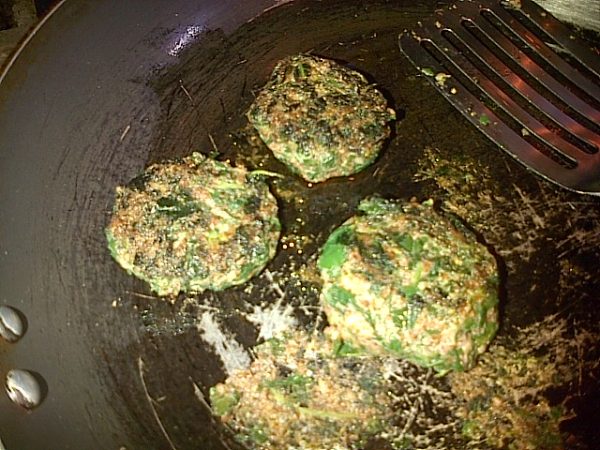
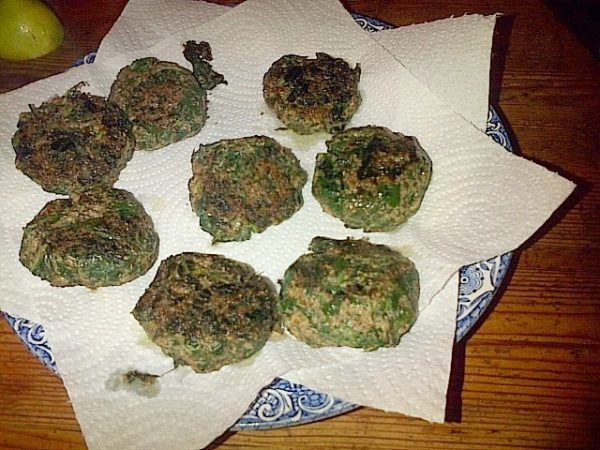
They are good (I’ve eaten three and will have some more for my lunch with yoghurt). However they were little too soft and also needed a bit more flavour. The recipe instructed me to squeeze as much water out of the leaves prior to chopping as possible. I did this with my hands but it was hard to be thorough as mallow leaves are mucilaginous and so slippy when squeezed. I think I will try squeezing the leaves between two chopping boards next time I cook them. And I’ll add some garlic, onion and pepper for extra flavour.
Khubeza grows widely in the Middle East and I read that it has often been foraged at times of famine caused by war, e.g. both during the Siege of Jerusalem in 1948 and during the present conflict in Gaza. To support those currently suffering in Gaza this link goes to a Médecins Sans Frontières article on the war and this to their donation page.