Silverweed Bannocks
I’ve been digging up ‘Dwarf’ Jerusalem artichokes and at the same time harvesting the roots of the silverweed that I planted in the same bed. They grow well between the artichokes as this variety only grows to 60-90cm high so doesn’t shade them too much.
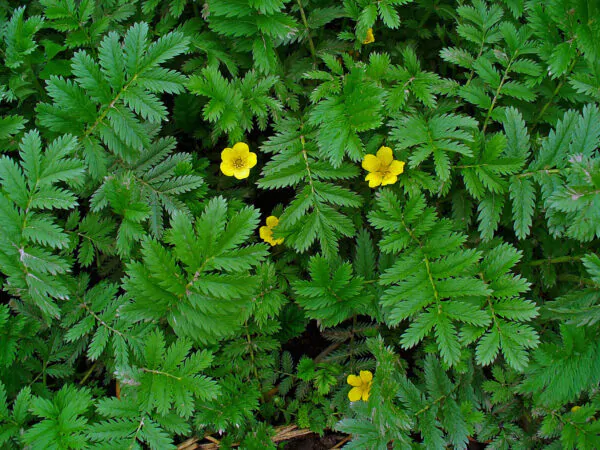
Silverweed in summer.
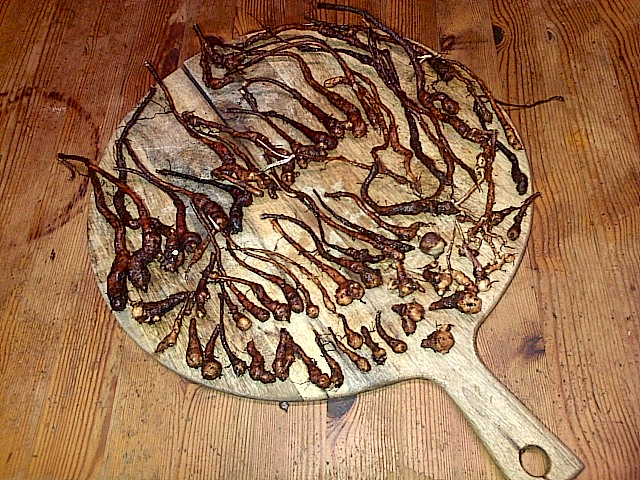
Silverweed roots
Having only cooked silverweed roots in the Tibetan New Year celebration dish, droma dresil, before, I looked around to find other traditional recipes that use them. Urban Food Forest has a good article on silverweed cuisine which gives a picture of how the plant is used around the world.
But on this occasion I decided to try an old Scottish recipe for silverweed bannocks. This is from ‘the mother of Calum Mcleod, the Glen, Barra, a hundred years ago’ and given by F. Marian McNeill in the ‘The Scots Kitchen‘. This was published in 1929 so the recipe must be from about 1829. (The roots above don’t quite match the McNeill’s description of ‘long, thin, and white or cream-coloured’ but I think this is probably because I harvested mine in autumn not spring hence the darker colour and clubbed ends – unless it is just how they grow in clay soil. I need to investigate further.)
Traditionally bannocks are heavy, flat cakes made from dough (often from barley or oat flour) and cooked on a ‘bannock-stane’ in front of the fire. These silverweed one are made by washing, dehydrating and grinding silverweed roots to make flour and then adding them to barleymeal with some salt, rubbing in butter, mixing in milk and forming the dough into a round.
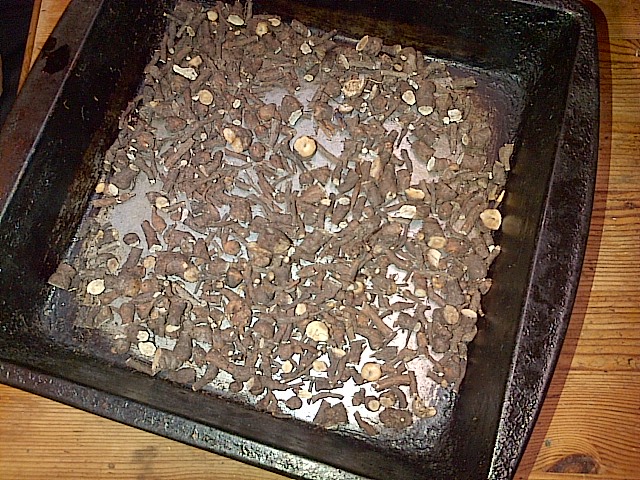
The chopped up roots having been dried in a low oven.
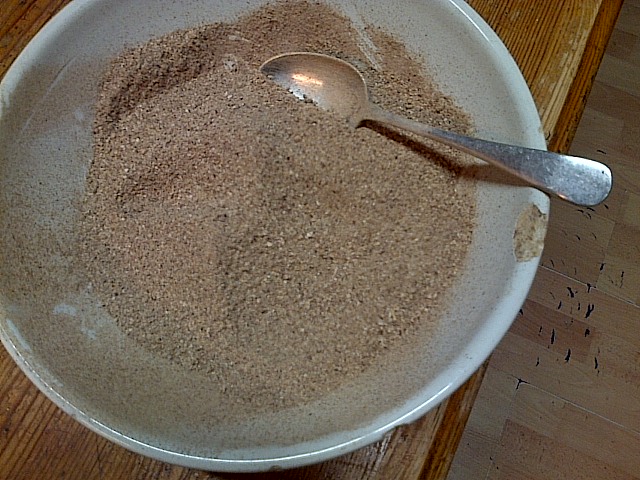
Silverweed roots ground up in a blender to make flour.
Barley flour didn’t seem obtainable in our small town but I had grown some barley a while back and luckily still had some barley ears sitting in a tub. So a bit more lengthy processing – but then Calum Mcleod’s mother wouldn’t have gone to Tesco either (I do realise she wouldn’t have had an electric blender!)
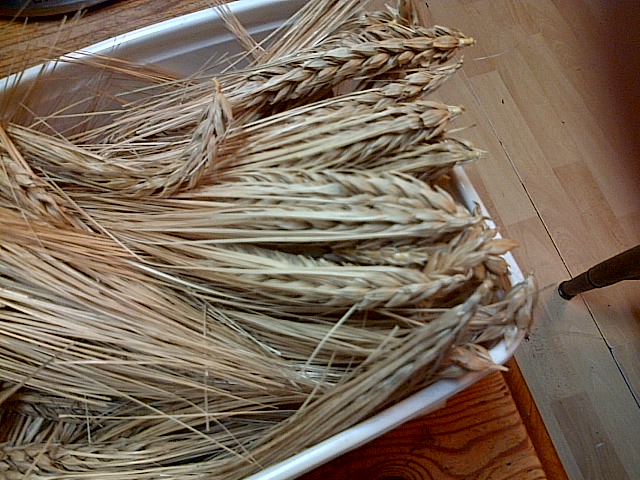
Ears of ‘naked’ barley
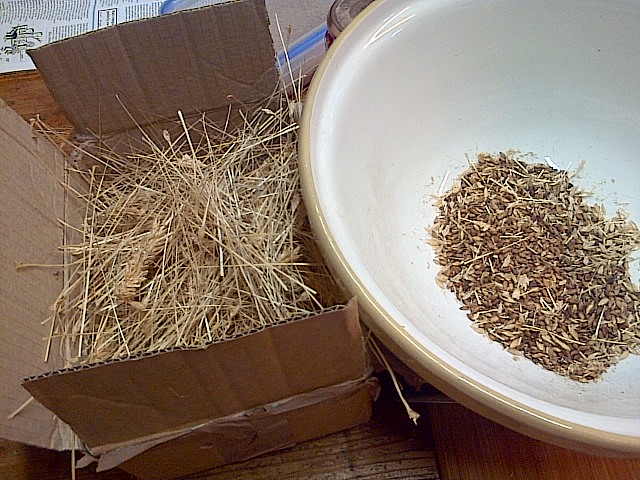
Barley ‘hand-threshed’ from the ears.
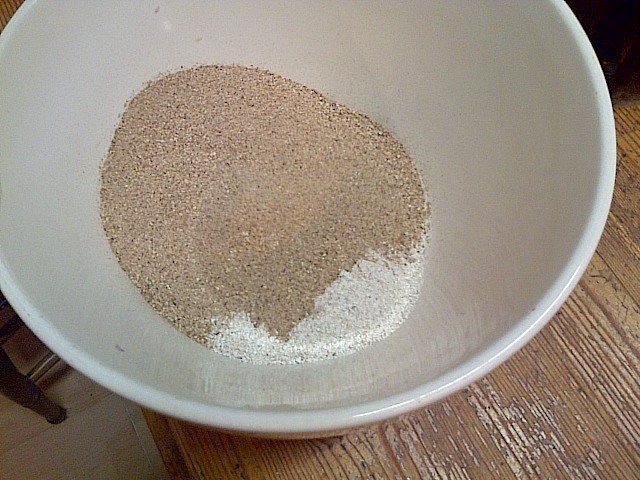
Barley grains processed in the blender to make barleymeal.
I followed the recipe in McNeill’s book fairly closely (I used sunflower margarine instead of butter and soya milk instead of dairy milk, and my bannocks were shaped into crumpet sized cakes because I didn’t initially realise that they were generally made into one larger round and then cut into pieces). I cooked them on a greased griddle placed over the gas rings on the stove. Traditionally the bannock-stane or slab would have been preheated by standing it in front of the peat fire and, when hot, the bannock would have been rested against it, toasted on one side and then the other. I have put one aside to try cooking on our recently installed woodburner when we light it later.
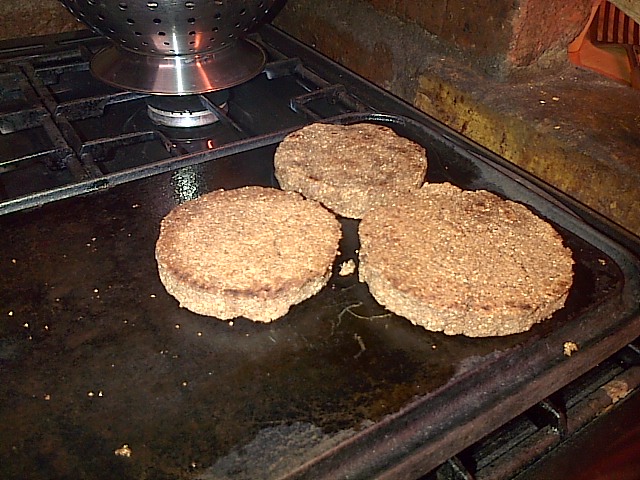
Well they were dense, it must be said! They had a nutty flavour but also a slight bitterness to them. Not exactly delectable fare but they would certainly fill you up. As McNeill says, ‘A chunk of silverweed cake and a cuach (cup) of milk used to make a satisfying meal for the labourer in the field.’
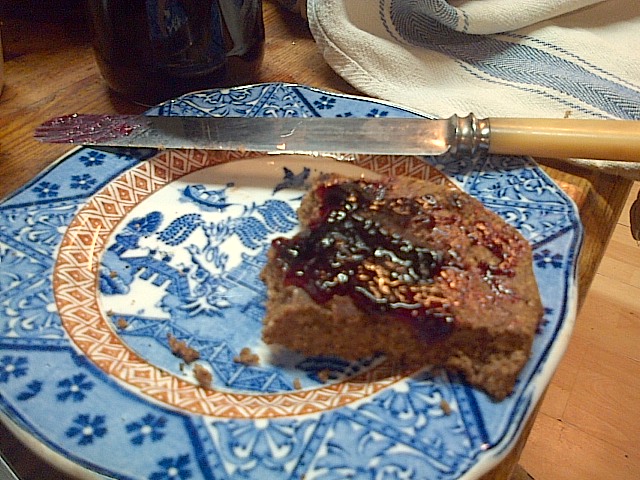
I’m not sure whether the labourer would have any damson jam to put on the bannocks but I did – and at that point rather enjoyed them – and ate two!