Experimental Perennial Vegetable Garden – Three Years On
This is the present state of the experimental perennial vegetable garden. It continues to be an amazingly productive small space. It is quick to pop in there any time of the year and pick a large bag of mixed leafy vegetables, and young shoots and flower sprouts in their season too. See last year’s post for the story of its development in a two-year, month-by-month photo diary.
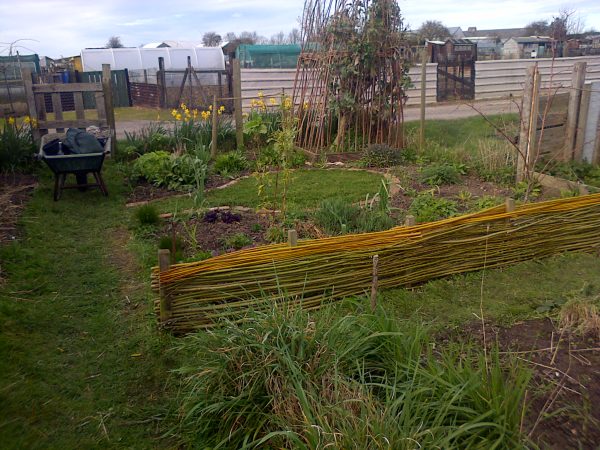
Various changes have happened in the garden over the last year and more are planned.
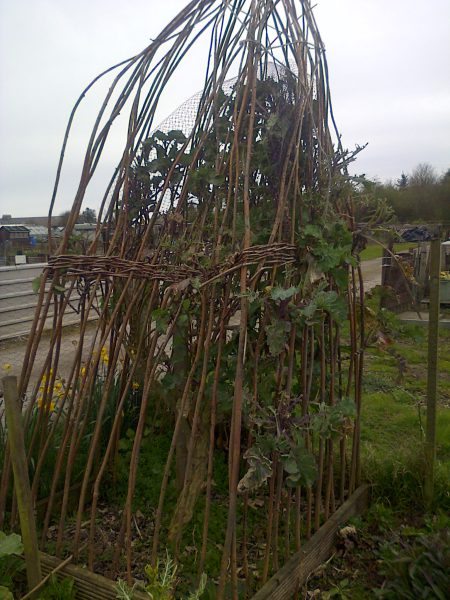
I’ve just been weaving new willow wands into the fence in the foreground. I intend to do a similar fence by the left-hand path but it may have to wait until next year. The willow in the structure around the Taunton Deane kale in the back right corner (intended for keeping the pigeons off the kale) also needs replacing and may take all the willow I have left. The pigeons have managed to get in there recently, as the willow became untied at the top and the secondary defence in the form of some black netting over the top of the plant was dislodged by the wind. The kale is a bit tattered as a result but will soon be in full leaf again now it is covered again.
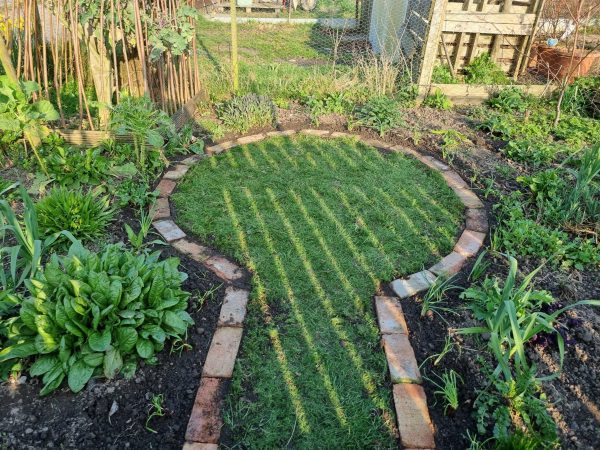
The camomile lawn in the centre of the garden looks much better now that it is surrounded with bricks rather than green plastic edging strip. Around the bricks is a border of everlasting onions.
The rhubarb and the alpine dock, both just too huge for the space, have been taken out. The rhubarb was shading out the sochan (Rudbeckia laciniata), a tasty vegetable that gives two harvests a year, in spring and autumn.
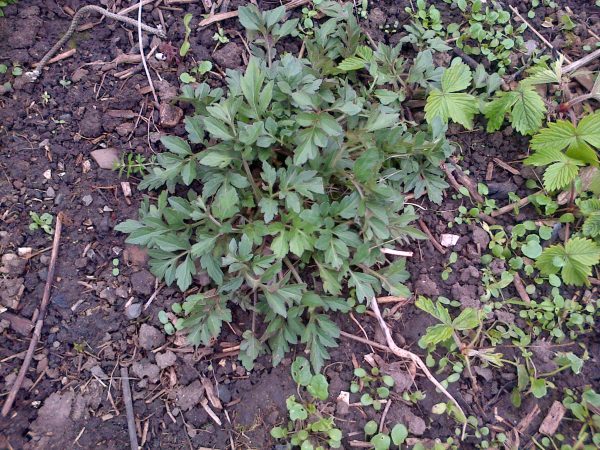
I’m looking forward to seeing the sochan revel in the light this year.
The alpine dock leaves were only mild enough for eating when they were new and small – something more productive can take its place. I have a decision yet to make about the replacements. Candidates in mind include perennial lettuce, cabbage thistle, pokeweed, Solomon’s Seal, sweet cicely or kahawut, Californian goosefoot. I also intend to introduce perennial leek, Delft Perpetual, to the garden, but elsewhere, in small groups dotted around the space.
Another decision is what to do about the saltbush, which was killed by the frost like its predecessor.
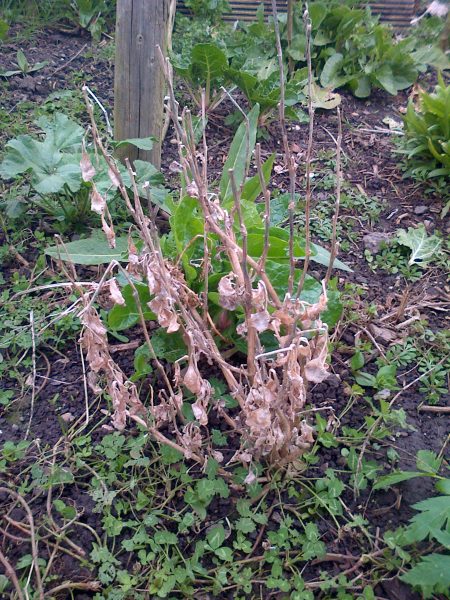
I’d really like a saltbush in the location this one occupies as it is one of the plants in the four corners giving the plot structure in the winter months, either by evergreen leaves or coloured bark and buds. The others are bamboo, small-leaved lime ‘Winter Orange’ and the Taunton Deane kale shown above.
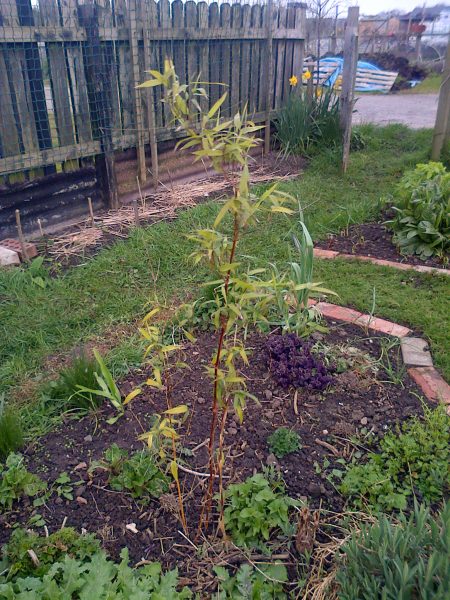
Golden groove bamboo – Phylllostachys aureosulcata aureocaulis
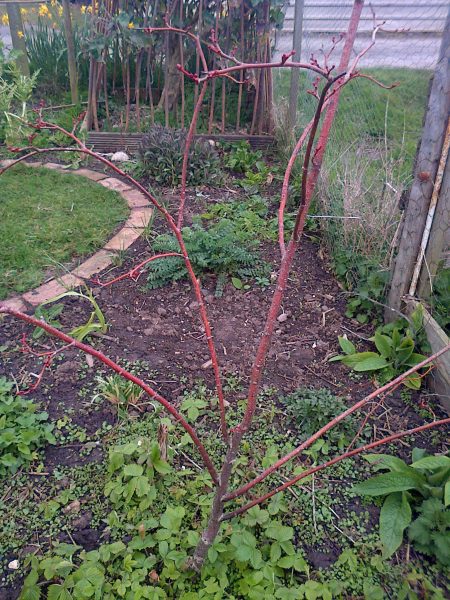
Small leaved lime ‘Winter orange’ – Tilia cordata cultivar
But is the location just too cold for saltbush? And if it is, what should I choose to go in its place? I might opt for a rosemary despite wanting vegetables rather than herbs because I am struggling to think of another suitable candidate. I do at least use a lot of rosemary.
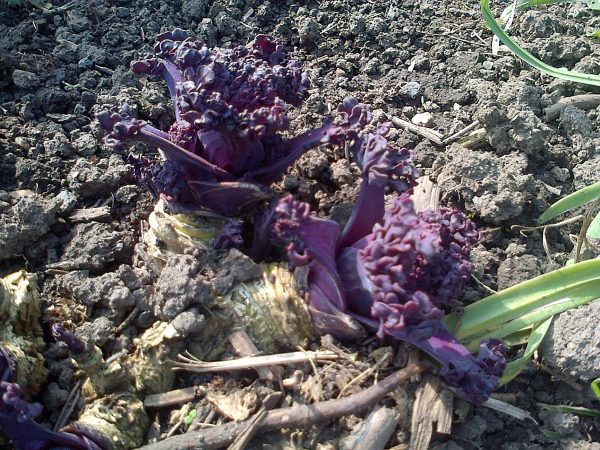
At this time of year I love seeing the sea kale bedecked in its purple opulence. It will give us both delicious leaves and flower sprouts over the next month or so, to go along with the delight of the asparagus spears when they begin to appear shortly.
Caucasian climbing spinach (Hablitzia tamnoides) has had a slow start (planted to the right of the kale cage in the top picture) but it should get going this year and begin to give cover to the fence on that side. And on the adjacent fence I’ll try again to get aardaker (Lathyrus tuberosus) going, both for its scented pea flowers and its delicious tubers.
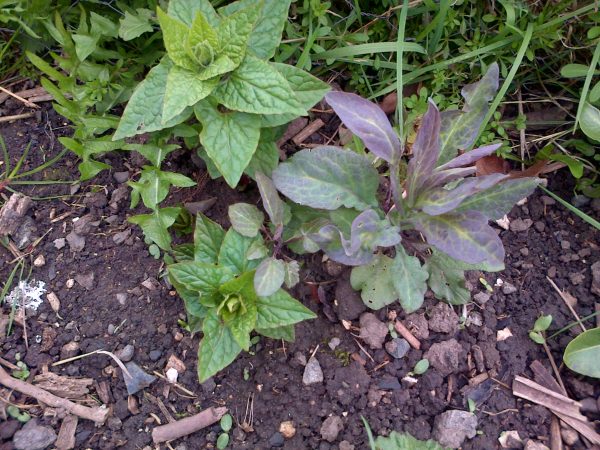
Caucasian Climbing Spinach – Hablitzia tamnoides (with a young garlic cress beside it).
Of the other plants, the garden sorrel (in both red and green), Good King Henry, Taunton Deane kale, garlic cress, self-seeding wintercress and chard and various alliums get particularly well used, and the Korean celery, bladder campion, perennial buckwheat, scorzonera leaves and buds, daylily buds and Turkish rocket are good reliable doers too.
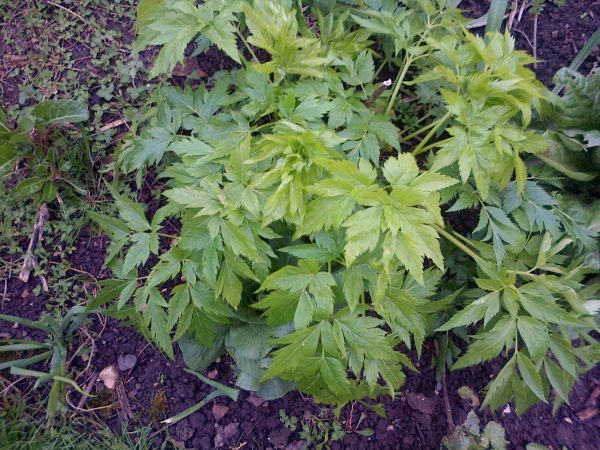
Korean perennial celery – Dystaenia takesimana
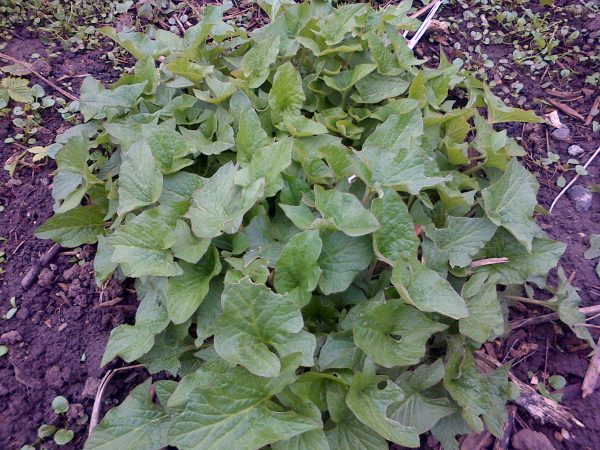
Good King Henry, Blitum bonus-henricus
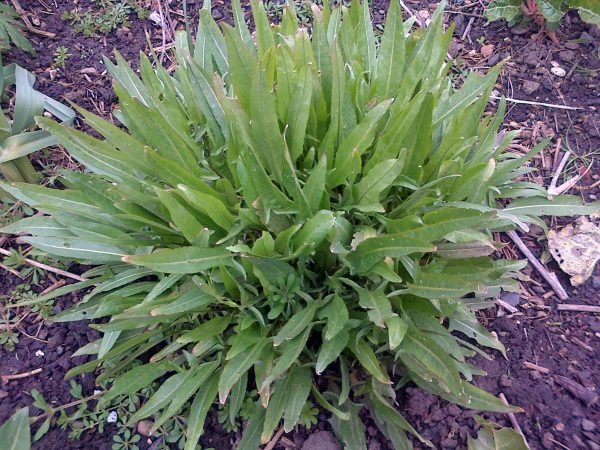
Turkish Rocket – Bunias orientalis
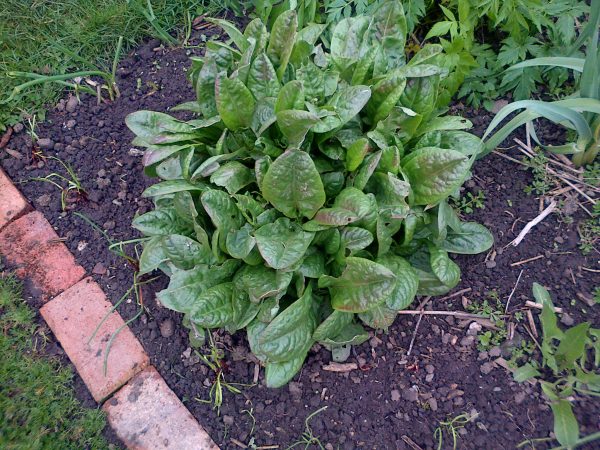
Garden sorrel – Rumex scutatus
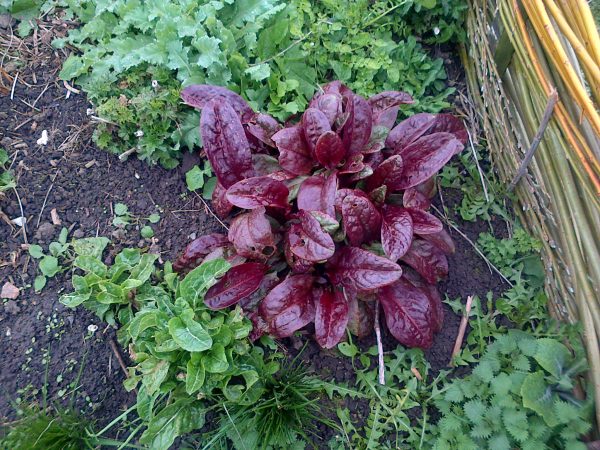
Red sorrel – Rumex rugosus ‘Purpureus’
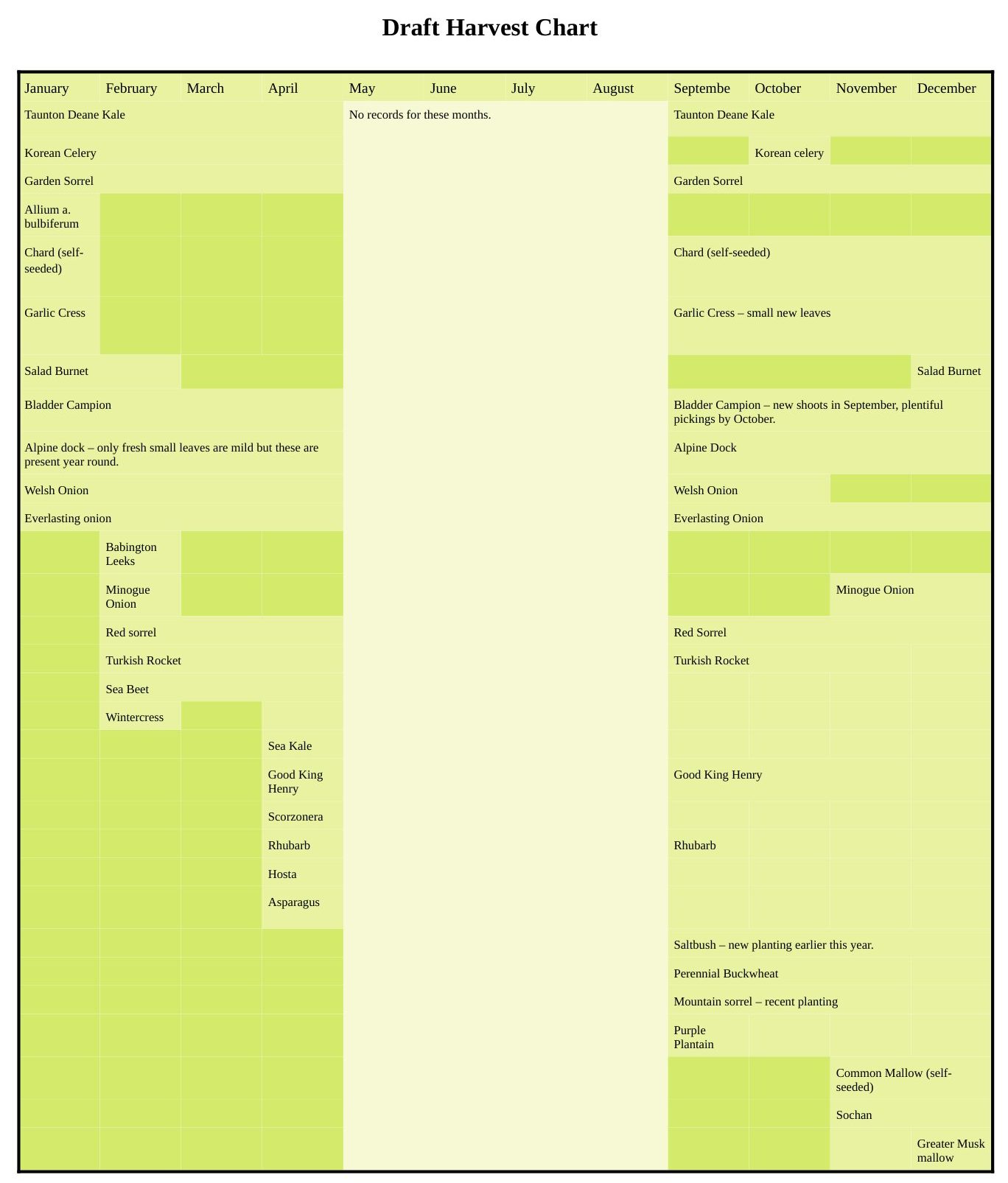
I was hoping to provide a month-by-month chart for the garden so readers could see when each vegetable is available for harvest – but, regrettably, I failed to keep sufficiently detailed records to make a good job of this yet. Apart from either getting too busy to take notes, losing the notes I did make, or not noticing some crops, some plants were only planted in the garden later in the year and one died out (purple plantain). All the same, the first draft is given below. It is unfinished and shouldn’t be relied on. (The lighter green area indicate when the plant was harvestable). But this year I’ll fill in the missing data and hope to include a decent version in next year’s review.
There is nearly always something that needs some attention in this garden, whether it is a bit of weeding, or a plant that needs replacing or dividing or a fence to be fixed. That is the nature of gardening. But the workload compared to that of an annual vegetable garden is very minimal indeed. The perennial vegetable gardening hype is true!
Despite my desire to grow aardaker on the fence, this garden was never intended for roots crops. But if one wished, some perennial roots such as skirret and hopniss could be included. A gap which hasn’t really been filled yet in a significant way is one for vegetable fruits (equivalents to tomatoes, courgettes etcetera). I have hopes of one day growing a hardy perennial chayote. And I have a species of tamarillo (tree tomato) in a pot in the greenhouse which is reputedly hardy. Perhaps that might be persuaded to survive and fruit in a perennial vegetable garden in the future.