Perennial vegetables for those who don’t want ‘weird’ stuff.
I get it. It doesn’t take long before perennial vegetable enthusiasts start talking about vegetables which not many people have come across, perhaps Turkish rocket, Chinese yams, udo, ostrich ferns or cabbage thistle. Or familiar plants but ones they have never considered eating – hostas, day lilies, ground elder or common mallow.
 I’ve grown a lot of ‘weird’ vegetables in the course of discovering what is attainable if a perennial food-growing system for easier and more environmentally-friendly growing is adopted. Unfamiliar vegetables are needed in order to increase the range of what one can grow this way – and they are needed anyway as we have to shift and diversify the food system to cope with a changing climate.
All fine and dandy if one has the spare resources and time to invest in researching how to grow, harvest and cook something entirely new. Something which you may then find you don’t actually like. Or maybe has a taste that you need to become accustomed to before you enjoy it.
The question is, if what you really need are vegetables that will give you a reliable harvest of stuff which you and your family already like, and which you already know how to cook, does the world of perennial vegetables have anything to offer?
Here is a list of perennial vegetables which I think fulfil those requirements – for the most part. I say ‘for the most part’ because I’ve included some that are popular in the UK when encountered in bought dishes and in restaurants but that don’t yet get grown and cooked in many homes. Also I’ve included some ‘taste-alikes’ and a couple of easy-to-cook ‘forgotten vegetables’ that were once commonly grown here. And I have finished with a good-flavoured tuber, less well-known than the friendly potato, but which is replanted in much the same way for the next year’s crop. Botanical names are supplied at the bottom of the page.
Leeks
Leeks are perennial plants but only some varieties will produce further good leeks from the base after being cropped (cut above the roots) and left to flower. The best I’ve found so far is ‘Delft Perpetual’. Other good candidates for perennial leeks are the hybrid St. Victor x Oerprei leek and, the rather more garlicky-flavoured, sub-species of leek ancestor, Allium ampeloprasum, usually known as Babington leek, elephant garlic, wild leek and poireau perpétuel.
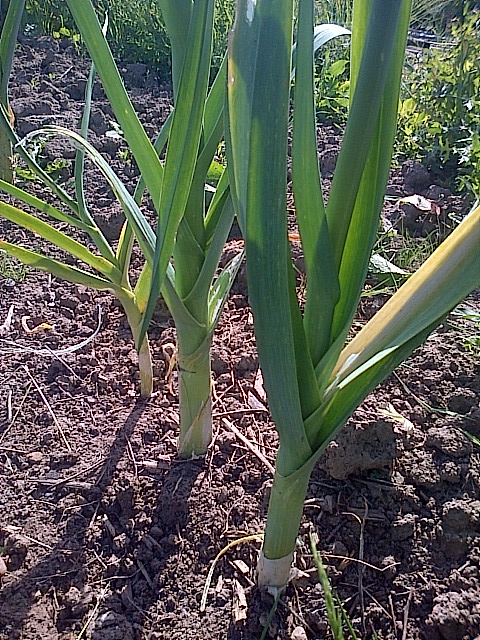
Leek ‘Delft Perpetual’
Onions
Potato onions and shallots. The shallot is a familiar perennial that gives a bunch of bulbs when one is planted. The potato onion does exactly the same thing. If you choose varieties that overwinter you can maintain a perennial onion patch on a piece of well-drained ground. For potato onions choose the brown skinned variety as they seem to be the hardiest and for shallots looks for types that are described as ‘autumn planting’.
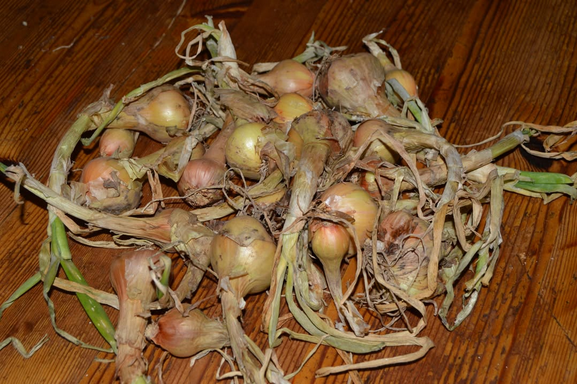
Potato onions
Tree onions are also worth growing as they are perennial plants which bear top-set onions at the tip of the stem, of varied sizes but, if well grown, quite a few are of a useful size for using in the kitchen.
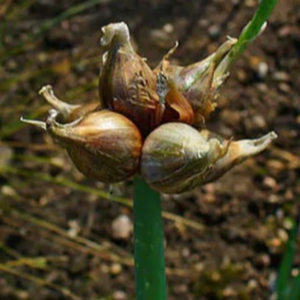
Tree onion top-set bulbils
Welsh onions are used for their leaves which are just like fat spring onions.
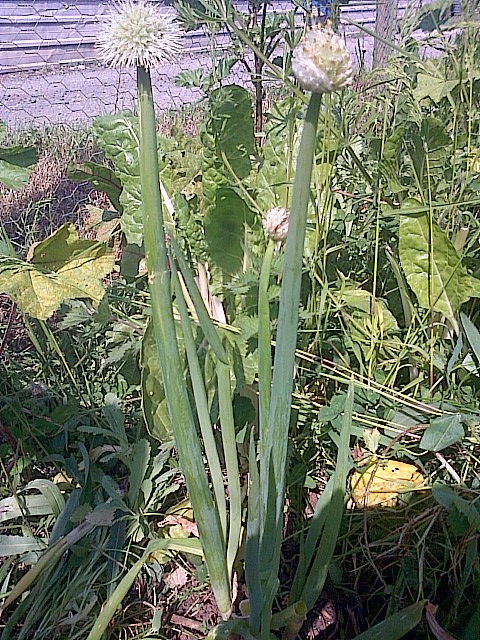
Welsh onions
Everlasting onions give a more slender all-year-round supply of onion-flavoured leaves.
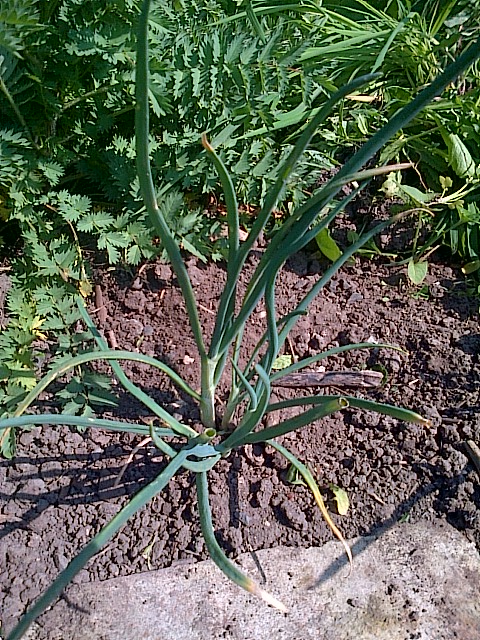
Everlasting onions
Kale
There are many varieties of perennial kale but I think the best of them for the UK is Taunton Deane kale, which gives tasty regular kale throughout the year, a tough plant that copes with all but the coldest winters, can last for many years and begins to resemble a small tree in time.

Taunton Deane kale
Sea kale was once harvested from the wild in Britain and is now served in the posher restaurants. It is easy to grow if you have a patch of well-drained soil and gives an early harvest of mild-flavoured young leaves in spring and throughout the summer if you search in the centre of the plants. Blanching under an upturned bucket is often done with this plant for especially mild and succulent leaves.
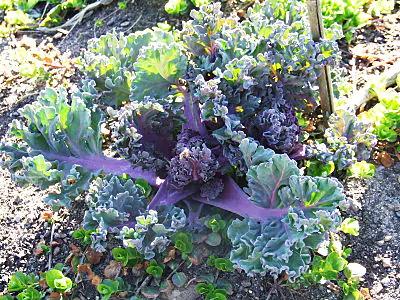
Sea kale
Broccoli
There is a variety of broccoli called ‘Nine Star Perennial’ that gives broccoli heads in spring (white ones which makes them look more like cauliflower). If well fed with manure or compost the plant will repeat this performance every spring for three to five years.
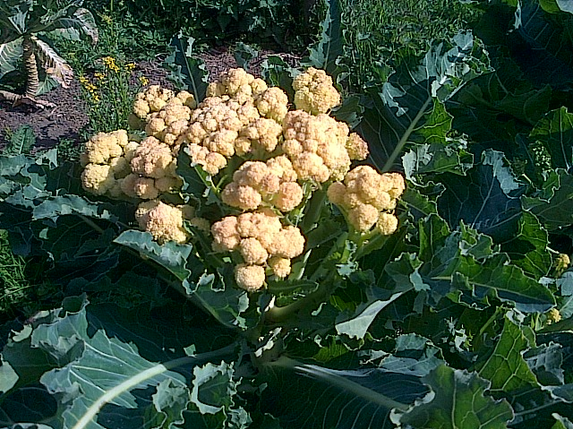
‘Nine Star Perennial’
broccoli
Rocket
Wild rocket crops up frequently in restaurant meals these days. It has spicier leaves than annual rocket, delicious in summer salads and with tomatoes.
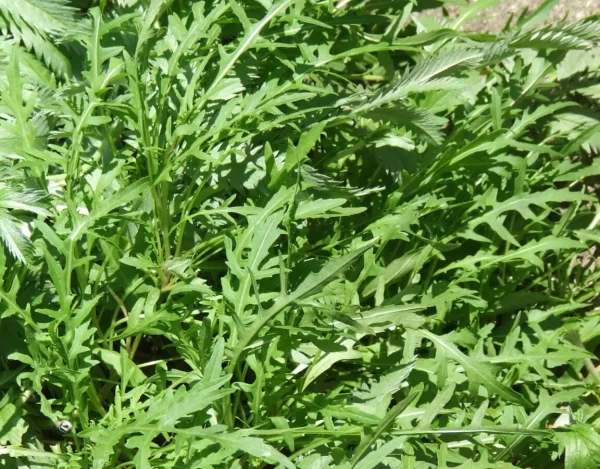
Wild rocket
Spinach
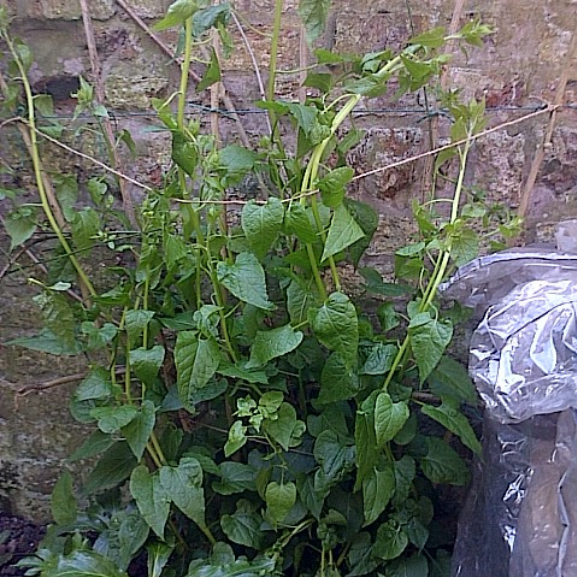
Caucasian climbing spinach provides leaves, like spinach in flavour but milder, for at least six months of the year on a shade-loving vining plant. A very long-lived plant.
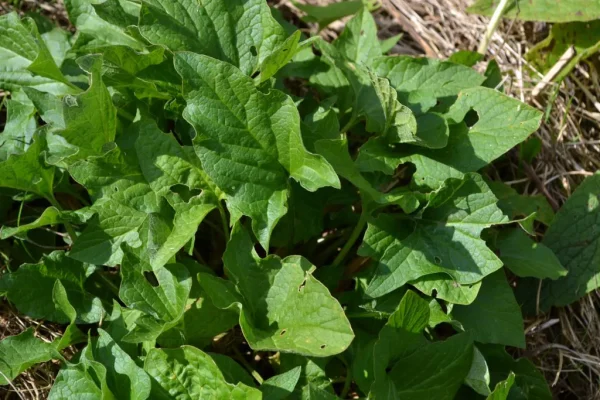
Good King Henry, also known as markery or Lincolnshire spinach has stronger tasting leaves which, for those who find them a bit too bitter, can be made milder by soaking them in salt water for half an hour. Another very long-lived plant.
Watercress
Watercress can be grown in buckets of water with some sandy soil at the base. Refresh the water every so often as its ideal growing condition is in oxygenated, running water in streams.
Watercress
Chard.
Both chard and leaf beet will crop for more than two years if the flowering stem is removed.
Sea beet is the wild ancestor of both plants and lives for somewhere between three and eleven years (sow a line of plants, some may die out but the long-lived ones will keep producing). Sea beet leaves are very like chard in spring but become bitter as they begin to flower.
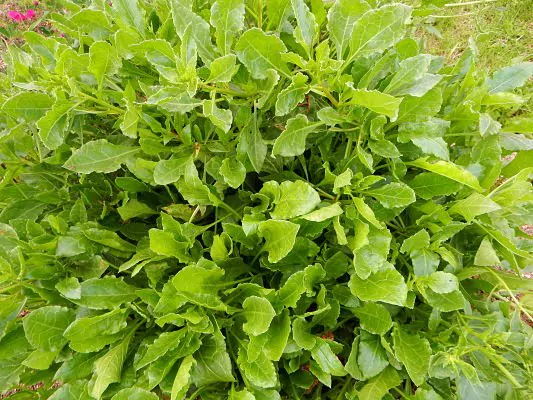
Sea beet
Asparagus.
A well-loved vegetable that will grow for years once planted giving juicy asparagus spears each spring.
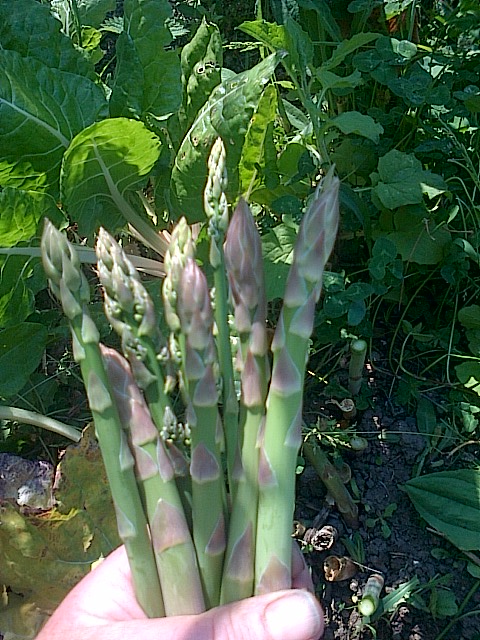
Asparagus spears
Jerusalem artichokes
Ashkibwaa or Jerusalem artichokes are very popular in soups and stews with those who can digest them easily. It is worth knowing if they suit you and those you grow for, because, if they do, you can get huge crops of tubers, that can even be stored in the ground over winter. Prepared just like potatoes; the varieties with smoother tubers are easiest to clean. They can be very tall plants but dwarf varieties are now available. Tubers for the next year’s crop can be replanted right at harvest time.
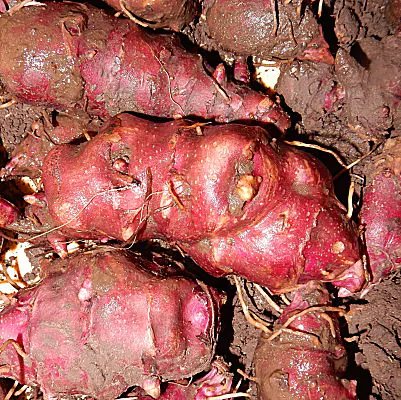
Jerusalem artichoke ‘Dwarf’Globe artichokes.
Globe artichokes need a bit of space but give fat edible flower buds. They are popular in Mediterranean cooking, and especially useful and easy as small ‘baby artichokes’ flower buds but the larger artichokes can be used also.
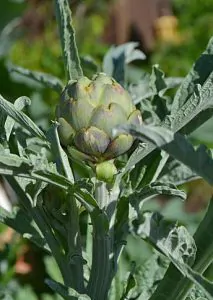
Globe artichoke
Skirret
A forgotten vegetable popular from Elizabethan times. The roots are a bit skinny but are delightfully sweet and have a texture like potato. They are quicker to cook than potato but can be used in the same sort of dishes. Another one that can be stored in the ground. And now available in pink!
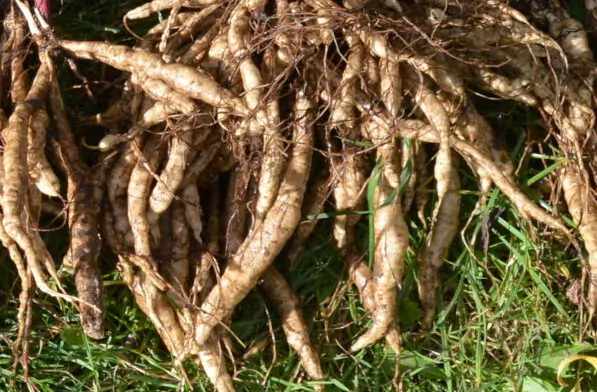
White skirret
Oca
Oca is a replant perennial tuber. It is easy to digest and tastes like a lemony potato. It can be prepared in the same ways as potato and can also be eaten raw. Unlike potato it is best to plant the tubers in pots first to get them well underway before planting in the ground in late spring. A good harvest depends on late frosts in autumn (and is helped by a bit of protection from fleece or polythene at this stage). The tubers can be stored alongside potatoes in a dark, damp, frost-free place. Bring the tubers for replanting into the light if they bring to produce shoots.
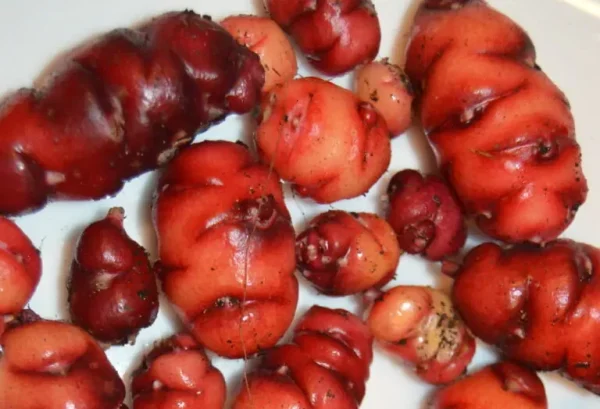
Oca tubers
Botanical names
Perennial leek Allium porrum
Babington’s leek Allium ampeloprasum babingtonii
Wild leek Allium ampeloprasum
Elephant garlic Allium ampeloprasum ampeloprasum
Poireau perpétuel Allium ampeloprasum bulbiferum
Potato onion Allium cepa aggregatum
Shallot Allium cepa aggregatum
Tree onion Allium x proliferum
Welsh onion Allium fistulosum
Everlasting onion Allium perutile
Perennial kale Brassica oleracea
Sea kale Crambe maritima
Nine Star Perennial broccoli Brassica oleracea botrytis asparagoides
Wild rocket Diplotaxis tenuifolia
Caucasian climbing spinach Hablitzia tamnoides
Lincolnshire spinach Blitum bonus-henricus
Watercress Nasturtium officinale
Chard Beta vulgaris var. cicla
Leaf beet Beta vulgaris var. cicla
Asparagus Asparagus offinalis
Jerusalem artichoke Helianthus tuberosum
Globe artichoke Cynara cardunculus scolymus
Skirret Sium sisarum
Oca Oxalis tuberosa
Branwen OShea
What a helpful article! Thank you for sharing all this. Do you think most of these would do ok in the New England part of the U.S.?
Alison Tindale
I don’t know your climate very well – but I’m thinking a lot of these might do well for you, but that you might struggle with perennial kale surviving the winter. Is it much milder in Falmouth, Maine than where you are? I mention this as it is where Edgewood Nursery which sells similar plants is based, so their stock might be a guide to what will grow.