Skirret Update 4
It has been four years since Skirret Update 3 although there have been a couple of skirrety posts since then: Don’t Skip the Skirret in the Stew and November Plant Profile: Skirret. In the meantime I have been doing some rough selection of the skirret growing here. Today’s harvest photos are below…


These aren’t bad. I dug up a more impressive clump last year but it may have been older….
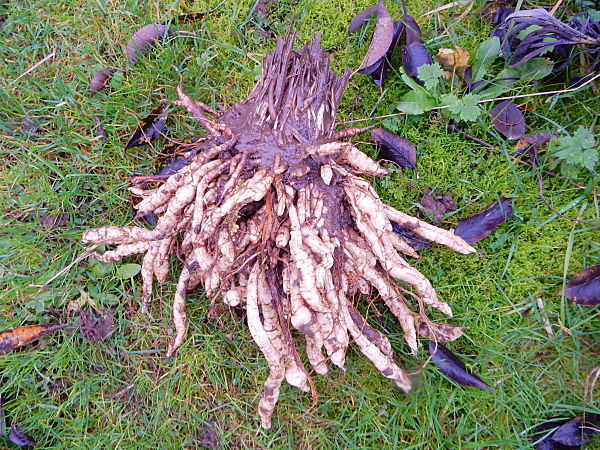
I’m harvesting skirret on a three year cycle these days, but to my dismay today I couldn’t quite remember which section of the bed contained the oldest roots. I may have dug up the two-year-olds leaving the three-year-olds to grow on for another year!
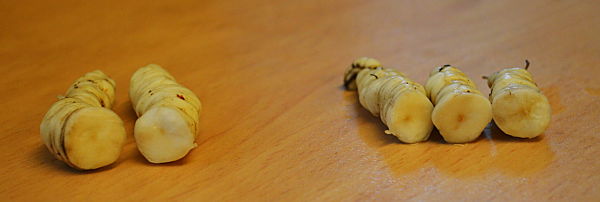
One pleasing sign of skirret-improvement progress is the lack of woody cores in the roots of the plants I’m growing now. You can just about see a trace of a core in the roots below but it wasn’t detectable when I had a taste. The roots were tender, sweet and not fibrous.
A simple method of skirret improvement is to grow a lot of genetically different plants together (by seeking out seed from a variety of sources) and then grow new plants from the seed of the best of them, discarding the worst. It is basically what I have been attempting here, albeit in a rather haphazard fashion. Since starting on skirret breeding I have bought or been given plants or seed from England, Scotland, Germany, Canada and France.
Skirret is a very obliging plant for breeding for two reasons. Firstly, older plants grow in a clump which can be separated into several individual plants with ease. So good plants can be multiplied very easily (for our own harvests and to put into the Backyard Larder shop too). Secondly, the plants usually hold onto their seed until after harvest time. So I can dig up a plant, assess the root quality, and only then decide whether or not I want to save the seed.
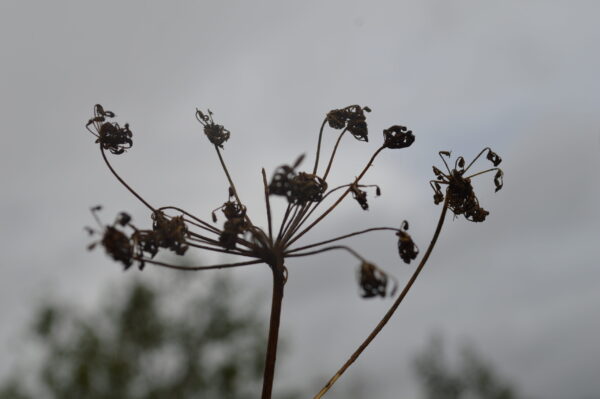
The reduction in woody core has probably come about through growing out seed from two growers (Matt Coward and Mandy Barber) who observed that their skirret wasn’t woody. There may still be climate and soil factors influencing this trait but I’m thinking now that genetics plays the larger part.
Likewise with root width and length, two other traits I’m hoping to improve on. Results for these have varied from year to year, probably in line with how wet or dry the season has been (but also I suspect with how much organic matter has been added to lighten the clay soils here, and improve their moisture retention). But once again the secret is probably mostly in the genes. Whilst I’m trying to select for fatter roots and longer roots I may not yet have the right material to select from. But Paulette Whitney, a grower who has produced some lovely fat-looking skirret roots in Tasmania, sent me some seed a few days ago. Exciting – I know what I’m going to do with that!