Experimental Perennial Vegetable Garden – Year 2, Update 4
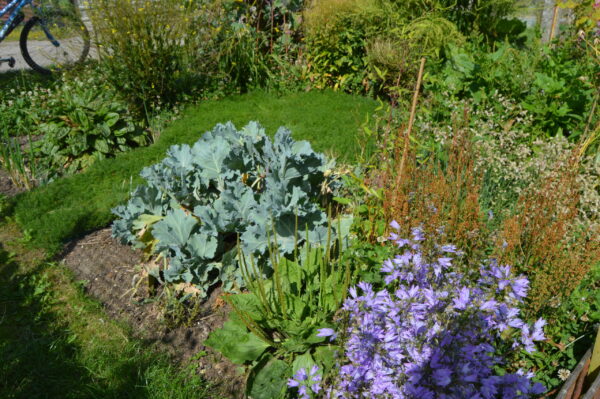
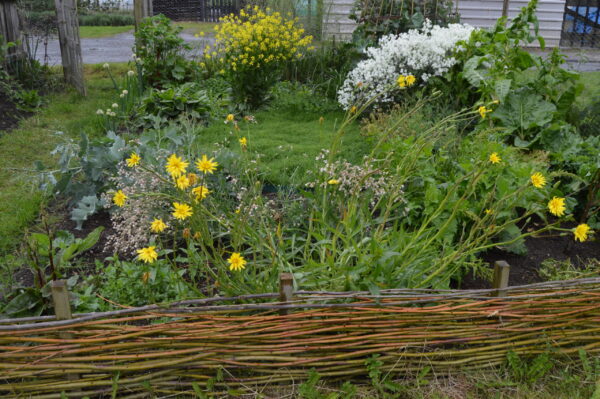
High summer and the blue self-seeded rampion (Campanula rapunculus) is bringing colour to the plot.
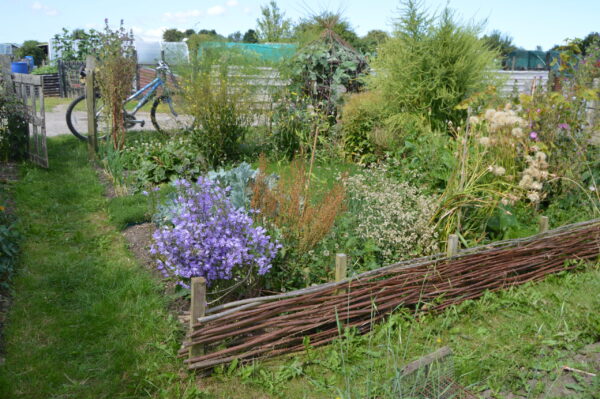
But it occurs to me that not much else is, apart from the yellow daylilies. Early in the spring I planted sweet peas all along the fence to the right in this photograph. The slugs got all but two of them! Here is one survivor (it is growing behind those huge flowering chard plants that are pretending to be a conifer.)
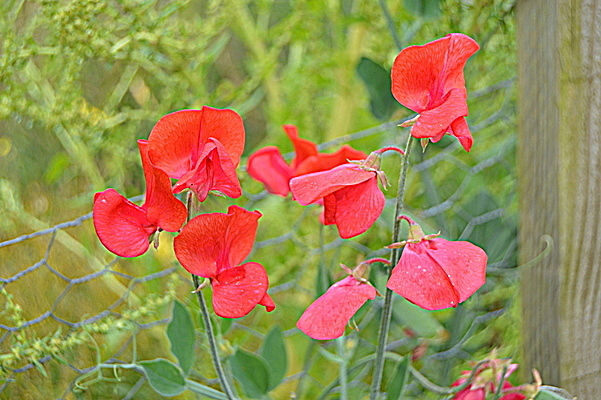
Seeing that the sweet peas had mostly been eaten I planted aardaker (Lathyrus tuberosus) tubers along the far fence but they haven’t fared any better. I will persist with trying to grow them. Their lovely pink flowers would give colour in summer and they fit the garden better than sweet peas really, being perennials. They even yield tasty edible tubers although the aim here has been to plant edibles that don’t need digging up. And their flowers are scented (unlike perennial sweet pea, Lathyrus latifolius, although I might plant that too). I’ve hunted high and low for scented perennial peas in the past and only this year realised that I was already growing one.
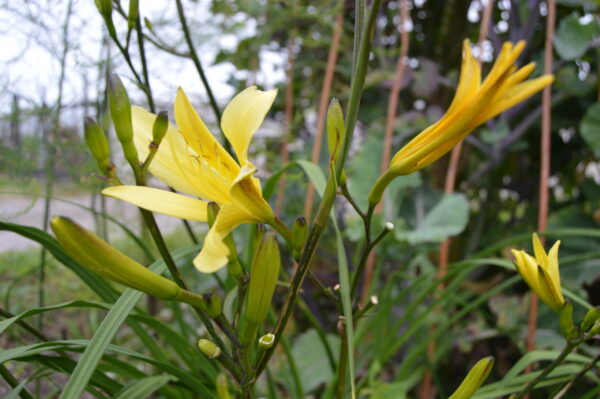
At present my only idea to give more summer colour is to plant more daylilies – not a bad idea as their buds are such a valuable summer-yielding perennial vegetable. There aren’t many of those. I’ll think more on this.
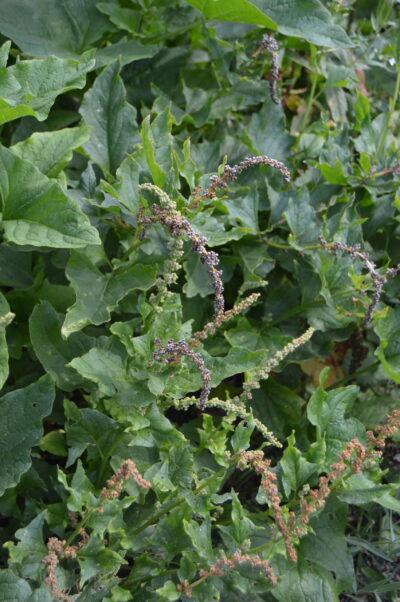
Good King Henry is providing its seed harvest. The seeds can be cooked like quinoa or ground up to make flour.
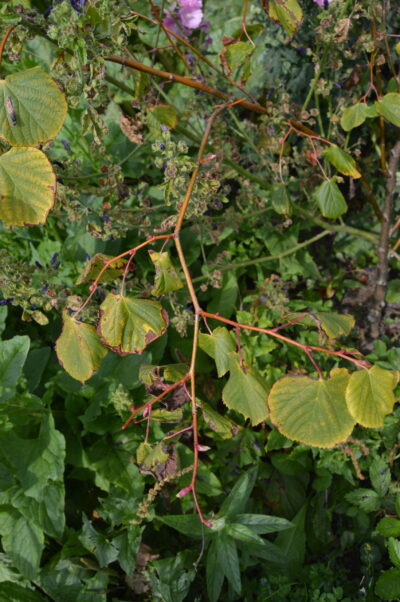
The Tilia cordata ‘Winter Orange’ that I planted in May has been worrying me. It was clearly not happy with pale browning leaves. But I’m pleased to say it is beginning to recover now and put out fresh green leaves.
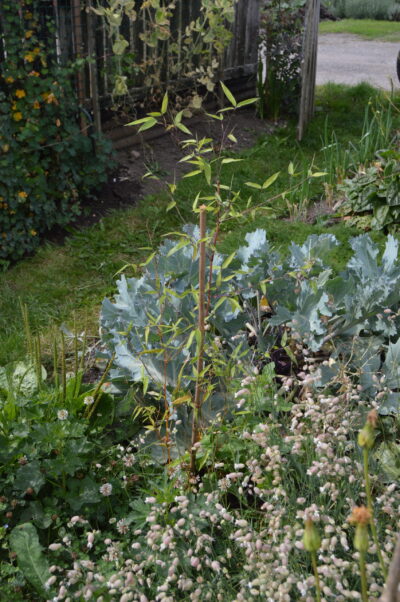
And the re-ordered bamboo arrived and has been put in place too. I didn’t install the root barrier I had in mind to limit its spread, as I read that root pruning at the edge of the root ball in winter is just as effective.
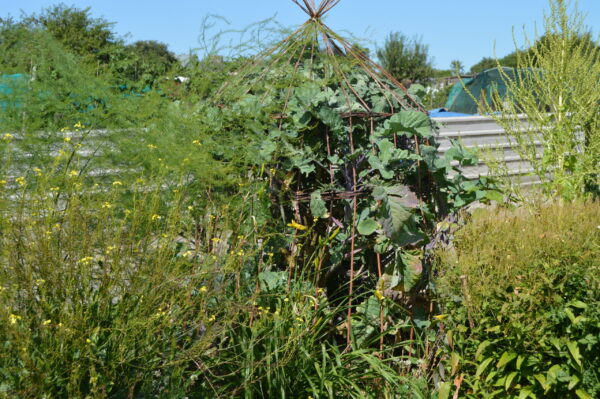
I might need to prune the Taunton Deane kale also – or build it a bigger cage!
The garden as it was on 26th June 2024,

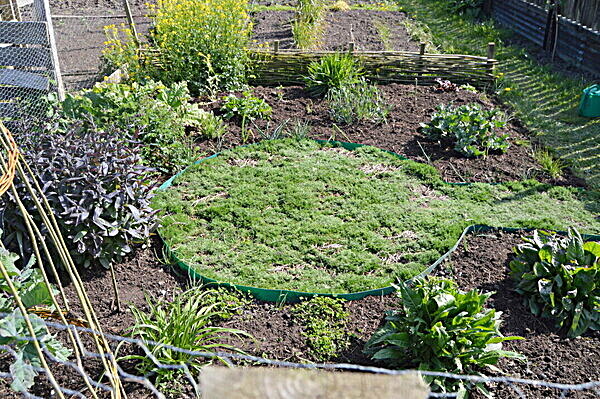
30th May 2024
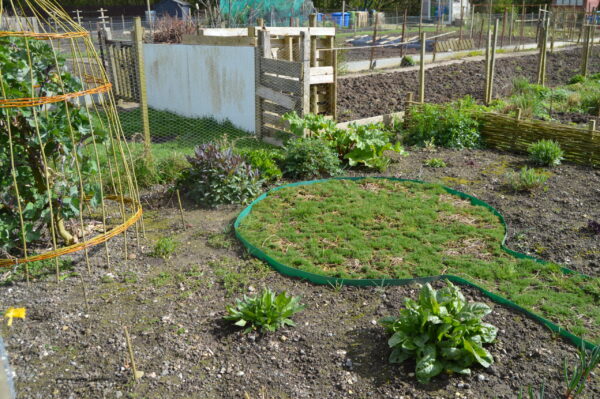
30th April 2024
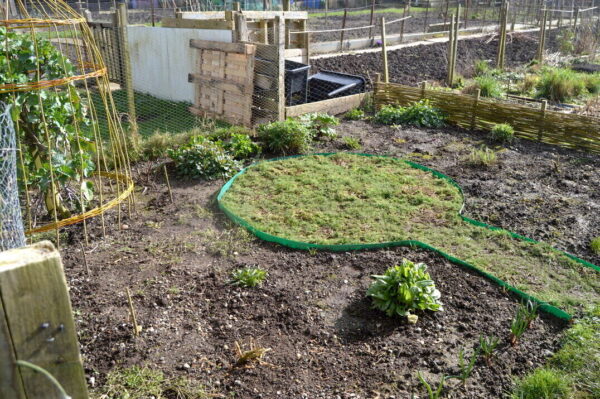
29th March 2024
25th February 2024
27th January 2024
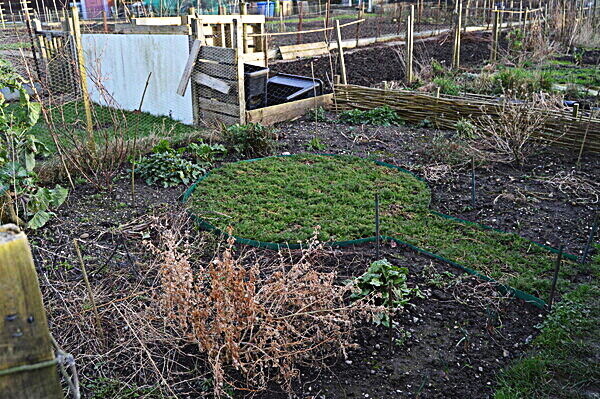
15th December 2023
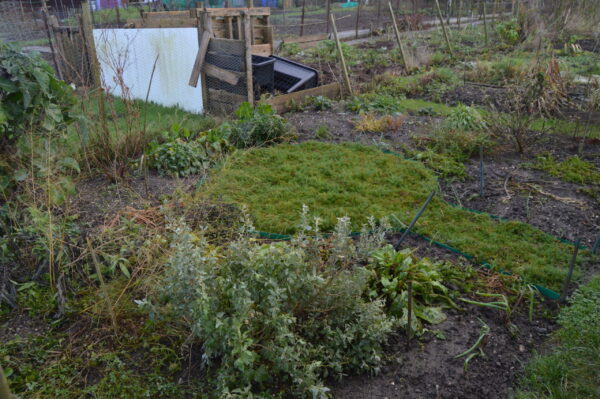
28th November 2023
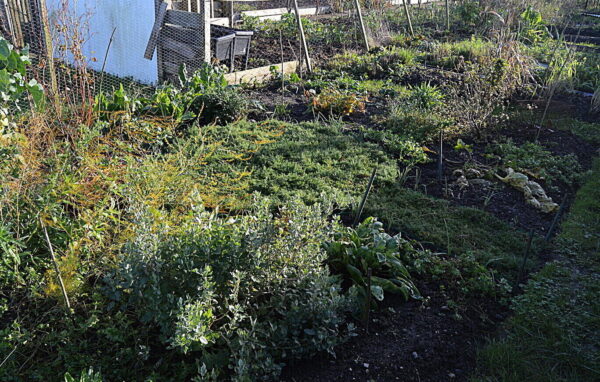
29th October 2023
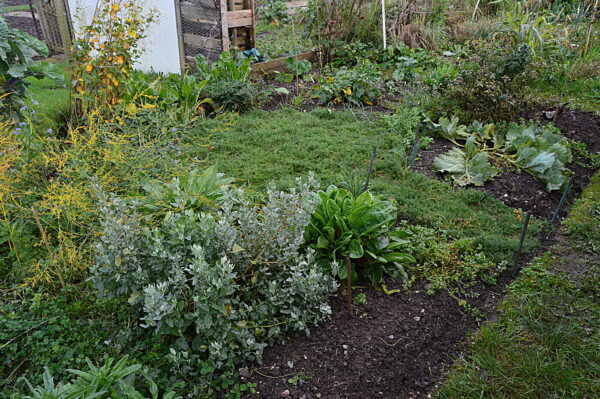
29th September 2023
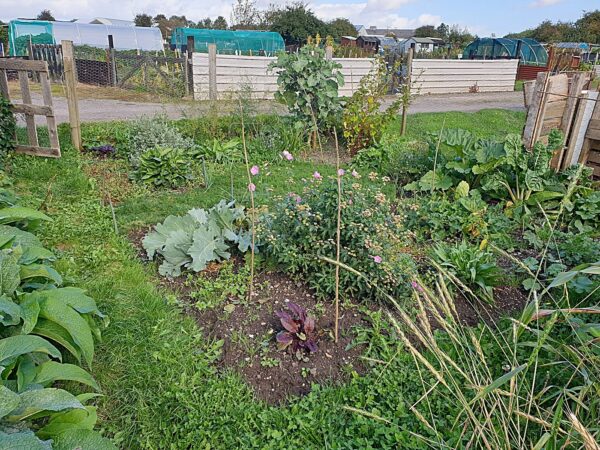
24th August 2023
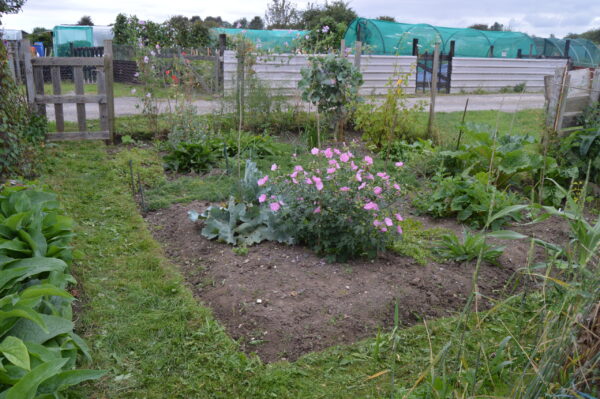
27th July 2023
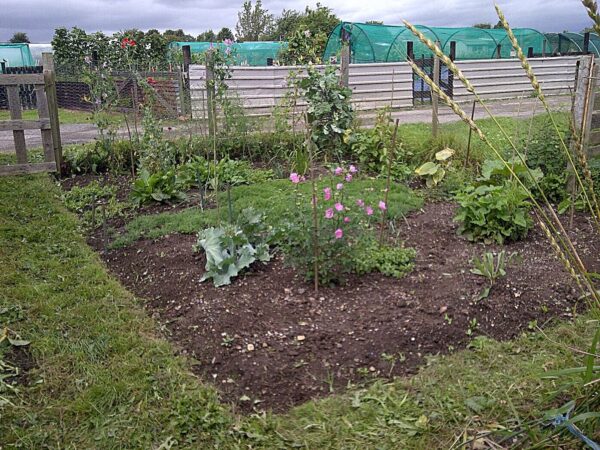
30th June 2023
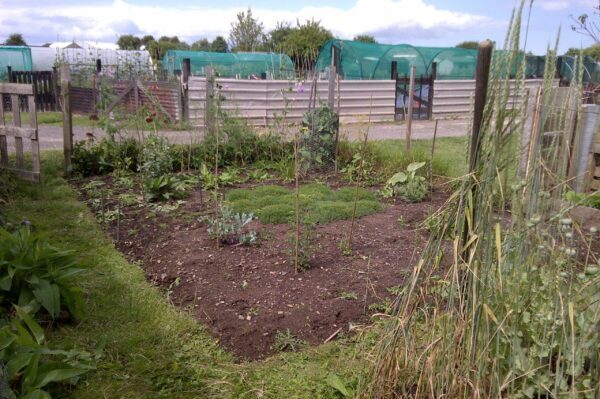
25 May 2023
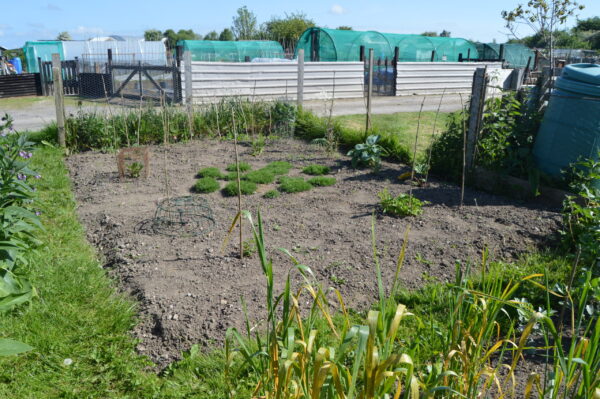
25th April 2023
29th March 2023
The original plan August 2022 (I’ve taken the photos from different spots so the left hand side of the plan equates to the top side of the photos from March – September, then the top-right hand corner of the plan is at the top of the photos from October to February and the right hand side is at the top in April 2024. From then on the orientation is whatever gives the clearest view of the garden.) I’ll make a new diagram including all the additional plants at the end of this second year.