Review 2026
The Backyard Larder’s thirteenth annual review!
A heady mixture of success and failure in the past year. Good news first? OK……
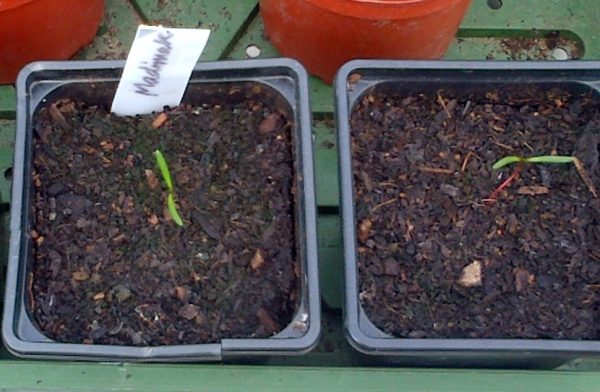
After much hunting I have madimak seeds (Polygonum cognatum) acquired in a swap with a fellow gardener and they are growing. This is sweet relief after a failed trip to try to collect a few seeds from the only UK site where they grow wild. Madimak is a popular perennial vegetable in the Black Sea region of Turkey. I hope to cook a madimak dish such as madimak yemegi if I can keep them alive.
I slogged through the heatwave last year and got the annual veg side of Plot 71 ready only slightly late for planting up time. I grew anchote there and it flowered and produced its attractive but barely edible fruits.
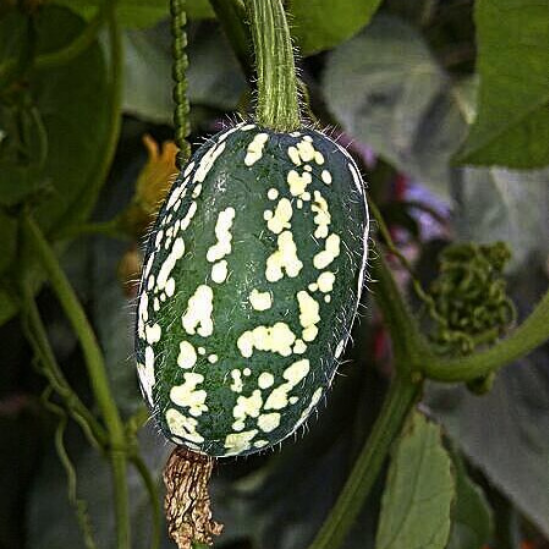
Anchote is actually grown for its nutritious starchy tubers – it is a drought-tolerant Ethiopian root crop. (I’ve cooked some and it tastes good but takes ages to cook – a pressure cooker proved to be the answer to speed things up).
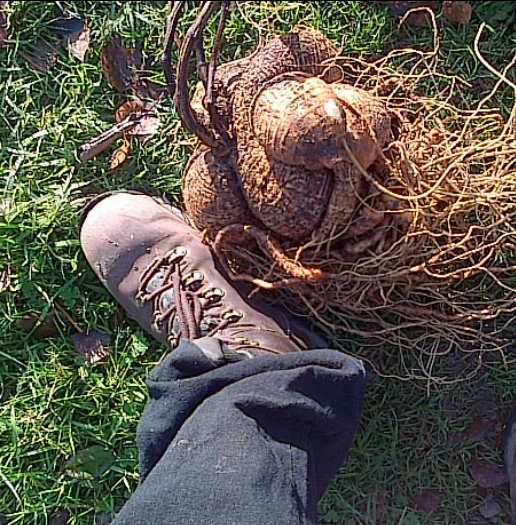
A large clump of anchote tubers.
Having got fruit, I got seeds, and so hope to grow more anchote this year. But it is actually a replant perennial – the only problem with this method seems to be that you only get one root per plant. I have read suggestions in some places that you could chop one root into portions and each will produce a plant. I don’t know if this is true and I cannot see auxillary buds on the tubers – but if it is, that would be good news for a perennial approach to the crop.
I planted some very feeble looking sunflowers in the same bed and was amazed when they managed to grow into these massive plants.
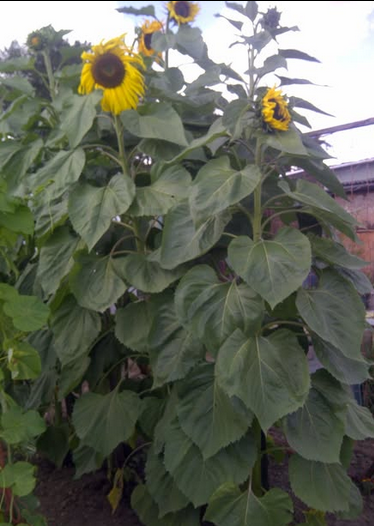
They are called Black Hole Sun – a sunflower from the Experimental Farm Network selected for black oil-rich seeds (some white seeds plants still grow). I have seeds to try to press in my hand-cranked Piteba oil press – a job I have yet to get around to.
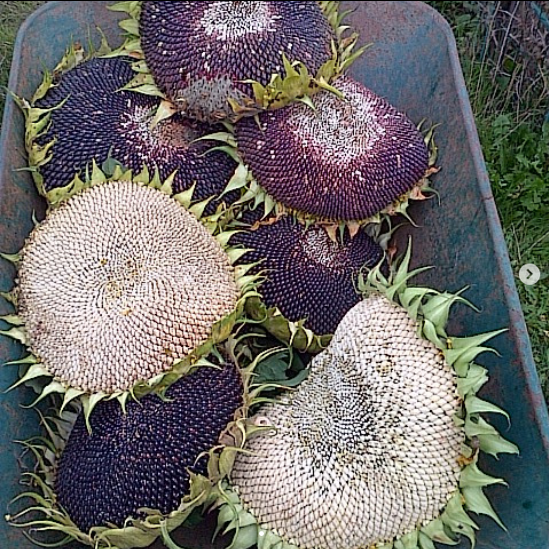
I used the pollen from the sunflowers to brush onto the flowers of the Dwarf Sunray ashkibwaa (Jerusalem artichoke) for my ongoing attempt to produce a perennial sunflower with large edible seeds.
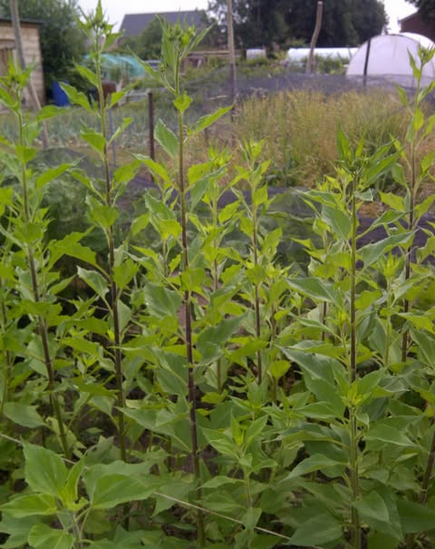
When the time came to harvest seeds from the Dwarf Sunray I got a huge number in comparison to the one or two per head I’m used to getting when I try this sunflower/ashkibwaa cross. By itself Dwarf Sunray doesn’t produce filled seeds. Whether this crop developed because they crossed with the sunflowers or another ornamental Helianthus I had growing on the plot or possibly even another flowering ashkibwaa (but there did not appear to be any around at the time), I don’t know, but I shall sow them this year and see what grows.
The planned hazel mini-coppice with its underplanting of spring flowers and strawberries on plot 71 is off to a good start. It needs a weed but has to put up with a rough hoe for now to keep the worst of the growth down until I get back from a planned holiday in Scotland.
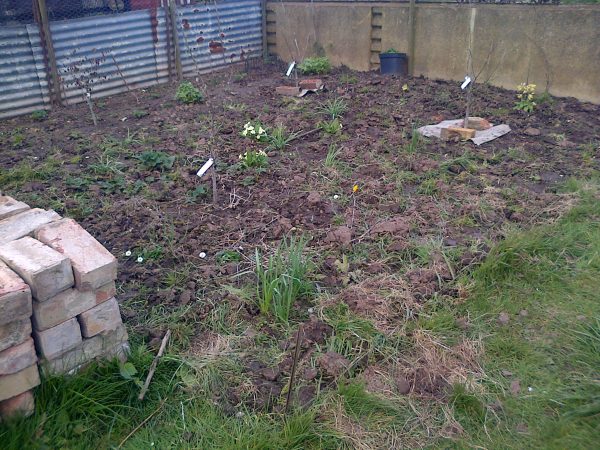
Pretty much the whole of the wildflower border got planted up fairly late last year and am looking forward to it filling out this year.
With Plot 71 giving me more space to play with I’ve been re-organising the main plot with a mind to planting it up with all our most favourite perennial vegetables and herbs (in a way like an extended version of the experimental perennial vegetable garden but with many other plants also for food, beauty, scent, wildlife value growing alongside the fruit and nut trees). At the back of my mind is the thought that this is the plot I will retreat to in old age. And if I’m no longer selling plants by then, there will be a little plot available by the greenhouse too for annual vegetables. (‘Nine bean rows will I have there’, to quote Yeats.)
To this end I’ll build a cage over one bed and plant Taunton Dean kale, Asturian tree cabbage, Ewiger Kohl, maybe some perennial purple sprouting broccoli and 9-Star perennial broccoli in there and a few other choice perennial brassicas. This will free up space for a herb garden in a sunnier spot than my previous one which was in two beds behind the front hedge, and then these spaces can be devoted to shade lovers and a shelter belt around the pond for frogs and newts.
The Bulbous Belly Border is well under way (everyone should have a Radix-inspired Bulbous Belly Border for edible bulbs and corms!) In here are Chlorogalum pomeridianum, Triteleia laxa, Tigridia pavonia, Allium sativum var. ophioscorodon, Allium victorialis, Allium cernuum, Allium chinense, Allium stipitatum, Allium ‘Purple Rain’, Crocus ancyrensis (bulbs) and Crocus sativus (stigmas).
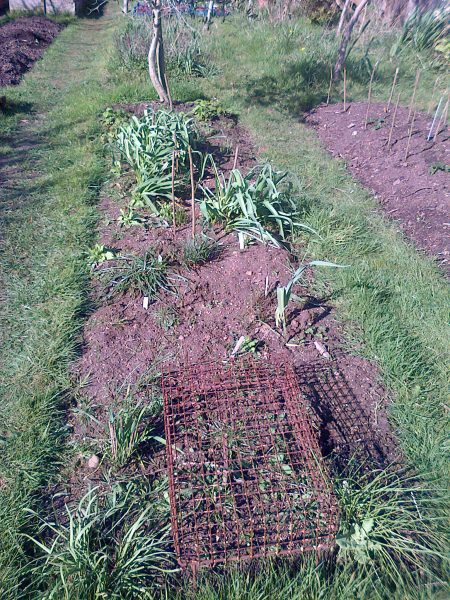
To the side of the bulb border there is a bed I’m planting up with perennial salad plants. So far I’ve put in garlic cress, perennial lettuce, mountain sorrel, wild rocket, sweet violet, red sorrel and mouse garlic. There are so many possibilities! I’ll probably move the perennial leeks and Caucasian beet already here to another bed but add some Welsh onions, everlasting onions and chives and some interesting dandelions I’m trying out. (The upturned wire baskets are to deter a visiting rabbit).
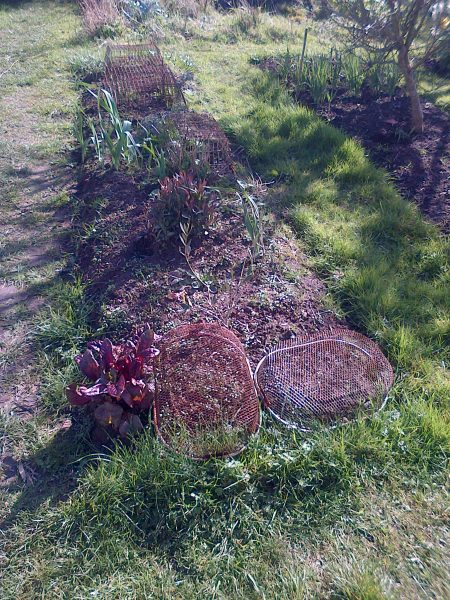
My previous mixed perennial allium bed can now be devoted to perennial leeks and potato onions. Delft Perpetual perennial leek became a favourite last year so I’d like lots of those but also St. Victor x oerprei and elephant garlic. Babington leeks, wild perennial leeks and ‘poireau perpétuel‘ will be happy growing throughout the wildflower border around the perimeter of the plot.
The great earth chestnut (Bunium bulbocastanum) continues to grow on the plot.
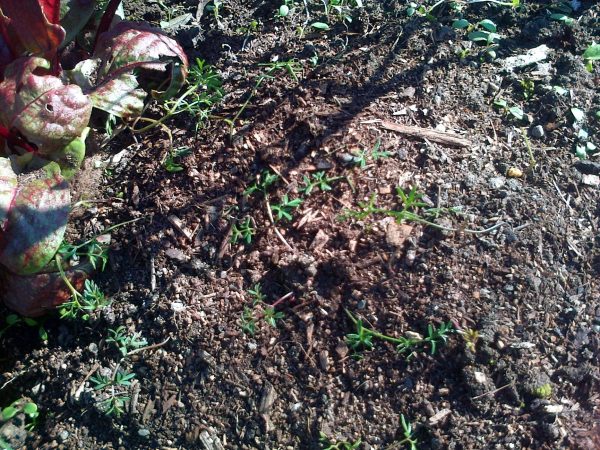
I imagine it is called great because the Bunium bulbocastanum bears just one tuber per plant which gets bigger year on year. This is unlike the imposters sold under the same name which usually have multiple tubers (an easy way to know they are not what they are claimed to be – the seed shape is also a giveaway). I’m trying to sow seeds when I get them. They don’t always come up and then develop very slowly but I hope in time to be able to supply genuine plants.
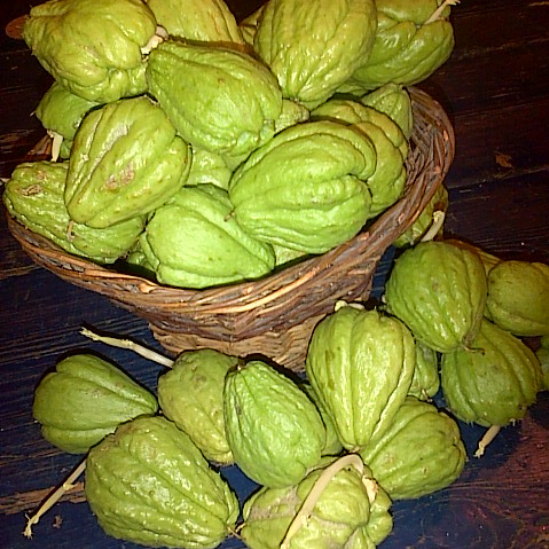
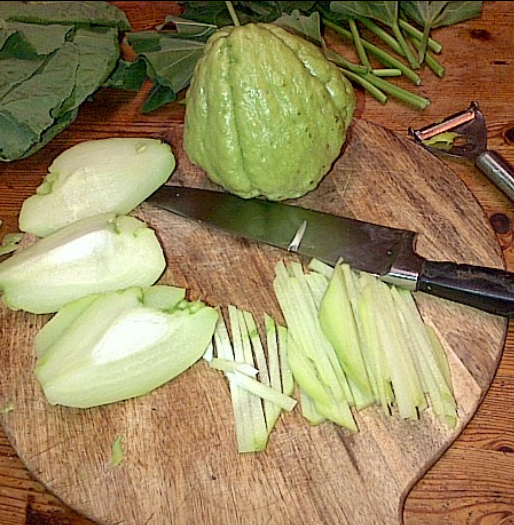
I’ll keep growing chayotes on this plot. They are proving to be a wonderfully productive squash to grow – big harvests (from admittedly big plants) which are useful in so many ways in the kitchen.
The bad news is that I lost some plants in the new edible shrub border on Plot 71. The Szechuan pepper, possibly the toon tree and the sweetleaf raspberry also didn’t survive there – probably because of the drought despite my best and repeated efforts with cans of water. (But the five-leaf aralia is still alive, which I’m pleased about as I want to taste its leaves which are popular gathered and cooked in quantity in Korea.) Various other plants have slipped from my grasp – I still haven’t managed to overwinter the cold-hardy chilli, Capsicum flexuosum, but I’m not yet doubting its cold-hardiness – it has survived for others! And I got no mushrooms in my King Stropharia mushroom bed. I’ll try yet again this year.
So that was the year that was. I think I’ll do my next review in August 2027 as that is a more fabulous time of year for showing off one’s plants than early spring!