2020 Review
The Backyard Larder Blog’s seventh annual review.
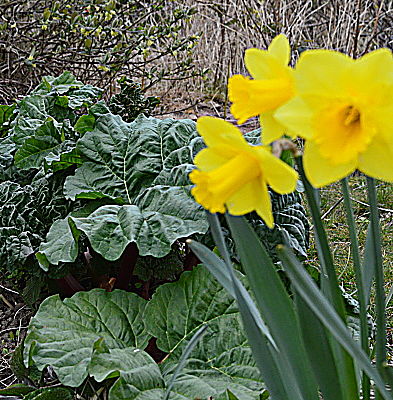
The perennial vegetable allotment is offering up lots of spring harvests just now, including Babington leeks, wild garlic (and all sorts of other allium crops), bladder campion shoots, various sorrels, patience dock, perennial kales, rhubarb, alexanders, nettles, lovage and more. I’ve still got lots of weeding to do after such an interrupted year there last year but it is great to see it all poking through and leafing up!
The sand beds I reported on in the 2019 review have been excellent for the sea beet, oyster leaf and saltbush. The latter is our top new perennial vegetable, I reckon, with its salty highly nutritious leaves available on the plant most of the year round. The tips of the leaves did get slightly touched by the frost but I think even in a very cold winter it would sprout again in the spring from its woody framework.
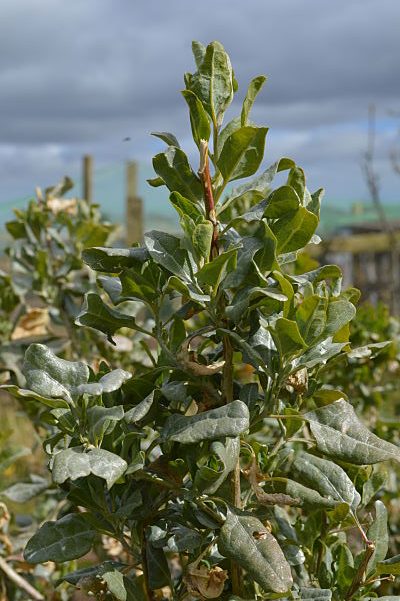
Saltbush – Atriplex halimus
I lost the Allium victorialis and also I think the Florida betony, Stachys floridana, (which I suspect wants higher temperatures to flourish). Once again the plant I hoped was Bunium bulbocastanum turned out to be something else! I noticed Great Dixter nursery was offering a plant under the Bunium bulbocastanum name and asked them if they were sure it was that. They weren’t sure but they have kindly sent me a plant to grow and identify. So I now have these three little plants with finely divided leaves growing in the sand beds, the last of which I hope will turn out to be the true ‘greater pignut’…..
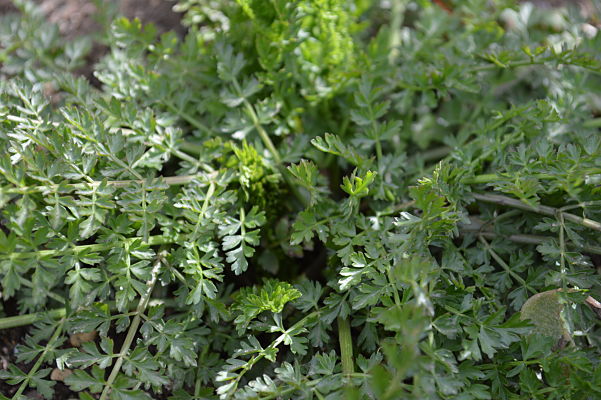
Probably Oenanthe pimpinelloides
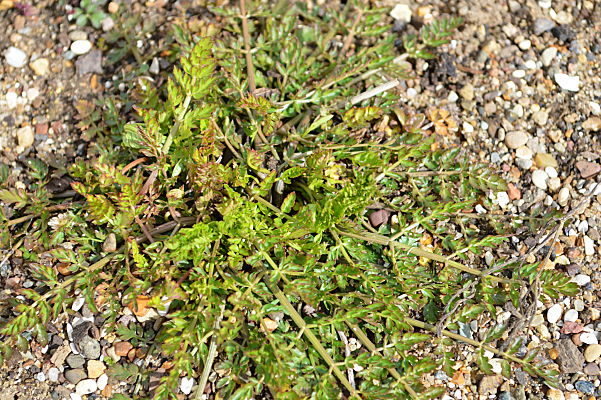
Possibly Oenanthe silaifolia
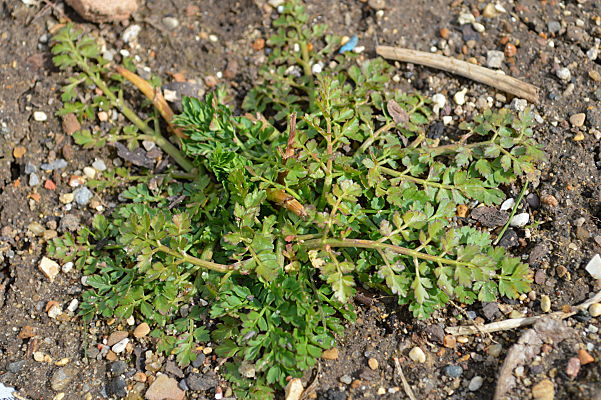
Hopefully Bunium bulbocastanum
‘By their fruits ye shall know them’. I have to wait until summer to see.
Other plants in the sand bed that I’m waiting to see really flourish are the spignel (Meum athamanticum), thicket bean (Phaseolus polystachyus) and sea kale (Crambe maritima) – I like to think they are just taking a while to settle in! The hopniss (Apios americana), sea aster (Aster tripolium) and rock samphire (Crithmum maritimum) are all quite happy and, although the rice root (Fritillaria camschatcensis) failed to make an appearance at all last year, this year it has popped right up!
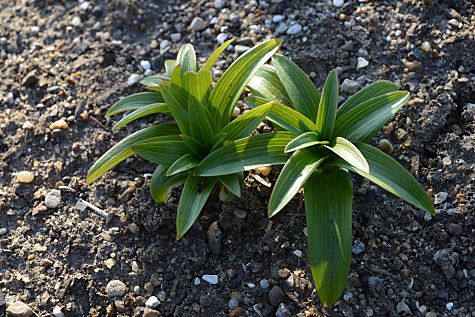
Xukwem or rice root – Fritillaria camschatcensis
Elsewhere on the allotment I will be watching the following edible plants carefully to see how they do this year: Rudbeckia laciniata (sochan), Ligularia fischeri (gomchwi), Cirsium oleraceum (cabbage thistle), a Rumex species, probably Rumex acetosa ssp. vinealis (red sorrel), Geum rivale (water avens but also called chocolate root!), Nasturtium x sterile (brown watercress) and Reichardia picroides (French scorzonera).

Cabbage thistle – Cirsium oleraceum
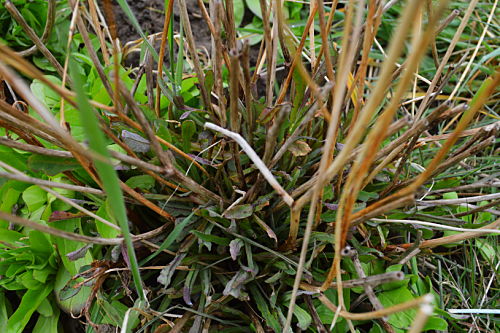
French scorzonera – Reichardia picroides
My allium collection has grown to include A. hirtifolium Alba, A. cernuum, A. angulosum, A. schubertii and A. altissimum Goliath. In the greenhouse I am growing an allium from seed that I bought under the name ‘slizun‘ – a name used for more than one species I have learnt so I’m not sure which allium it is yet. In the picture it had broad flat leaves which I thought might be good to cook with. Here is Allium angulosum. I like the way its leaves fan out…
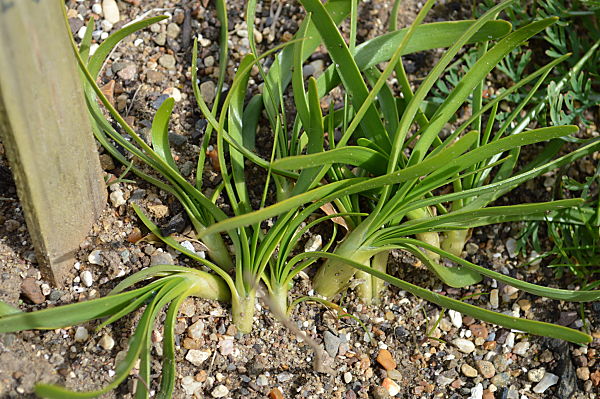
Allium angulosum
I’d like this plot to provide a lot of food from a small space with little work. To this end I am always looking for ways to ‘thicken up’ the planting of perennial edibles in line with the polyculture and layering principles of forest gardens. I’ve started on a plan to grow grapes on a simple support over two of the perennial vegetable beds and have planted a dwarf mulberry and a ‘patio’ Conference pear in two others. The Babington leeks (which we eat in quantity) are now spreading further, into the perennial kale beds (along with yarrow, marjoram and ox-eye daisies to attract insects to keep aphids, whitefly and caterpillar numbers down on the kales). I aim to find places to plant more perennial leeks and elephant garlic too. Unfortunately onions seem to get diseased on the plot probably from long-lasting soil-borne disease organisms so I have started growing the potato onions in pots and may have to do the same with the Welsh, tree and everlasting onions too if things don’t improve.
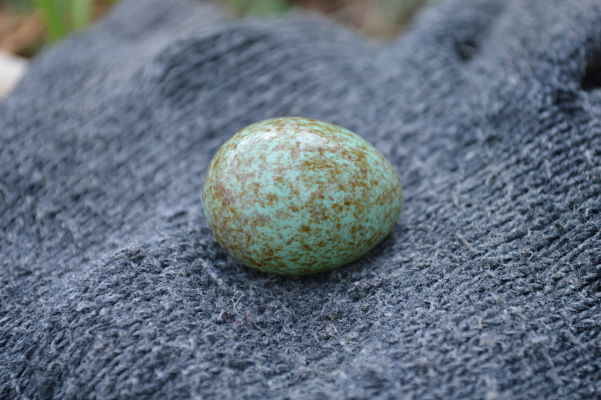
The aim is also for the plot to be a relaxing, beautiful place to be in and to support a wide range of wildlife. It was good today to see the wren flitting in the edible hedge and a brigade of house sparrows chattering in its upper branches. I pulled this blackbird egg out of a bucket of water – but hopefully the others in the clutch are safe and warm under the breast of a blackbird sitting in a nest somewhere close by.
Jake Rayson
Lovely, thank you for a beautiful write up 🙂
Alison Tindale
Glad you liked it Jake.
Caroline Mackay
An interesting read into a fascinating world.
Virginia
So informative and interesting to read your write up. I enjoy reading how your plot is progressing and being introduced to so many different edible plants.