Multi-purpose Elephant Garlic
Elephant garlic (Allium ampeloprasum var. ampeloprasum), a close relative of wild leek (Allium ampeloprasum) and Babington leek (Allium ampeloprasum var. babingtonii), is an excellent plant to grow in a perennial vegetable garden.
Elephant garlic yields very large bulbs consisting of fat individual cloves with a mild garlic flavour (particularly nice roasted with other vegetables but I have also seen a recipe for elephant garlic pie online.)

A single clove planted in autumn in fertile, well-drained soil, mulched with some compost and leaf mould will yield a bulb like this by late summer of the following year. The tall flower stems are best removed whilst still in bud if very big bulbs are desired. But sizeable cloves will be formed even on plants left to flower (the cloves below were harvested in November last year after the flower stalk had died back).
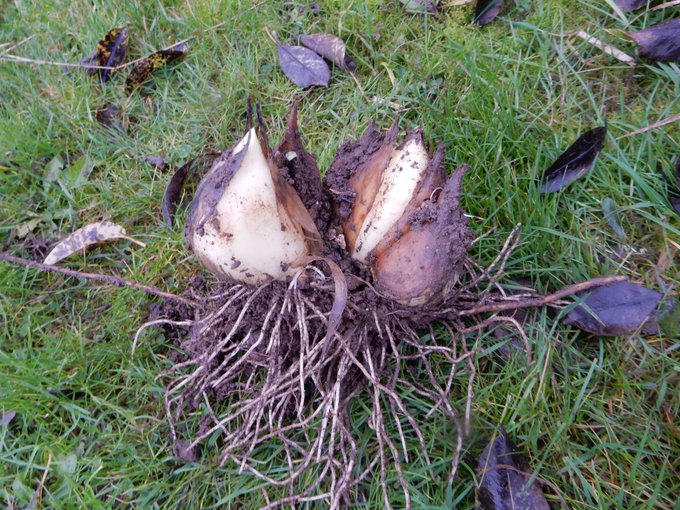
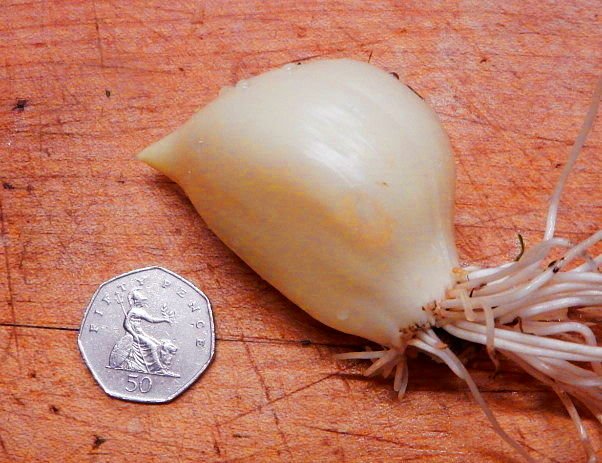
Here are some dug a few days ago….
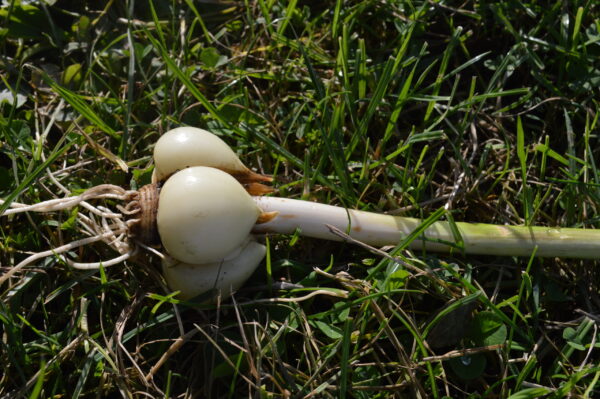
The flowers are attractive and much visited by bees and other insects.

Sometimes monobulbs are formed; largish bulbs undivided into separate cloves. They are great for using in the kitchen being big and juicy but if left in the ground they will form a divided bulb the following year.
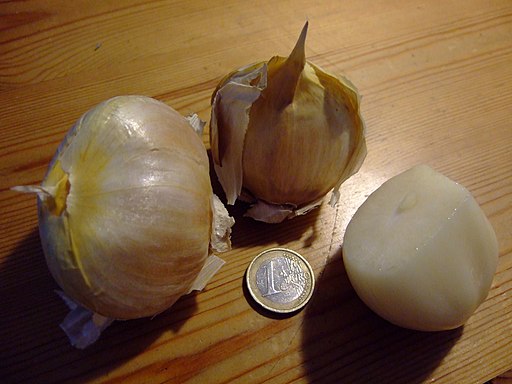
I understand they can arise from cloves which have been slower in their development (or were planted in the spring) but also from the small nut-like ‘corms’ which often form around the base of the large bulbs of cloves. Both the planting of cloves and corms will keep the perennial elephant garlic patch going. So will simply leaving cloves and corms in the ground.
Of course whole bulbs left to sprout will give a closely planted bunch of plants. These will need to be thinned to an approximate spacing of 15-20cm between plants for large bulbs to form. One possibility is to do this in spring when the young elephant garlic ‘leeks’ make excellent eating just as Babington leeks do. Remove the whole plant if thinning is the aim or cut above the bulb if you want it to resprout.

Elephant garlic ‘scapes’ (very young flower stems just in bud) can also be eaten and so can the young flowers.
So how did these useful plants with their huge bulbs and multiple edible parts arise? I’ve been looking into that. It is a more interesting and complicated tale than my initial enquiries suggested. For another post in a few days time!…………….
Helen Haran
I love elephant garlic and I’m looking forward to hearing their back story
Alison Tindale
Hi Helen,
Here it is…..https://backyardlarder.co.uk/2020/09/elephant-garlic-a-puzzling-history/