Experimental Perennial Vegetable Garden – One Year On
It is a year since I started creating the experimental perennial vegetable garden at the front of the allotment. My idea was to try planting up an area with a selection of productive perennial vegetables that would work well in a small front or back garden. I was also aiming for a low work garden (hence the no-mow chamomile lawn) and one which looked quite attractive too. Here is the original plan….

This is how it looks today….. and from the other side…..
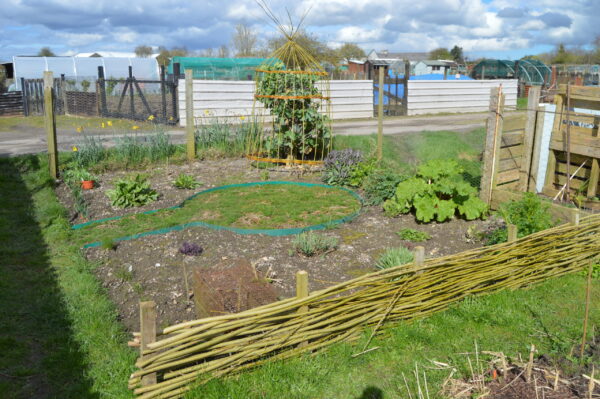
I’m pleased with how it has developed but have lots of thoughts on how to develop it further…..
The chamomile lawn (Chamaemelum nobile ‘Treneague’) has been very successful. I’ve just had to pull out a few weeds now and again. Hopefully there will be even fewer this year as the weed seeds in the soil will be depleted and the cover will be there from early on to stop blown in seeds from germinating. I put in the green plastic border when I realised how eager the chamomile was to outgrow the circle. It has worked very well but I’d quite like to replace it with wood or metal sometime. It will be hidden beneath the chamomile from late spring until early winter at least. (The same is true for the winter bare patches in the lawn too.)
I was unsure from the start about the choice of low-growing groundcover between the plants to avoid the need for weeding. So I left that undecided for the first year, just allowing wild white clover and a rather lovely self-seeded blue-flowered scarlet pimpernel (Anagallis avensis f. azurea) to spread.
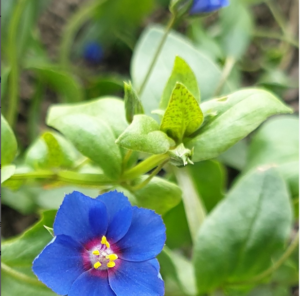
Blue scarlet pimpernel (Anagallis avensis f. azurea)
The pimpernel is an annual so won’t provide the permanent solution that the clover will, but the clover is very vigorous and might needed checking so it doesn’t over-run some of the smaller plants. Wild strawberries might work well too. I quite like the idea of using just one species to give a uniform carpet and the more evergreen it is the better. Still undecided!
The garden was planned with a largish perennial vegetable in each corner: Taunton Deane kale, saltbush, Rose of Sharon (Hibiscus syriacus not non-edible Hypericum calycinum), and greater musk mallow – but I need to rethink all but one of these choices. I lost the saltbush (Atriplex halimus) over winter.
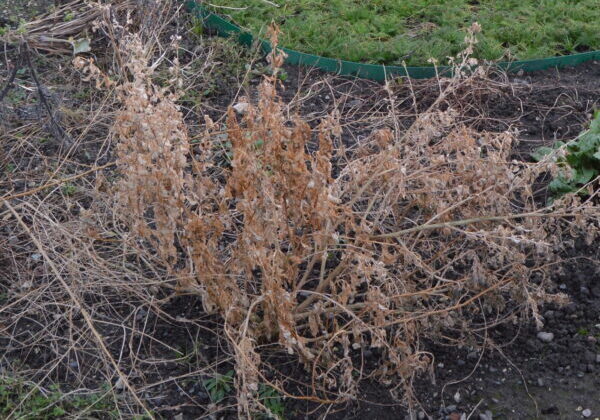
Saltbush is a great perennial vegetable but it is only borderline hardy in Britain. (I’ve seen a higher hardiness rating for Nuttall’s saltbush, Atriplex nuttallii, but haven’t managed to find any seeds for it yet.) Losing a key plant is a problem in an ornamental garden. The Rose of Sharon failed to grow from the cutting I put in and barely grew from the replacement plant I bought from Thomas and Morgan nursery. I may replace it as I’m not sure how good an edible it will prove to be anyway. I’m also now thinking that ideally these four corner plants would all be evergreen, as the Taunton Deane kale is (and the saltbush would have been if it had stayed alive) to maintain the structure of the garden over the winter.
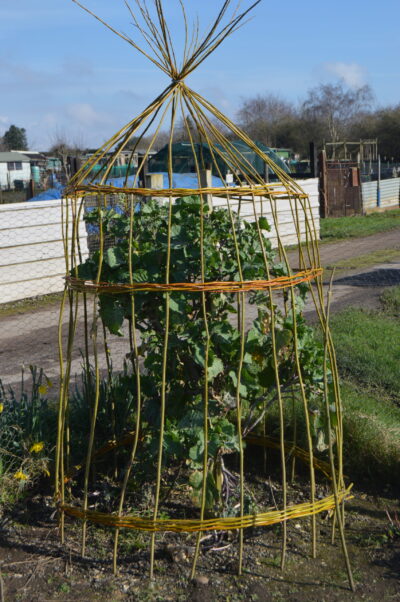
Evergreen Taunton Deane kale in winter (in its willow pigeon-deterring cage)
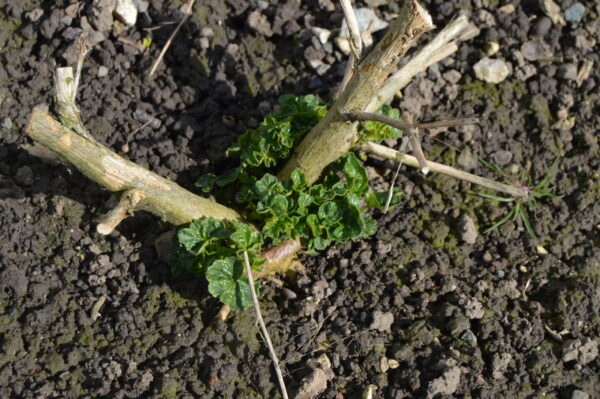
Greater musk-mallow coming back into leaf in March.
But I’m presently short of ideas for evergreen perennial vegetables of some stature. Globe artichoke perhaps? Rosemary would look great as one of the four, but I’m loathe to plant a herb if I could have a vegetable (because that is the basic idea of the garden, not because I don’t love rosemary!)
The willow border has given the garden some separation from the rest of the long narrow allotment. I didn’t have enough willow this year to carry on the border down the allotment path side but I did edge the garden down this side with Welsh onions and Triteleia laxa (which has edible corms).
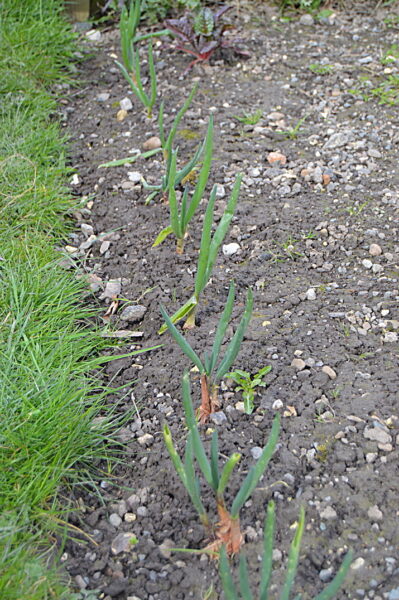
Welsh onions
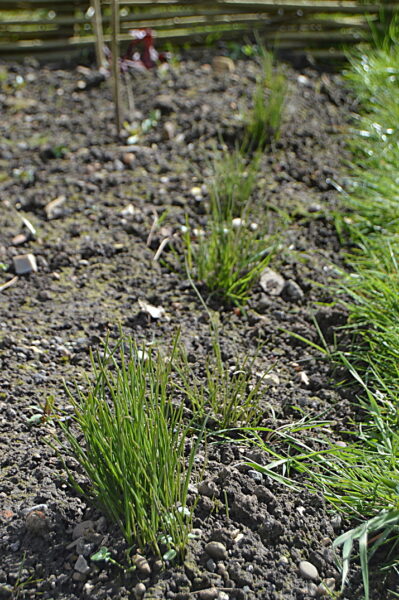
Triteleia laxa (triplet lily)
Some other additions into gaps in the planting have been garlic cress (Peltaria alliacea), buck’s horn plantain, salad burnet, mountain sorrel, red sorrel (in the foreground of the 29th September photo further down this page, not sure of its botanical name, it is all red unlike red-veined Rumex sanguineus) and red plantain (Plantago major ‘Rubifolia’).
Here are the photos of the garden going back in time over the last year….
25th February 2024
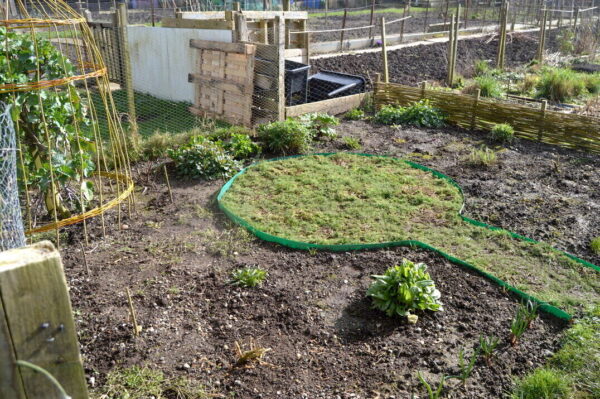
27th January 2024
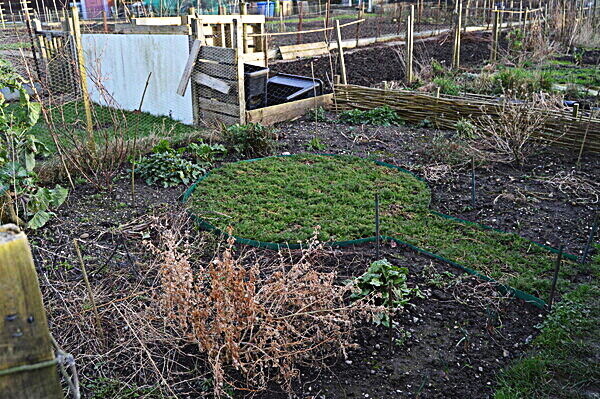
15th December 2023
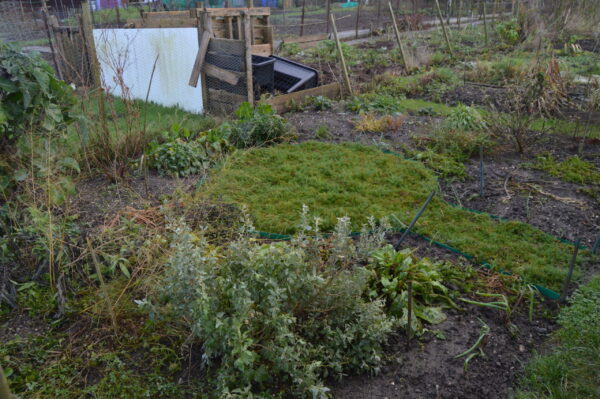
28th November 2023
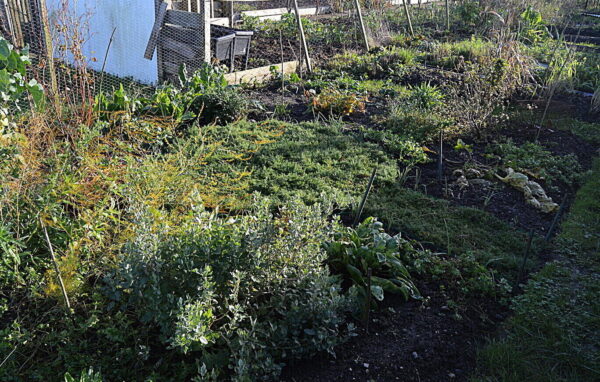
29th October 2023
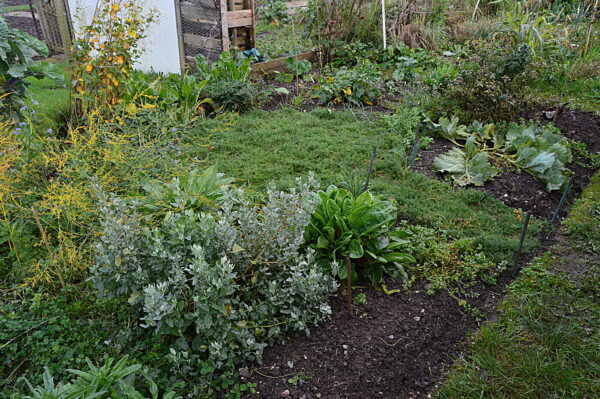
29th September 2023
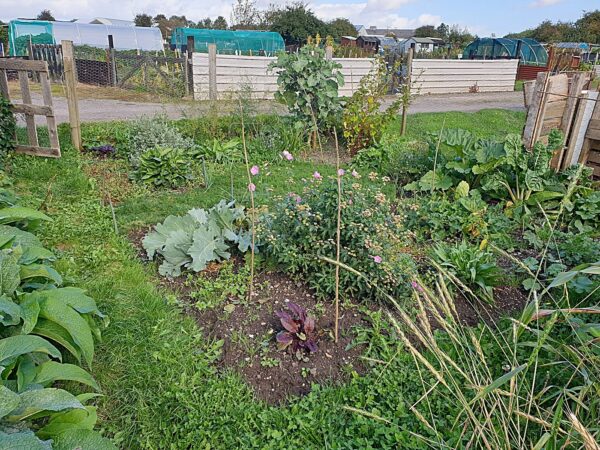
24th August 2023
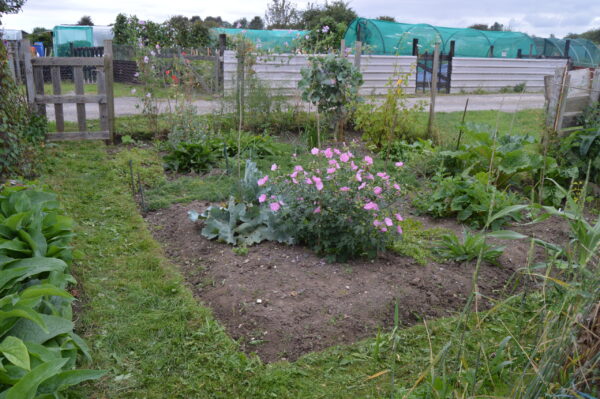
27th July 2023
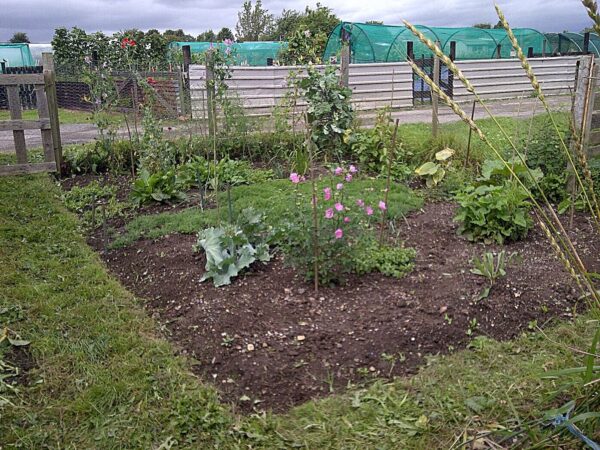
30th June 2023
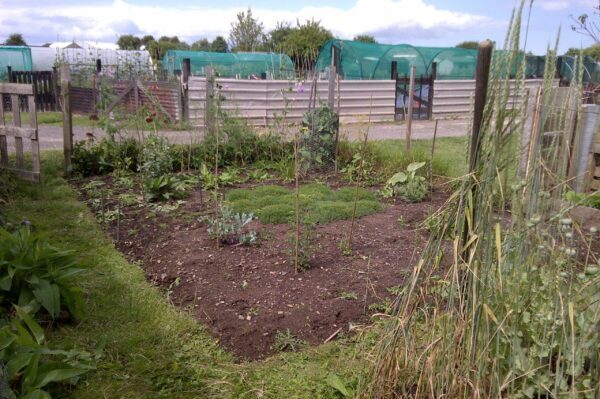
25 May 2023
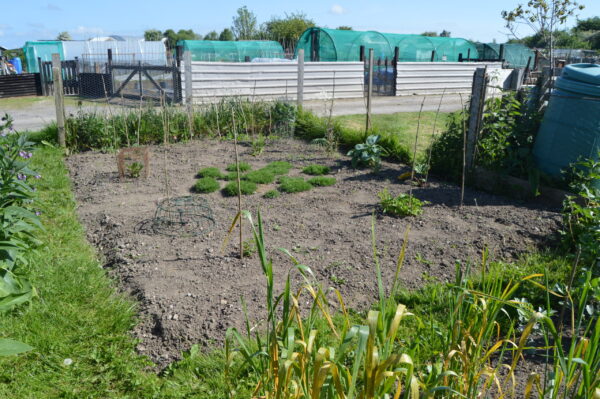
25th April 2023
29th March 2023
It will be fun to watch the garden grow over its second year. Some of the plants (like the asparagus and sea kale below) are just coming into their true glory. They will be bigger and better this year….
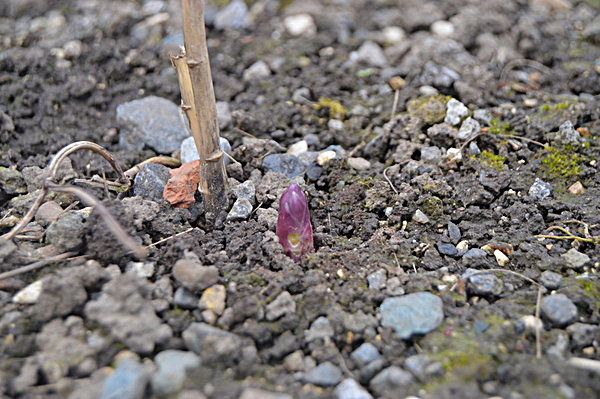
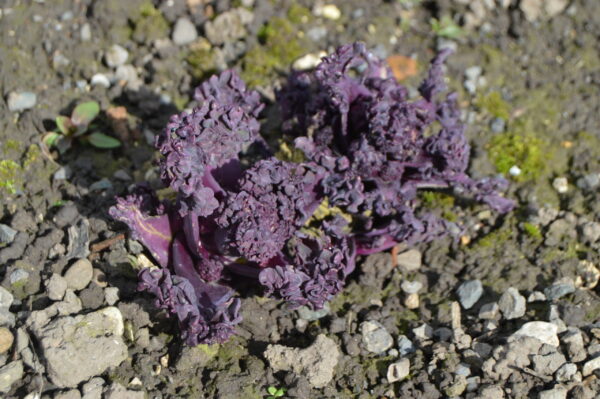
….so I’ll keep posting up photos each month.
susan mccall
Thanks for doing what you are doing. It is so nice to read other peoples experience of perenniel veg. i enjoy reading you blogs. My small collection has been been built up from a variety of sources and your website has enabled me to add a couple of things I didnt have. I first was directed to you by google when looking for elusive potato onion but you were out of stock but the reward was i discovered your website. I later found potato onions but dont know how genuine they are. Keep up the good work.
Alison Tindale
That’s a lovely affirming comment. Thanks Susan. It is so good to hear that people both find the blog useful and also appreciate the importance of perennial food crops. Best of luck with your collection – I hope it continues to grow and do well. I keep finding new possibilities – it is very exciting!
Christy Garner
What a fun blog. Your design is beautiful. How about a Toona sinensis tree in the corner that you can pollard? The leaves are incredibly delicious. ??
Alison Tindale
Thanks for the suggestion. Would that be quite productive, do you think? I have a very young Toona but haven’t got to the harvesting stage yet so I’m not sure how much it will provide (more as it matures I suppose). I put my planting dilemma to the Edimentals and Perennial Vegetables FB group and got a lovely list of suggestions, evergreen and otherwise. I will add yours to the list and mull them all over! Glad you like the blog and the design.
Sue Edgley
Is there anywhere that I can read up about your ‘wild flower predator strip’? Do you think it would also deter cabbage white caterpillars from eating annual kales too?
Alison Tindale
Something like this perhaps……https://www.wildlifetrusts.org/features/garden-insects…..Yes it will work for your annual kales too. But I didn’t notice a real difference for a year or two. I guess the plants had to get bigger before they attracted predators in sufficient numbers to really make a difference. This is quite good too….https://veganorganic.net/wp-content/uploads/2015/01/VON-the-basics.pdf (page 7)
Katrina Brudenell-Maylin
Thank you so much, Alison, for sharing this with us – and right from the beginning so we can see how it develops “in real life”. So much of what you see nowadays only shows you the “good bits” when everything is already fully grown (and anything that may have failed has been removed and replaced wordlessly) before the pictures are shown. For novice gardeners it can be so disheartening trying to live up to these impossible standards and give such a false impression on where and how to start.
Alison Tindale
Glad you find it useful Katrina. I’m definitely a trial and error sort of gardener!
Michele Bland
I also thank you for your work. I find your site very interesting to read.
I have found the white clover to be very invasive here where I live in France – equidistant (roughly) between Lyon, Grenoble and Geneve, 550m high. I use the alpine strawberries as cover and because I prefer the flavour of their fruit to other strawberries. I also use Creeping Jenny but I don’t know if it edible.
Alison Tindale
Thanks Michele. I’m still undecided about the clover. I left it for now and it hasn’t proved too invasive here so far. Do you find it too much around perennial or annual plants? I think I once found a report of creeping jenny being edible but only that one, so am not convinced!