Thus far…..
A year has passed since I starting blogging about the possibilities of the perennial vegetable garden – so here is a review of discoveries to date and a note or two to update previous posts.
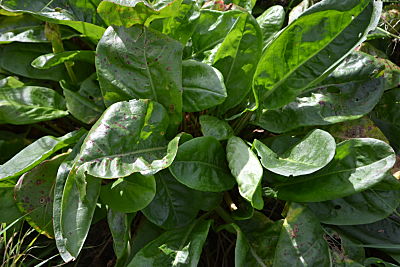
Firstly, the non-flowering form of garden sorrel – a plant that just gives and gives!
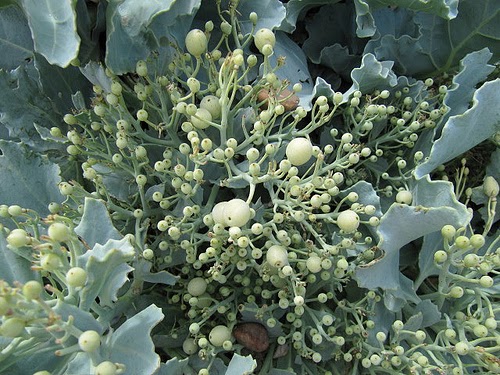
Sea kale – I love everything about it including its purple crinkled young foliage, its slightly older glaucous blue leaves (delicious steamed) and the heady smell of its lovely blossom! I have yet to try its young spherical seed pods as a summer treat.

 |
Good King Henry is good early in the year when both its young flower sprouts and youngish leaves make really tasty vegetables.
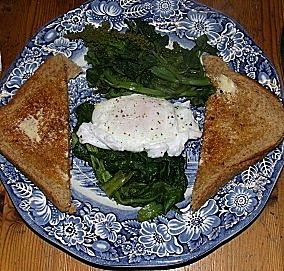
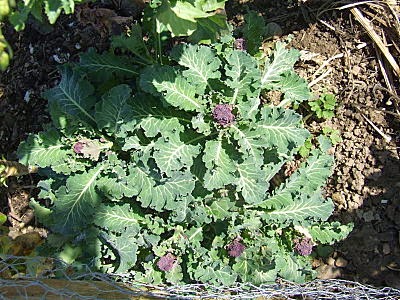
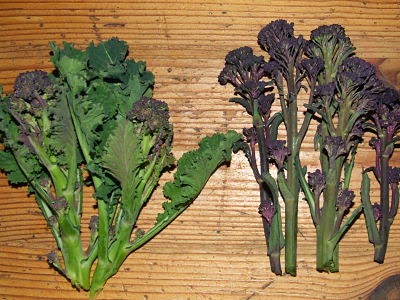
The wild cabbage plants have fed us over and over for months from late last summer when they grew big, all through the winter and into the spring. Will they keep going?
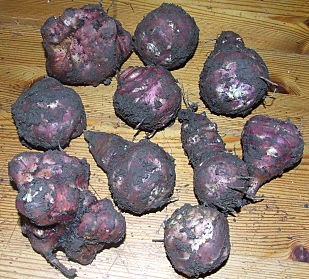
The Jerusalem artichokes – the easiest perennial vegetable ever, requiring no work at all beyond planting, harvesting and replanting. Such a shame they are not more universally digestible!The day lilies were another success from last year – plucking their fat buds was like picking green beans. The few I dried stored well in a glass jar and I want to dry a lot more this year.
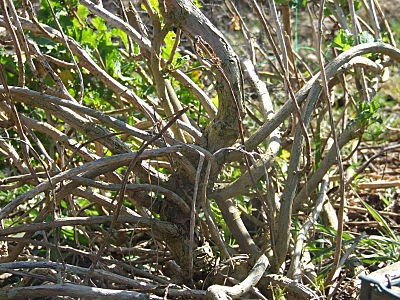
Not everything has gone well. Sadly the Daubenton kale plants (the first plant many people seek out when they start collecting perennial vegetables) are very poorly! They fed us well last year but these plants will have to be pulled out. I found evidence of cabbage root fly. Luckily I have plants to replace them with.
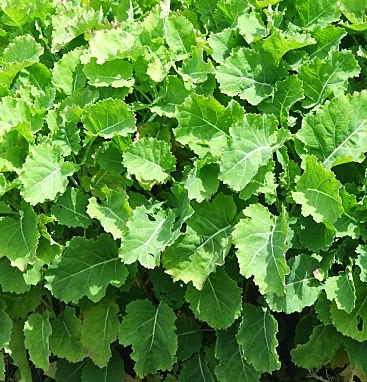 It should look more like this!
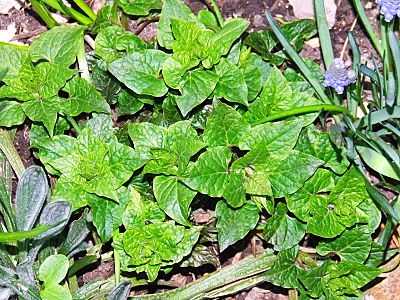
I had another sick plant last year. The Caucasian spinach (Hablitzia tamnoides) may have been attacked by beet curly top virus…

but it’s looking healthy so far this year. I shall keep a close eye on it – I still haven’t had much of a chance for a Caucasian spinach feast!
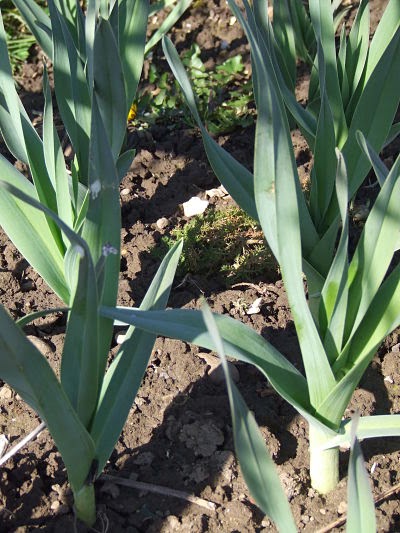
I’m still waiting to try the Babington leeks too although we did enjoy the garlicky green bulbils last summer. I expected to harvest the leeks in the winter or very early spring but ours are only just ready.
The Chinese artichokes were disappointingly small. They may have been too dry so now they are planted in a frame containing a heavy leaf mulch to retain moisture.
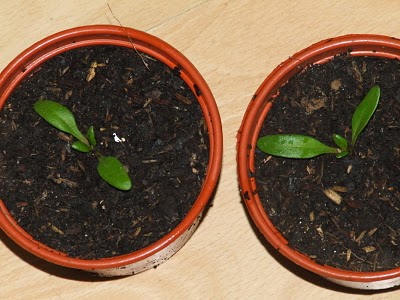
Only one of the sea beet plants has survived the winter. This year I’m trying again with some seed from plants I found growing on a north Anglesey beach last September. It may prove to be a more truly perennial and wild beet than the plants I grew last year.
Ground-covers are gradually covering bare soil between the perennial vegetables. I have more clover paths to sow but on the beds wild strawberries are taking over wherever I plant them, the silverweed is beginning to make a show around the skirret, lambs lettuce is keeping weeds at bay on the asparagus bed as well as providing salad greens and the creeping Jenny has only allowed a very occasional dandelion to infiltrate the sea kale.
There are many more perennial vegetables to investigate; I think I have about fifty in my collection now and I’m gradually organising them all onto one allotment plot. One I rather wanted to see flower last year was my Bath asparagus (Ornithogalum pyrenacium).

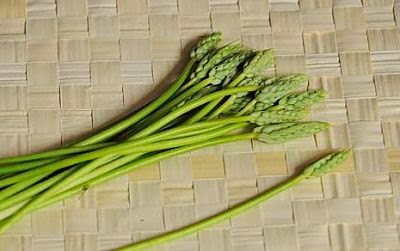
Well it hasn’t yet! Thanks go to others for these photographs. But this entry on the Wiltshire and Swindon Biological Records Centre website suggests that the plants do take a while to mature so I shall live in hope.
Sarah Shoesmith
What an interesting post. I am a huge fan of perennial veg (apart from Jerusalem artichokes, I'm sorry to say). I love daylilies though – and I completely intrigued by Ornithogalum pyrenacium. Do you know what it tastes like?
I used to grow and love sea kale years ago and I had forgotten all about it until reading this. Thank you for the reminder!
Alison
Thank you Sarah! Well I have always assumed it must taste a bit like asparagus but I don't know! It also goes under the name of wild asparagus or Prussian asparagus although the first name, of course, is also given to wild plants in the Asparagus genus. It is easy to find online photographs of bunches of it ready for market and I'd be interested to know whether it is a cultivated vegetable perhaps on the Continent and/or in the States.